


If you’re researching the Wingstop Franchise, the first question is obvious: how much is a Wingstop franchise, and what does it really take to own one?
Wingstop is one of the better-known names in fast-casual chicken, with a focused menu, strong brand recognition, and a franchise model built around local execution, staffing, speed, and consistency. For the right candidate, that can be appealing. But the brand name is only part of the decision.
The more important question is whether the Wingstop franchise cost, operating demands, and ownership model actually match your budget, lifestyle goals, and appetite for restaurant operations.
If you’re comparing Wingstop against other food or service concepts, it helps to start with a broader view of franchise fit—not just brand familiarity. A good first step is to receive expert guidance at no cost by filling out this form so you can compare models based on investment level, workload, and owner fit before locking onto a single name.
This guide reviews Wingstop franchising, startup costs, fees, support, daily operations, owner requirements, and the bigger question many candidates overlook: is Wingstop the right business model, or just a well-known brand?
All trademarks are the property of their respective owners. Wingstop and its subsidiaries are not affiliated with FBA.
This content is for informational purposes only and is not legal, financial, or tax advice. Always review the current Franchise Disclosure Document (FDD) and consult qualified professionals before making a franchise decision.
Is Wingstop a Franchise? Brand Overview & Business Model.
Yes, Wingstop is a franchise, and its growth has been driven primarily through franchising.
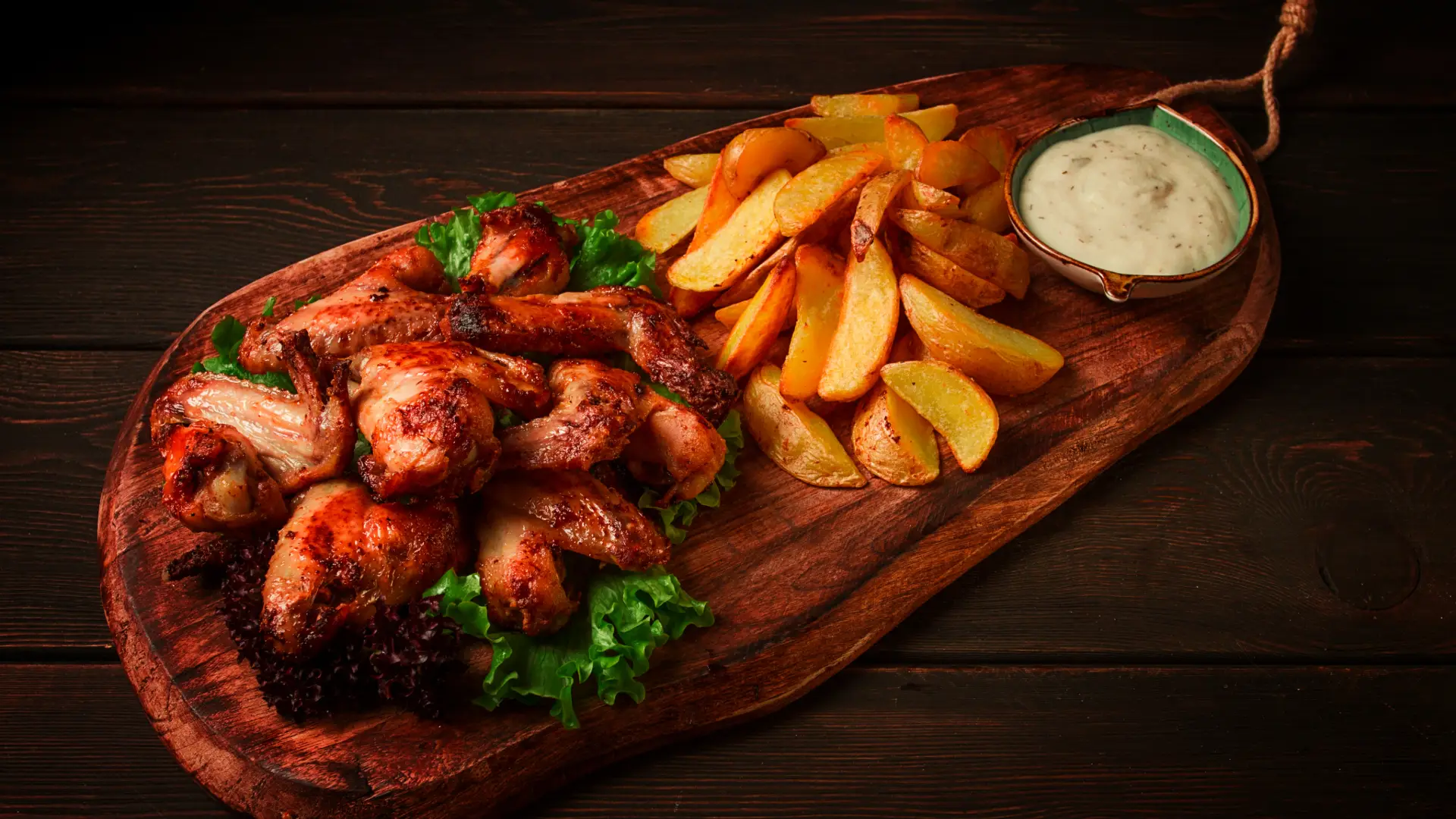
Wingstop built its brand around a focused menu of wings, tenders, sandwiches, fries, and flavor-driven sauces and dry rubs. That focused menu can support operational consistency and strong brand identity. Compared with broader restaurant menus, it may also simplify certain parts of execution.
But simpler does not mean easy.
A Wingstop location still depends on strong site selection, reliable staffing, throughput, food quality, customer service, and local leadership. The model is repeatable, but it is still a restaurant business—and restaurant businesses are usually won or lost in execution.
So when people ask, “is Wingstop a franchise?” the more useful follow-up is this:
Is Wingstop the kind of franchise you actually want to own?
That depends on far more than the brand name.
If you want to review the brand directly, you can also explore Wingstop’s official franchise page.
How Much Does a Wingstop Franchise Cost? Full Investment Breakdown.
Opening a Wingstop Franchise requires thoughtful capital planning and a clear understanding of startup and recurring costs. Based on the 2025 FDD and widely cited industry summaries, here’s what prospective franchisees typically evaluate. These numbers can change year to year, so treat them as a planning baseline and confirm in the current FDD.
Wingstop Franchise Investment Table (Estimated).
| Expense Category | Low Estimate | High Estimate | Notes |
|---|---|---|---|
| Initial Franchise Fee | $20,000 | $25,000 | May vary by territory or development agreement |
| Leasehold Improvements & Build-Out | $164,000 | $581,000 | Depends heavily on location and market conditions |
| Equipment, Signage & Fixtures | $85,000 | $115,000 | Kitchen, POS, seating, décor |
| Initial Inventory & Supplies | $10,000 | $20,000 | Food, packaging, smallwares |
| Training & Opening Support | $12,000 | $15,000 | Training + launch support |
| Technology & POS Systems | $15,000 | $30,000 | Hardware + software stack |
| Additional Funds (3 months) | $35,000 | $95,000 | Payroll, rent, marketing, operating buffer |
| Total Estimated Investment | $298,200 | $1,013,500 | Based on 2025 FDD ranges and industry summaries |
Ongoing Fees (Commonly Disclosed).
- Royalty Fee: 6% of gross sales.
- Marketing Fund Contribution: 4%–5% of gross sales
Financial Qualifications. (Commonly Reported).
- Minimum Net Worth: $1,200,000
- Liquid Capital Requirement: $600,000
Wingstop typically seeks well-capitalized, operationally capable candidates who can meet these thresholds and may be positioned for multi-unit development.
If you want a practical way to organize Item 7-style startup costs, working-capital buffers, and “what if” scenarios across multiple brands—not just Wingstop—use the Franchise Financial Calculator to structure your assumptions conservatively.
Hidden Cost Drivers That Impact Wingstop’s Investment Range.
Even within the published range, total cost often moves based on a handful of drivers. This is where candidates can accidentally underestimate cash needs.
Key cost drivers include:
- Build-out scope and landlord conditions: Restaurant build-outs can swing widely depending on site condition, required improvements, permitting timelines, and local contractor pricing.
- Market labor costs: Wage pressure changes staffing cost assumptions and working capital needs.
- Real estate availability: A “good enough” location is not always available when you want it; delays can increase holding costs and pre-opening expenses.
- Technology and equipment configuration: POS, kitchen tools, and implementation support can vary based on what’s required at the time you sign.
- Pre-opening marketing approach: A stronger pre-opening push can require more upfront cash, even if it supports launch momentum.
- Staffing plan: Hiring earlier can stabilize operations—but increases payroll before sales are predictable.
If you’re trying to answer “how much is it to franchise a Wingstop,” the real answer is: the disclosed range is the starting point, and the drivers above determine where you land inside it.
What Support Does Wingstop Provide Franchisees?
Training and back-end systems can make or break a first-time franchise owner’s experience. Wingstop describes a structured onboarding process and ongoing support that typically includes:
- A multi-week initial training program with classroom and hands-on components.
- Opening support with trainers assisting on-site during launch.
- Access to field consultants and coaching.
- Help with real estate and site selection (within system processes).
- Vendor coordination and marketing content for national and local efforts.
Technology and Operating Rhythm.
Technology plays a meaningful role in Wingstop’s operations, including tools designed to improve throughput, forecasting, staffing decisions, and order flow across dine-in, carryout, and delivery. For operators comfortable with systems and dashboards, the tech stack can support consistent execution. For owners less familiar with digital operations, it can create a learning curve—especially when software updates or workflow changes occur.
If you want a real-time education format that helps you understand how support, training, and operations differ across franchise systems, attend the Franchise Webinar and bring your diligence questions with you.arning curve—and ongoing software updates may involve added costs.
Daily Operations: What to Expect as a Wingstop Franchisee.
A Wingstop location is usually an execution business: staffing, speed, quality, customer experience, and consistent local marketing. While exact routines vary by market and operator structure, franchise owners often spend time on:
- Hiring and retention: Recruiting, onboarding, scheduling, and performance standards.
- Food and labor controls: Managing waste, throughput, labor efficiency, and shift execution.
- Customer experience and service recovery: Reviews, complaints, and order accuracy.
- Local marketing execution: Managing campaigns and promotions inside brand guidelines.
- Compliance and consistency: Following system standards across food safety, brand execution, and operations.
- Multi-unit leadership (if applicable): Building managers, training pipelines, and weekly scorecards.
A practical owner-fit question: Do you enjoy leading a shift-based team and making “small improvements” every week? That’s often where restaurant success is built.
If you want a fast snapshot of what ownership styles typically align best with concepts like Wingstop, take the Zorakle Assessment before you commit heavy time to one brand.
Is the Wingstop Franchise Worth It? Pros & Risk Factors.
Every franchise opportunity comes with trade-offs. Here are common positives and challenges candidates weigh during due diligence.
Pros.
- Recognizable brand and focused menu: Clear positioning and operational simplicity relative to broader menus.
- Scalable model: Designed for repeatable operations and multi-unit pathways (for qualified operators).
- Support infrastructure: Training, marketing assets, vendor coordination, and field support are often part of the system.
- Operational tech tools: Systems designed to improve forecasting, order flow, and execution consistency.
Cons.
- High upfront investment: Cost range can exceed $1M depending on build-out and market factors.
- Strict financial requirements: Net worth and liquidity thresholds narrow the candidate pool.
- Ongoing fees: Royalty + marketing fund contributions can materially affect unit-level margins.
- Competitive QSR landscape: Customer acquisition and real estate competition can be intense.
- Operational intensity: Peak-hour execution pressure, staffing issues, and input-cost volatility are real factors in restaurant operations.
If you want help comparing Wingstop-style fast-casual demands against other food and service models (including lower-investment or more flexible ownership structures), connect through Franchise Consulting. can offer a scalable model with strong brand recognition. But it’s not the only path to fast‑casual or food‑sector ownership.
Before You Franchise Wingstop: 8 Critical Questions to Ask.
If you’re researching Wingstop franchise opportunities or asking “is Wingstop a franchise,” your best next step is structured diligence—not more blogs.
Use this checklist before you treat the numbers as “real”:
- Confirm Item 7 totals in the current FDD and ask what commonly pushes totals toward the high end
- Clarify the development model (single-unit vs. multi-unit expectations)
- Validate real estate assumptions (site availability, build-out scope, landlord terms)
- Ask about staffing reality in markets similar to yours
- Understand technology requirements (required tools, implementation, and ongoing costs)
- Review fees and required spend (royalty, marketing fund, required vendors, local marketing expectations)
- Call a mix of franchisees and ask consistent, non-leading questions
- Have advisors review the documents (franchise attorney + financial review)
If you prefer a guided, interactive comparison process—especially if you’re weighing multiple concepts—join FranPath Live.
How FBA Helps You Evaluate Wingstop — and Find Better-Fit Alternatives
The Franchise Brokers Association (FBA) helps you evaluate the Wingstop Franchise in context—your budget, lifestyle goals, and operator fit—so you’re not making a “big-name” decision in a vacuum.
Here’s what that looks like:
- Clarify fit fast: An advisor learns your goals, timeline, and investment comfort—then confirms whether a high-buildout QSR model like Wingstop matches your reality. Start with Find Franchises.
- Compare trade-offs side-by-side: Wingstop vs. other food brands, vs. lower-overhead concepts, vs. service models—so you can see differences in staffing intensity, buildout risk, and day-to-day workload.
- Stay diligence-driven: Guidance on what to verify in the FDD (especially startup costs and any financial disclosures), plus how to run smarter franchisee calls. Learn in a live format via the Franchise Webinar.
- Get 1:1 support: If you want an advisor to help you structure your process and comparisons, use Franchise Consulting.
- Stress-test the money: Organize startup costs and cash buffers with the Franchise Financial Calculator and pressure-test fit quickly with the Zorakle Assessment.
- Explore options interactively: Compare models in a guided session via FranPath Live.
FBA won’t remove risk—but it can reduce guesswork, speed up comparison, and help you choose a franchise model you can actually execute.
FAQ.
How much is a Wingstop franchise?
Estimated startup costs are often summarized in a range from roughly $298,200 to $1,013,500, depending heavily on build-out, market conditions, and working capital assumptions. Always verify in the current FDD.
What are the ongoing fees?
Commonly reported ongoing fees include a 6% royalty on gross sales and 4%–5% marketing/ad fund contributions, plus other potential fees outlined in the FDD.
What financial qualifications are required?
Commonly cited requirements include approximately $1.2M net worth and $600K liquid capital, though exact standards can change and should be confirmed in the current FDD.
Is Wingstop a good fit for first-time franchisees?
It can be, if you have sufficient capital, strong operations interest, and comfort leading teams and using technology systems. Many first-time buyers also consider lower-investment concepts to match their risk tolerance.
Can FBA help me find other franchise brands?
Yes. While Wingstop isn’t in FBA’s active portfolio, FBA can help you compare other food-and-beverage and service franchises that align with your budget, skills, and goals.
Exploring Alternatives to the Wingstop Franchise.
Since the Franchise Brokers Association doesn’t list Wingstop in its portfolio, the goal here is to help you evaluate whether Wingstop fits—or whether a different concept matches your budget and lifestyle goals better.
FBA can help you:
- Compare alternatives with lower entry costs or different operating models
- Use a structured discovery process instead of “brand-name shopping”
- Build a diligence plan and question set before you talk to franchisors
- Match you to models that fit your schedule, leadership style, and capital plan
Start exploring options through Find Franchises, and if you want a structured education format before you commit, attend the Franchise Webinar.
If Wingstop’s cost, competition, or operational demands make you pause, that’s not a “no”—it’s a signal to compare smartly and choose a model you can execute with confidence.