
Does IHOP franchise in the U.S.? Yes. IHOP is a full‑service, family‑dining brand built around breakfast leadership and an all‑day menu. The system supports multiple restaurant formats (freestanding, inline/endcap, and conversions), plus non‑traditional venues in select cases, and is backed by Dine Brands with brand standards, training, marketing, and development resources. IHOP is also advancing a dual‑brand Applebee’s | IHOP configuration that extends day‑part reach under one roof.
This guide explains how IHOP franchising works—covering the operating model and guest experience, owner profile and staffing expectations, training and technology stack (POS, tablets, KDS, online ordering), territory and site‑selection rules, and the leadership/support structure behind the brand. We’ll cover costs and fees in their own section so you can evaluate numbers in context.
For objective franchise education, industry frameworks, and brand‑comparison tools, visit our Franchise Brokers Association (FBA) Blog to learn how to evaluate and compare leading franchise opportunities with expert guidance.
Who owns IHOP and what’s the brand story?
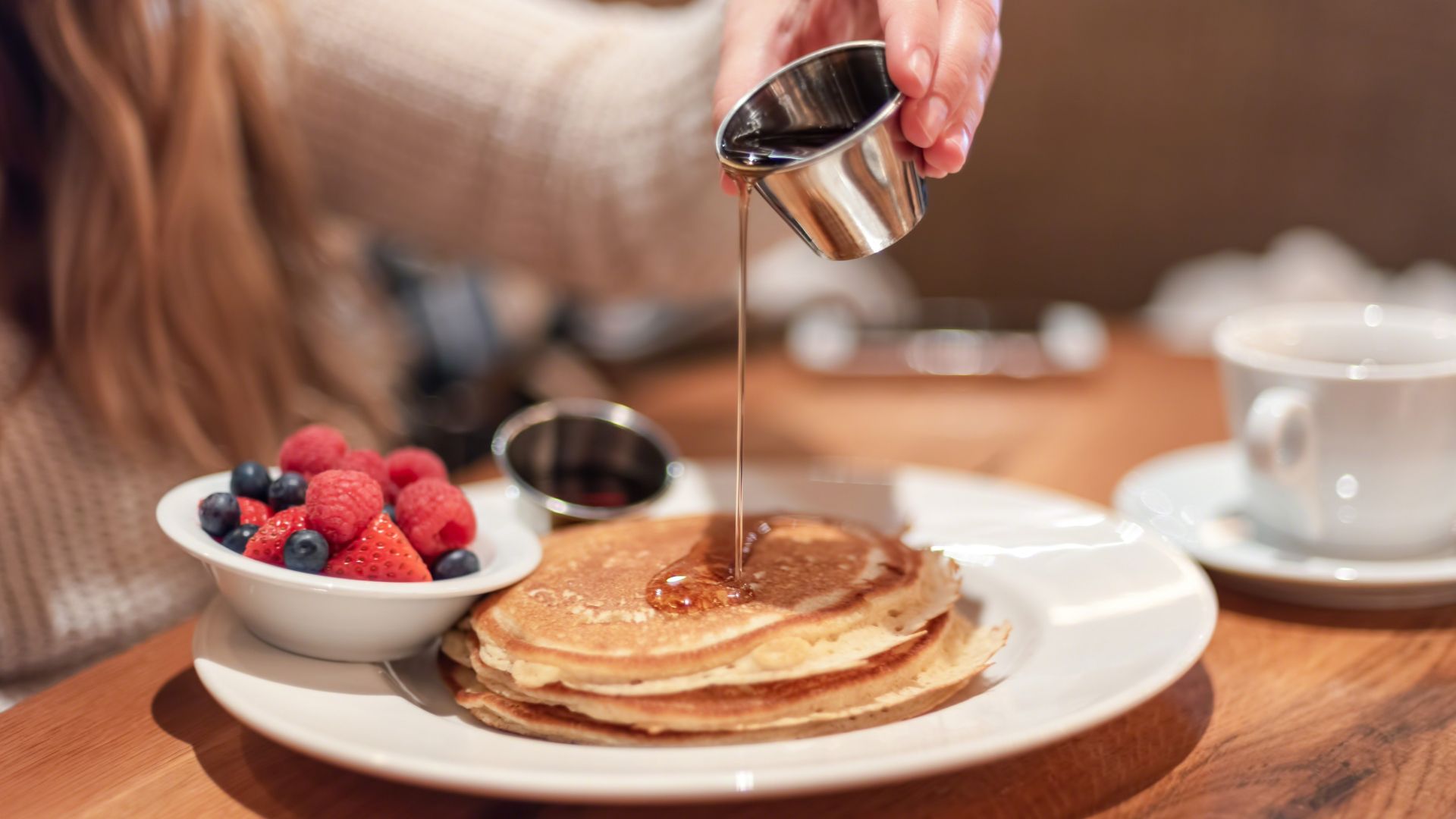
IHOP—originally International House of Pancakes—opened its first restaurant in 1958 in Toluca Lake, California, founded by brothers Al and Jerry Lapin with early investors Al and Trudy Kallis. The concept built national recognition around pancakes and breakfast specialties, then expanded into an all-day, family-dining menu while preserving its “pancake house” identity.
Today, the IHOP brand is franchised by affiliates of Dine Brands Global, Inc. (NYSE: DIN), the parent company that also oversees Applebee’s and Fuzzy’s Taco Shop. This corporate structure provides centralized brand stewardship, development programs, and shared innovation across the portfolio.
Dine Brands is also advancing a dual-branded Applebee’s | IHOP format that places both concepts under one roof with shared back-of-house efficiencies and distinct dining zones. The first U.S. location opened on February 18, 2025, in Seguin, Texas, with the company signaling an aggressive domestic rollout thereafter; recent trade coverage indicates the potential for dozens more sites in the near term.
How much does an IHOP franchise cost?
IHOP’s total estimated initial investment varies by development path and prototype. For new-builds, the range is $1,751,798–$5,222,865 (2025 FDD, Item 7). A separate Purchase Program—used for certain takeovers of IHOP affiliate-operated restaurants—shows a lower entry point, with a range of $380,550–$3,735,850 (2025 FDD, Item 7). These figures reflect the requirements of a full-service, all-day family-dining model.
Typical startup cost line
| Category | Low Estimate* | High Estimate* |
| Initial Franchise Fee (IFF) | $50,000 | $50,000 |
| Construction (prototype-dependent)* | $900,000 | $3,500,000 |
| Major Equipment & Fixtures (by prototype)* | $493,000 | $740,000 |
| Signage (by prototype)* | $30,000 | $100,000 |
| Opening Inventory / Smallwares* | $15,000 | $100,000 |
| Training / Opening Support Fee* | $0 | $65,000 |
| POS Setup, Training & Support* | $3,500 | $9,000 |
| POS System Hardware* | $20,000 | $60,000 |
| Server Tablets + Payment Devices* | $7,500 | $30,000 |
| Kitchen Display System (KDS)* | $15,000 | $30,000 |
| Working Capital (first 3 months)* | $50,000 | $200,000 |
| Total Estimated Initial Investment (new build) | $1,751,798 | $5,222,865 |
What drives the range.
Prototype selection (e.g., freestanding vs. inline/endcap), market construction costs, scope of any conversion, and equipment package drive most variance. Dual-brand sites can increase capex due to size and signage, while conversions may compress costs if infrastructure already exists. Working capital assumptions will also shift with staffing plans and opening timelines.
IHOP Franchise Training & Technology (What You’ll Use Day One).
IHOP delivers a multi-phase training and support system that blends classroom and e-learning with on-the-job instruction, a structured opening program staffed by NRO (New Restaurant Opening) trainers, and ongoing guidance on brand standards and approved technology. The goal is consistent execution—from the first guest served through long-term operations—using clear curricula, defined roles, and monitored performance.
At a glance
- Training structure: Six-week Certified Leader Training plus Initial Opening Training with NRO support; IHOP determines timelines and staffing based on your opening plan.
- Tech stack: Approved POS hardware with TRAY software, server tablets, Kitchen Display System (KDS), online ordering, and defined device/security standards; required fees apply to certain services.*
- Advertising: Centralized national fund at 3.5% of Gross Sales*; no required local advertising fee at present.*
Certified Leader Training.
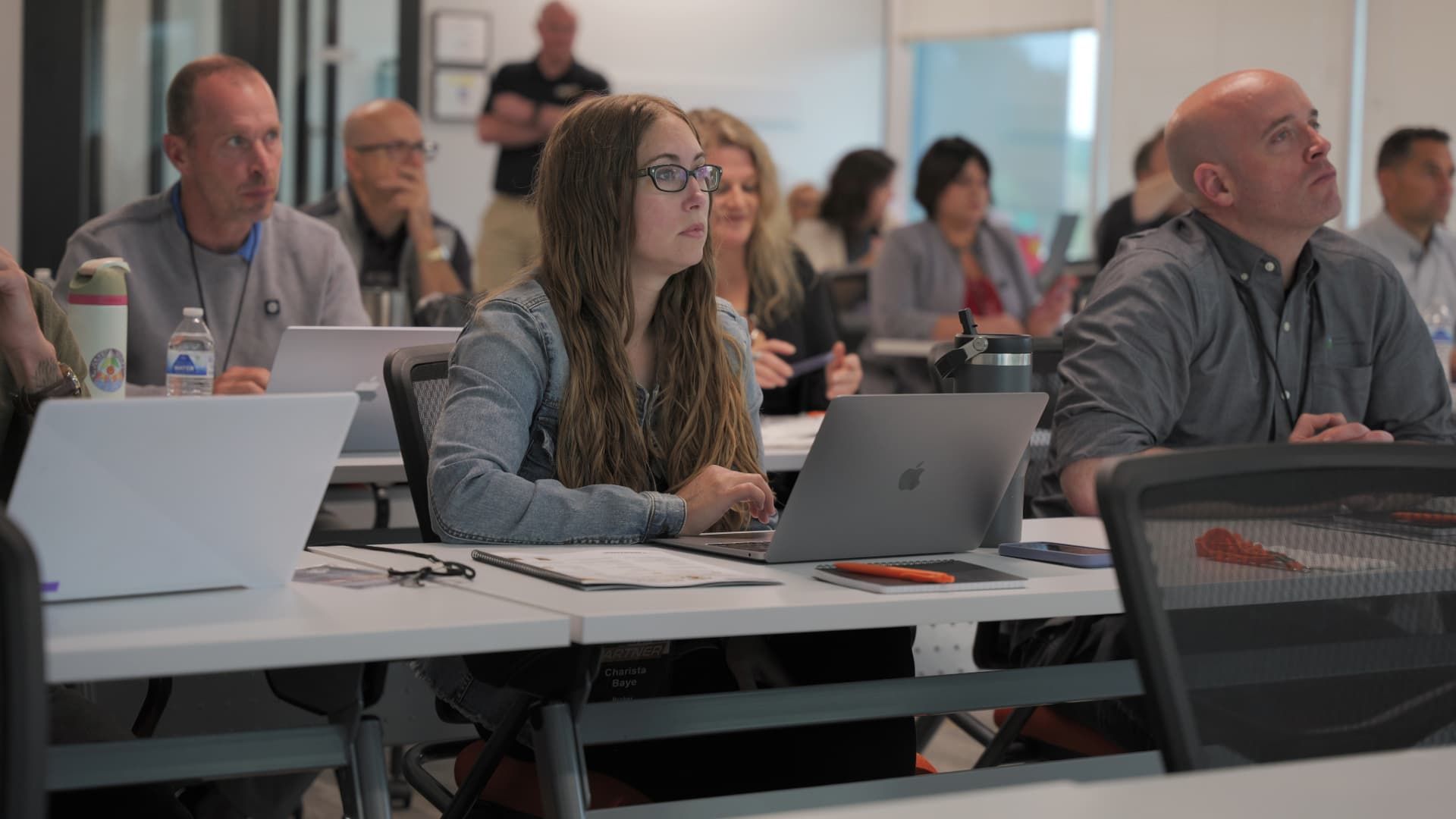
Each restaurant must maintain two Certified Leaders; one may be the franchisee or a designated representative. Certification typically occurs 30–60 days before opening and follows the SMILE Leadership curriculum—an intensive six-week sequence at ~45–50 hours per week combining IHOP Academy e-learning with hands-on training in a working restaurant. If a Certified Leader is later replaced, retraining fees may apply*.
Initial Opening Training (NRO).
For launch, IHOP assigns an NRO training team calibrated to your projected sales and staffing. Trainers typically support the restaurant for up to three weeks around opening to stabilize kitchen flow, service choreography, and guest experience. The Opening Training Support Fee is currently $0–$65,000*, depending on trainer count and schedule. Onboarding, coursework, and assessments run through IHOP Academy.
Ongoing operations & technology support.
After opening, franchisees receive prototypical plans and specifications, operating procedures, and brand standards manuals. IHOP provides continuing guidance for the approved technology stack—including POS, server tablets and payment devices, KDS, and digital ordering—along with device/security requirements and periodic updates so teams can maintain speed, accuracy, and compliance as systems evolve.
Territory & Site Selection (No Exclusive Territory)
Under the standard IHOP franchise agreement, you do not receive an exclusive territory. The franchisor may approve additional franchisees, operate company-owned units, or use other channels of distribution within or near your market.
Your documents define two important geographic concepts: a Trade Area, which guides development and site selection, and a Franchised Area around a Traditional Venue location that can restrict certain new non-traditional IHOP development within a specified radius. This protection is not equivalent to exclusivity and remains subject to the program’s terms and approvals.*
IHOP assigns a Trade Area under the Single Store Development path and must approve the specific site before you proceed. Non-traditional venues (e.g., airports, travel centers, campuses) operate under separate rules, and approvals for those formats follow their own criteria and availability.*
For new builds, the FDD indicates a typical restaurant footprint of ~2,700–6,000 sq. ft. on a 30,000–60,000 sq. ft. lot, depending on the prototype and market conditions. Prototype options include Inline/Endcap/Conversion and Large-Format designs, with equipment and seating plans calibrated to the chosen layout. IHOP’s official guidance also notes that several formats are supported from ~1,000 to 4,500+ sq. ft., with the optimal size determined by trade area demand, co-tenancy, parking, and throughput expectations.*
Plan for upfront coordination with IHOP on site criteria (ingress/egress, visibility, parking ratios), prototype fit, and any nearby system activity—since network density and non-traditional placements may influence your Franchised Area and long-term growth strategy.
What kind of franchise is IHOP?
IHOP is a full-service, family-dining franchise built around breakfast leadership and an all-day menu. Unlike QSR, the model relies on seated service and coordinated front- and back-of-house operations seven days a week.
Franchisees (or their designated operators) are expected to manage a disciplined restaurant cadence: consistent execution at breakfast, a quick pivot into lunch, a steady dinner period, and—where market demand supports it—late night.
How does the day-to-day work?
Operating model. Guests are greeted and seated by FOH (hosts, servers, bussers) while a line‑driven kitchen fulfills orders flowing POS → tablets → KDS. Emphasis: speed, accuracy, and table turns. Off‑premises (online ordering, delivery, curbside) is integrated via approved tools with a dedicated staging area to protect dine‑in.
Daily rhythm. Mornings: prep, line checks, and pre‑shift huddles. The team rides the breakfast rush, then resets for lunch and dinner. Between dayparts, managers handle ordering and inventory, track labor vs. forecast, verify food‑safety logs, and assign IHOP Academy modules. Close with deep cleaning, cash reconciliation, temperature logs, and a next‑day plan.
Staffing and leadership. Typical team: GM/Certified Leader, assistants/shift leaders, kitchen lead, plus line cooks, prep, dish, servers, and hosts. Each unit keeps two Certified Leaders and cross‑trains broadly; strong operators recruit continually and maintain bench strength tied to guest‑experience goals.
Management focus & KPIs. Core metrics: sanitation compliance, ticket times, guest‑satisfaction, accuracy/voids, food & paper cost, labor %, average check, and table‑turns. Leaders watch POS/KDS dashboards, reconcile variances, and adjust deployment in real time—especially at breakfast.
Marketing & community. Local store marketing—seasonal features, app offers, loyalty, and community partnerships—balances dayparts in coordination with brand marketing.
Owner profile. IHOP favors experienced, well‑capitalized multi‑unit operators able to hire, train, and enforce a seven‑day, compliance‑driven model; semi‑absentee is possible only with a strong GM and tight controls.
Management fit & qualifications. Guidance: $1.5M net worth and $500k liquid per restaurant; maintain two Certified Leaders per unit, with retraining if leadership changes.
Business model & formats: anything unique to note?
IHOP operates a flexible platform with multiple traditional prototypes (freestanding, inline/endcap, and conversions) and a separate non-traditional program for travel centers, campuses, airports, and other high-traffic venues. The non-traditional line is often marketed as IHOP Express or limited-service formats and is governed by distinct program documents and fee structures; confirm the applicable track with the franchisor when you scope a site.
A notable development is Dine Brands’ dual-branded Applebee’s | IHOP model, which places both concepts under one roof. The first U.S. unit opened on February 18, 2025, in Seguin, Texas, featuring two distinct dining areas with a shared, optimized back-of-house and single kitchen to drive daypart coverage from breakfast through late night. Dine Brands has since indicated a broader domestic rollout, with industry coverage highlighting an active pipeline and significant white-space potential for the format. Availability remains market- and program-dependent, so you should verify eligibility and site criteria during validation.
Per IHOP’s 2025 FDD, there were no U.S. dual-brand restaurants operating during fiscal 2024; the Seguin opening and subsequent pipeline reflect the concept’s U.S. launch phase rather than mature deployment. If you are comparing footprints, ask which traditional prototypes are currently approved for your geography and whether dual-brand or non-traditional options fit your trade area, co-tenancy, and throughput targets.
For objective frameworks to compare formats—and to map capital, staffing, and operational complexity across competing brands—visit our Franchise Brokers Association (FBA) Blog for expert guidance and brand-comparison tools.
Comparisons & considerations.
When you compare the IHOP franchise to other family-dining and breakfast-forward systems, focus on four levers: prototype flexibility and capital intensity, labor model and operational complexity, territory dynamics, and brand leverage.
Capital structure & prototypes. IHOP reflects a full-service build with a sizeable kitchen line, dining room, and signage package. Prototype choice—inline/endcap/conversion versus freestanding or large-format—materially affects real-estate, construction, and equipment costs, as well as timeline risk. Inline/endcap sites can compress buildout and speed openings; freestanding sites typically offer stronger signage, parking, and throughput at higher capex. Dual-brand opportunities (where eligible) may expand daypart coverage but add design and coordination complexity.
Labor & operations. Unlike QSR, IHOP relies on seated service with hosts, servers, bussers, dish, line cooks, and managers. The kitchen flow is more intricate than counter-service concepts; approved POS, server tablets, and KDS mitigate ticket times and accuracy but require disciplined deployment and training. Operators should plan for structured pre-shift routines, expo management, and ongoing certification to stabilize service during peak breakfast periods.
Hours & complexity. A multi-daypart, seven-day cadence changes staffing and inventory rhythms compared with breakfast-only brands. Broader menus support mixed occasions but raise prep, smallwares, and quality-assurance demands. Late-night or extended hours (market-dependent) can lift fixed-asset utilization yet require deeper bench strength and tighter controls.
Territory & market dynamics. IHOP does not grant exclusive territories under the standard agreement. Evaluate network density, nearby system activity, and the Franchised Area provisions that limit certain non-traditional placements around your site. Your trade area’s co-tenancy, parking ratios, and ingress/egress will influence table turns, off-premises staging, and future development options.
Brand leverage. IHOP’s household recognition and all-day menu can aid awareness and demand balance across breakfast, lunch, and dinner. Local execution still matters: community marketing, digital offers, and delivery integration shape mix and margins. Where available, dual-brand configurations may broaden reach by pairing breakfast leadership with casual-dining traffic, but they require careful site selection and capital planning.
How to use this in selection. If you favor lower staffing, streamlined menus, and shorter build cycles, a fast-casual or QSR breakfast concept may suit you better. If you want brand equity, multi-meal demand, and table-service economics, IHOP fits operators prepared for higher capex, fuller org charts, and rigorous training.
For a structured side-by-side with breakfast leaders, 24-hour diners, and broader family-dining peers—mapping capital, staffing, hours, technology, and territory—visit our Franchise Brokers Association (FBA) Blog for objective frameworks, and connect with an FBA advisor to discuss trade-offs brand by brand. This analysis is educational, not an earnings claim. Always rely on the current FDD and qualified advisors.
FAQ.
How much does it cost to open an IHOP?
According to the 2025 FDD (Item 7), the total estimated initial investment for a new build ranges from $1,751,798–$5,222,865, depending on the approved prototype. A separate Purchase Program for certain affiliate takeovers ranges from $380,550–$3,735,850. IHOP separates estimates by Inline/Endcap/Conversion, 2,700-sq-ft, Large-Format, and Dual-Brand concepts; your final budget depends on site conditions, scope, equipment package, and opening support needs.
What kind of franchise is IHOP?
IHOP is a full-service, family-dining restaurant with breakfast leadership and a broad all-day menu. The model relies on seated service with standard FOH/BOH staffing and table service, supported by POS, tablets, and a Kitchen Display System to manage speed and accuracy across breakfast, lunch, and dinner.
Who owns IHOP and when was it founded?
IHOP is part of Dine Brands Global. The first International House of Pancakes opened in 1958 in Toluca Lake, California, founded by Al and Jerry Lapin with early investors Al and Trudy Kallis. Franchisor programs and corporate relationships appear in Item 1 of the FDD.
What training and ongoing support are provided?
Franchisees complete Certified Leader Training (approximately six weeks) and receive Initial Opening Training with NRO teams. IHOP administers e-learning through IHOP Academy and supplies brand standards and operations guidance. Staffing levels and timelines align with your opening plan, and certain training and technology fees apply per the FDD (e.g., an Opening Training Support Fee currently $0–$65,000 and POS support $9,000 onsite/$3,500 remote per Item 7).
What makes IHOP different from similar franchises?
The brand pairs strong breakfast equity with a multi-meal, all-day platform, multiple prototypes to fit varied real estate, and a national marketing engine. Dine Brands has also introduced dual-brand Applebee’s | IHOP restaurants in select markets; availability remains program- and market-dependent.
What is the ideal owner profile for IHOP?
IHOP favors well-capitalized, multi-unit operators with the capability to develop and staff multiple locations. Current guidance often cites a minimum net worth of $1.5 million and $500,000 in liquid assets per restaurant (development-dependent). The checklist emphasizes experience in real estate, development, supply chain, quality assurance, and marketing, plus infrastructure to execute multi-unit growth and maintain two Certified Leaders per unit.
Is IHOP the right fit for you?
If you’re evaluating full‑service, family‑dining brands, IHOP offers strong name recognition, defined training, and multiple build formats. In return, expect higher capex, a deeper staffing bench, and disciplined seven‑day operations. With no exclusive territory, careful market planning is essential—consider network density, trade‑area demand, and nearby non‑traditional placements.
IHOP best fits multi‑unit operators who can recruit and retain teams, run FOH/BOH choreography, and manage to metrics (ticket times, guest satisfaction, food & labor). Community and digital marketing help balance breakfast, lunch, and dinner.
Fit indicators
- You plan multi‑unit development with capital, real‑estate pipeline, and leadership in place.
- You’re comfortable with sit‑down operations: structured training, certification, and required tech (POS, tablets, KDS, digital ordering).
- You value brand equity and a multi‑meal platform over the lighter builds typical of QSR.
Caution flags
- You need exclusive territory, ultra‑low capex, or a minimal staffing model.
- You prefer a narrow menu or single day‑part operation.
- You can’t commit to development, opening, and maintaining two Certified Leaders per unit.
If this profile fits—and you want a side‑by‑side of national breakfast and family‑dining brands—we can help map trade‑offs and market availability. Start with us today and you can explore franchise opportunities and get guidance on options that match your goals.