


If you have been researching beauty service franchises, chances are the Hello Sugar Franchise has come up on your list. It is one of the faster-growing waxing and sugaring concepts in the country, and it comes with a business model that looks quite different from the traditional salon franchise you might be picturing.
Hello Sugar is a waxing, sugaring, and optional laser hair removal franchise with a business model built around centralized marketing, AI-assisted reception, and a two-stage growth path that lets owners start lean and scale on their terms.
Startup costs range from roughly $90,984 to $736,250* depending on format, no beauty experience is required, and the system is designed for owners who want to lead a team rather than perform services themselves.
This review will walk you through everything a prospective owner needs to evaluate: what the business model involves, what it actually costs, how the franchisor supports you, how territories and real estate work, who tends to thrive in this system, and how Hello Sugar compares to similar concepts. By the end, you will have a clear picture of whether this franchise deserves a spot on your shortlist.
If this concept interests you, the FBA can connect you directly with the brand and help you evaluate whether it is the right fit — fill out this short form to receive expert guidance at no cost.
This article is sponsored by Hello Sugar and was created in partnership with the brand to provide accurate, compliance-safe information about its business model and franchise opportunity.
Nothing in this article should be considered legal, financial, or tax advice. Prospective franchisees should always review the most recent Franchise Disclosure Document (FDD) with qualified advisors before making an investment decision.
Key facts at a glance of the Hello Sugar Franchise.
Hello Sugar is a fast-scaling beauty services franchise with a dual-format model — suite and flagship — and a strong emphasis on automation, centralized support, and multi-unit growth potential for the right owner.
- Founded: 2015 corporate operations; franchising began 2021.
- Headquarters: Mesa, Arizona.
- System size: 233 total units as of December 31, 2024 — 215 franchised, 18 corporate.
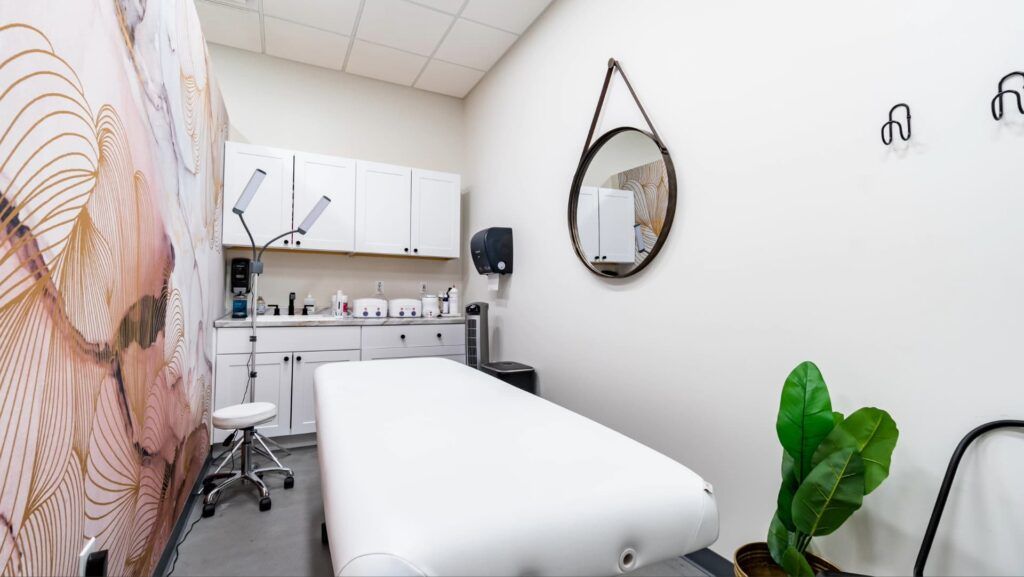
- Business model: Suite incubator locations (~110 sq. ft.) and larger flagship salons (~1,200 sq. ft.).
- Services: Waxing, sugaring, and optional laser hair removal.
- Owner profile: Semi-passive potential after ramp-up; average franchisee reportedly owns 2.2 units.
- Training: 57–99 hours initial training plus ongoing certifications through Hello Sugar University.
- Recognition: Top New & Emerging Franchise — Entrepreneur (2023); Entrepreneur Franchise 500 (2024–2025).
About Hello Sugar: what is this franchise and how did it start?
Hello Sugar did not begin as a franchise. The brand spent several years operating its own corporate salon locations starting in 2015, testing the service model, refining its technology tools, and building out the client acquisition playbook before opening the system to outside owners in 2021. That runway matters — it means the franchise launched with real operational data behind it rather than projections alone.
The concept combines a membership-based personal care salon with a technology-driven support infrastructure. Clients come in through a freemium introductory offer, convert into recurring members, and stay through a loyalty program managed by centralized software. The goal is to reduce what typically makes salons hard to scale: inconsistent front-desk operations, unpredictable marketing results, and owner dependence on individual technicians.
Supporting the system is a network of affiliated companies, each handling a specific function — digital advertising, off-site reception, product supply, laser certification, and a separate injectables brand. Understanding this structure is important during due diligence, as some fees and required purchases flow through these related entities.
How much does it cost to open a Hello Sugar franchise?
The total investment depends heavily on which format you choose. A suite location — a small, single-room setup inside an existing salon building — sits at the lower end of the investment spectrum. A flagship salon is a larger, fully built-out space with multiple treatment rooms, more visibility, and a higher construction cost. Both formats operate the same core service model; the difference is scale and capital required.
The 2025 FDD outlines estimated startup investment ranges for both formats. These figures include the franchise fee, buildout, equipment, inventory, training travel, software subscriptions for the first three months, and an initial working capital reserve.
If you want to model how these numbers compare to other franchise options before committing, the FBA’s franchise financial calculator is a free tool built specifically for that purpose.
| Type of Expenditure | Low Amount* | High Amount* |
|---|---|---|
| Initial Franchise Fee* | $50,000 | $50,000 |
| Furniture, Fixtures and Equipment* | $21,630 | $33,479 |
| Laser Equipment (Optional)* | $0 | $6,000 |
| Build-Out Costs* | $93,349 | $377,662 |
| Miscellaneous* | $500 | $21,363 |
| Contractor* | $11,255 | $45,319 |
| Initial Inventory* | $28,074 | $48,668 |
| Rent* | $8,000 | $27,000 |
| Software Fees (3 Months)* | $2,609 | $4,734 |
| Grand Opening Advertising* | $5,000 | $10,000 |
| Insurance* | $1,400 | $7,000 |
| Training Expenses* | $13,200 | $15,000 |
| Building Signage* | $6,500 | $8,500 |
| Professional Fees* | $1,500 | $4,000 |
| Business Management System* | $0 | $7,500 |
| Construction Management* | $0 | $15,000 |
| Design / Architecture / Engineering* | $8,000 | $15,000 |
| Permit Management* | $0 | $4,000 |
| Site Survey* | $0 | $6,000 |
| Additional Funds (3 Months)* | $15,000 | $30,000 |
| TOTAL* | $266,042 | $736,250 |
For the suite model, the 2025 FDD discloses a total estimated initial investment of $90,984 to $127,914*, reflecting the smaller footprint and significantly reduced buildout scope.
Important context: These figures reflect startup and early operating needs only. They do not indicate financial performance or outcomes.
What tends to move the total up or down?
The investment ranges are wide for a reason. Several factors can push your all-in number toward either end of the spectrum:
- Format choice is the single biggest driver — suites cost a fraction of a flagship buildout.
- Local construction costs vary widely; labor rates and landlord contributions can shift the buildout line item significantly.
- Optional laser services add equipment and training costs if you choose to offer that service line.
- Professional services like architects and project managers raise soft costs but can reduce timeline and execution risk.
- Working capital preferences — some owners budget more than the disclosed three-month minimum for additional peace of mind.
- Multi-unit development adds area development fees on top of the per-unit investment. The FDD discloses development fees of $95,000 for 2 units, $135,000 for 3 units, and $175,000 for 4 units.*
Hello Sugar Ongoing & Recurring Fees.
The fees below represent the most material ongoing obligations a Hello Sugar franchisee should plan for, selected from Items 5 and 6 of the 2025 FDD.
| Fee | Rate / Amount* | When Due | Notes |
|---|---|---|---|
| Royalty Fee* | 6% of Gross Revenue | Monthly | Core ongoing fee paid to the franchisor. |
| Brand Fund* | 1% of Net Revenue | Monthly | Contributes to system-wide brand marketing. |
| Reception & Customer Experience Fee* | $3.25 per serviced appointment* | Monthly | Covers off-site AI-assisted reception services. Capped at no more than 10% of the current non-member Brazilian female wax price. |
| Ad Management Fee* | $7.50 per completed appointment (new clients)* | Monthly | Paid to affiliated agency Dallas Media for new client acquisition campaigns. |
| Email & Text Remarketing Fee* | $3.50 per completed appointment (reactivated clients)* | Monthly | Covers re-engagement campaigns for lapsed clients. |
| Local Marketing Minimum* | $350/month minimum* | Monthly | Franchisee-managed local digital and non-digital advertising spend. |
| Technology Fee* | $75/month* | Monthly | Access to the franchisor’s proprietary booking and management platform. |
| Software / Email & Text Fee* | ~$60/month* | Monthly | Point-of-sale, accounting, messaging, and other software. |
| Initial Training Fee* | $5,250 (Suite) / $10,500 (Flagship)* | Before opening | Covers franchisor-provided on-site esthetician training prior to opening day. |
| Additional Training Fee* | Equal to Initial Training Fee* | As needed | Required for estheticians hired after opening day. |
| Renewal Fee* | $2,500* | At renewal | Due at each 5-year renewal; no new initial franchise fee required. |
| Late Bookkeeping Fee* | $200 per occurrence* | As incurred | Charged when monthly reconciliation is submitted late. |
| Construction Management & Oversight Review Fee* | $250/hour* | During flagship buildout | Waived if franchisee uses a franchisor-approved third-party construction management service. |
| Relocation Fee* | $500 + review costs* | If applicable | Due if franchisee requests to relocate the approved business location. |
What is Hello Sugar’s business model, and what do operations look like day to day?
Understanding the cost is only part of the picture. Equally important is knowing what the business actually involves — and whether that operational reality fits the kind of owner you want to be.
Hello Sugar is built around three things working together: a focused personal care service menu, a technology-driven client acquisition system, and a membership model that keeps clients coming back on a schedule. This combination is designed to make the business more predictable and less dependent on walk-in traffic or one-off appointments.
The core model elements:
- Focused service menu: Waxing, sugaring, and optional laser hair removal — specialized rather than full-service, which keeps operations clean and training focused.
- Suite-to-flagship pathway: Owners can start small in a suite, validate the market, and expand into a flagship when the business is ready. The FDD confirms that once a suite is approved to upgrade, the franchisee must open the flagship within 12 months of approval.
- Freemium client acquisition: New clients come in through a complimentary or discounted first service and are converted into members during or after that visit.
- Membership-driven retention: Monthly memberships create recurring revenue and make client scheduling more predictable over time. Memberships offer clients savings of up to 20% and build long-term loyalty.
- Centralized advertising: Dallas Media handles digital ad campaigns for franchisees — owners are not expected to manage their own paid media independently.
- AI-assisted, off-site reception: Booking, reminders, and membership inquiries are handled by automated tools and off-site staff, automating approximately 66% of traditional front-desk tasks and reducing the need for a dedicated on-site receptionist.
What does a typical day look like for an owner?
Most Hello Sugar owners are not in the treatment room. Their role is closer to a general manager — overseeing people, tracking key metrics, and coordinating with the franchisor’s support teams. A typical day might include:
- Opening huddles with estheticians to align on bookings, membership goals, and daily promotions.
- Reviewing dashboard data on appointment volume, membership growth, client retention, and online reviews.
- Checking treatment rooms for hygiene compliance and service consistency.
- Handling hiring, coaching, or scheduling adjustments as needed.
- Following up on local outreach — nearby businesses, community events, or review responses.
- Coordinating with corporate support on any marketing, HR, or operational questions that arise during the week.
The day-to-day is people-focused and metrics-driven. Owners who prefer hands-on technical work over team leadership tend to find the model less fulfilling than those who enjoy building and managing a high-performing team.
What training, support, and technology does the franchisor provide?
A franchise is only as good as the support behind it. Hello Sugar has structured its system around the idea that the franchisor handles what is hardest to build independently — marketing, technology infrastructure, training, and reception operations — while the franchisee focuses on execution and local leadership.
Before evaluating any franchise’s support claims, it helps to understand what strong franchisor support looks like across the industry. The FBA’s free franchise webinar series covers this in depth and can help you ask sharper questions when you enter discovery with any brand.
Support & Systems Overview.
| Area | What You Get |
|---|---|
| Initial training | 57–99 hours across operations, service standards, sales, and technology — classroom, on-the-job, and remote formats. |
| On-site launch support | Franchisor trainers travel to your location to certify your esthetician team and support your opening day. |
| Ongoing education | Hello Sugar University provides an on-demand course library and annual recertifications to keep staff skills current. |
| Laser training | The National Institute of Laser Aesthetics (NILA) provides laser certification for franchisees who opt into that service line. |
| Marketing support | Dallas Media manages all digital advertising, lead generation, and campaign optimization on behalf of franchisees. |
| Technology | A receptionless booking platform, AI-powered KPI dashboards, and a client mobile app managing scheduling, memberships, and loyalty rewards. |
| HR and recruiting | Franchisor playbooks guide a structured multi-round interview process for hiring estheticians, along with onboarding resources. |
| Operations | Detailed operations manuals, SOPs, and regular coaching calls to support consistent brand execution. |
| Bookkeeping | Franchisees use QuickBooks and must grant the franchisor admin-level access to their account monthly. |
A few additional details worth confirming during discovery:
- Site selection guidance is available to help evaluate potential locations before signing a lease.
- Financing assistance may be available for qualified candidates — confirm specifics directly with the franchisor.
- Grand opening support is built into the model, with a coordinated launch marketing push from the corporate team.
- System modifications can be made by the franchisor at any time via the Operations Manual, and franchisees may be required to cover the costs of implementing those changes.
What should you confirm during due diligence?
Support programs can look impressive on paper and vary in practice. Before signing, these are the questions worth pressing on:
- How are ad budgets and local campaigns customized to your specific market, and what input do you have in that process?
- What does field support look like in year one versus year two or three?
- Which technology fees are mandatory, and how do they change as you add locations?
- How are service quality and brand standards enforced if a location falls out of compliance?
- What do current franchisees say about response times when they need help?
Reaching out directly to franchisees listed in Item 20 of the FDD is one of the most valuable steps in any franchise evaluation. The FBA’s franchise consulting team can also help you prepare the right questions and structure your discovery process before you sit down with the brand.
How do territories, real estate, and equipment requirements work?
Before you sign any franchise agreement, three physical and operational questions deserve careful attention: where you are allowed to operate, what kind of space you will need, and what it takes to equip the business. For Hello Sugar, the answers vary depending on which format you choose and how aggressively you plan to grow. Here is what the 2025 FDD discloses on each point.
Territory protection.
Hello Sugar grants a defined protected territory with each franchise agreement — defined as the lesser of a 60,000-person population area or a 2-mile radius around the approved location. Within that territory, the franchisor limits the placement of other Hello Sugar units, provided the franchisee remains in good standing under the agreement.
However, the FDD makes clear that the franchisor retains certain rights within your territory. These include providing competitive services through alternative distribution channels, establishing locations in captive venues such as hotels, airports, or college campuses, and making acquisitions of similar businesses. Reviewing these carve-outs carefully with a franchise attorney before signing is strongly recommended.
For multi-unit growth, franchisees can enter into an area development agreement covering a larger defined Development Area with a unit-opening schedule. Development fees are $95,000 for 2 units, $135,000 for 3 units, and $175,000 for 4 units.*
Real estate profile.
The real estate requirements differ meaningfully between formats:
- Suite locations are compact single rooms inside shared salon-suite buildings — minimal buildout, limited exterior visibility, but fast to open and low on construction risk. The suite phase is specifically designed to validate demand before committing to a larger space.
- Flagship locations are larger branded salons — typically in neighborhood or lifestyle retail centers — with multiple treatment rooms, a reception area, and exterior signage opportunities.
Site selection assistance is available from the franchisor, which can be helpful when evaluating traffic patterns, co-tenancy, and lease terms. Engaging an independent commercial real estate advisor familiar with personal services retail is also a sound step before committing to any location. The FDD notes that franchisees must continue operating their suite throughout the flagship buildout period and only close the suite once the flagship is ready to open.
Equipment requirements.
For a standard waxing and sugaring location you will need treatment tables, wax stations, salon fixtures, and consumables — sourced through approved vendors including the affiliated Salon Wax Supplies. If you choose to offer laser hair removal, additional devices and NILA certification for your staff are required. Point-of-sale hardware compatible with the franchisor’s software platforms is required across all formats. No vehicles are needed — all services are performed on-site.
Territory, real estate, and equipment are ultimately operational commitments that live alongside your financial ones. Getting clarity on all three — ideally with a franchise attorney reviewing your agreement and an FBA broker helping you compare the full picture — puts you in the strongest possible position before you make any final decision.
If you want to explore how Hello Sugar’s physical and operational requirements stack up against similar concepts, the FBA’s franchise consulting team can walk you through that comparison at no cost.
Who is the ideal Hello Sugar owner, and what time commitment does it take?
Hello Sugar is not designed for someone who wants to perform services behind a wax table. It is designed for someone who wants to build and manage a team, follow a proven playbook, and grow into multiple locations over time. The brand describes its ideal owner in four clear categories.
- Relationship builder. Hello Sugar thrives with owners who genuinely enjoy developing people. Estheticians are the face of the business, and client relationships drive membership retention. Your ability to recruit, motivate, and develop your team directly shapes how the location performs.
- Systems thinker. The model is built around established processes — proprietary technology, marketing playbooks, and operational SOPs. Successful franchisees lean into these systems rather than working around them. If you prefer building your own approach from scratch, this model may feel constraining.
- Growth-oriented entrepreneur. The average Hello Sugar franchisee owns 2.2 locations, and 100% of current franchisees reportedly express interest in opening additional units. The brand is oriented toward multi-unit operators who view the initial suite as Phase 1 of a larger portfolio — not as a single-location lifestyle business.
- Operational delegator. Once a location matures, the franchisor estimates that owner involvement can drop to approximately 10 hours per week, provided a strong manager is in place. This makes Hello Sugar appealing to owners who want to manage the business rather than work in it daily — though the early months will require significantly more hands-on time.
If you are not sure whether this owner profile matches your own strengths and work style, the FBA’s Zorakle franchise assessment is a practical tool for identifying which business models align with how you naturally lead and operate.
How does Hello Sugar compare to similar franchise options?
Hello Sugar occupies a specific niche in the beauty services franchise space. Understanding how it differs from other concepts helps prospective owners place it correctly in their evaluation process.
- Service scope. Hello Sugar is positioned as the only franchise offering waxing, sugaring, and optional laser hair removal under one roof. Most competitors focus on a single modality — typically waxing alone. This broader service menu expands the addressable client base and allows for higher average ticket values, though it also adds operational and regulatory complexity if laser is chosen.
- Entry path flexibility. The suite-to-flagship model is a genuine differentiator. Many competing beauty service franchises require a full retail buildout from day one, committing franchisees to the higher end of the investment spectrum immediately. Hello Sugar’s suite option allows owners to enter at roughly one-sixth the cost of a flagship and prove the concept before scaling.
- Marketing model. The done-for-you advertising structure removes a significant burden that many franchise owners underestimate. Managing digital ad spend, conversion optimization, and local targeting is time-consuming and expensive to learn independently. However, it also means franchisees have limited control over how their local marketing dollars are spent — a trade-off worth understanding clearly before committing.
- Technology emphasis. The proprietary booking platform, KPI dashboards, and client app are more developed than what most personal care franchises offer. Owners who are comfortable with technology-driven operations will find the infrastructure genuinely useful. Those who prefer simpler systems may need an adjustment period.
- Staffing model. Like all personal services franchises, Hello Sugar is labor-intensive. The difference is that the receptionless model and centralized marketing reduce two of the most common staffing pain points — front-desk turnover and owner time spent on advertising. However, recruiting and retaining skilled estheticians in a competitive labor market remains an owner responsibility that should not be underestimated.
For a broader comparison of beauty and personal care franchise options across different investment levels and operational models, the FBA’s FranPath Live program walks prospective owners through a structured evaluation process that includes side-by-side concept comparisons.
Frequently asked questions about the Hello Sugar franchise.
1. What makes Hello Sugar different from other waxing franchises?
Hello Sugar is the only franchise offering waxing, sugaring, and optional laser hair removal under one roof. It also combines a suite-to-flagship growth path, 100% done-for-you digital advertising, and AI-assisted off-site reception — reducing overhead and front-desk staffing needs that most competing concepts still require owners to manage independently.
2. How much does it cost to open a Hello Sugar franchise?
The 2025 FDD discloses an estimated initial investment of $90,984–$127,914* for a suite and $266,042–$736,250* for a flagship, including the franchise fee, buildout, equipment, inventory, training, and three months of working capital. The franchisor requires a minimum of $150,000 in liquid capital and a net worth of $500,000–$750,000.*
3. Can I own a Hello Sugar franchise without beauty industry experience?
Yes. Hello Sugar provides 57–99 hours of initial training through Hello Sugar University plus ongoing staff certifications, specifically designed for owners coming from outside the beauty industry. The role is focused on team leadership and business management — not performing services. All estheticians must meet applicable state licensing requirements.
4. How does the suite-to-flagship model actually work?
Franchisees start with a low-cost suite location to build membership and validate local demand. Once approved to upgrade, they have 12 months to open their flagship — and must keep the suite operating throughout the entire buildout period. The suite then closes once the flagship is ready to open.
5. What ongoing fees should I plan for before signing?
The key recurring costs are a 6% royalty on gross revenue, a 1% brand fund contribution, a $3.25 per-appointment reception fee, a $7.50 per-appointment ad management fee for new clients, a $75/month technology fee, and a minimum local advertising spend of $350/month. Additional training fees apply each time new estheticians are hired after opening day.
Is Hello Sugar the right fit for you?
By this point, you have a clear picture of what the business involves. The question is whether it matches your goals, your operating style, and your financial position.
Hello Sugar tends to be a strong fit for owners who:
- Want a structured, marketing-supported business rather than building a beauty brand from scratch.
- Are comfortable leading and developing estheticians and view team culture as a competitive advantage.
- Are interested in multi-unit growth and see the suite as a starting point, not a destination.
- Appreciate a technology-forward operating model and are comfortable working within a defined system.
- Have the financial profile the model requires — a minimum of $150,000 in liquid capital and a net worth of $500,000–$750,000.*
You may want to proceed cautiously or explore alternatives if you:
- Prefer full control over marketing and how your local advertising dollars are spent.
- Are uncomfortable with the intimate nature of the services or with managing compliance in a personal care regulatory environment.
- Want a solo or minimal-staff operation rather than a team-based service business.
- Are not prepared for the lease and buildout obligations associated with the flagship format.
Hello Sugar is part of the FBA portfolio, which means FBA brokers work directly with the brand and can walk you through the discovery process, help you ask the right questions, and compare Hello Sugar against other concepts at a similar investment level — all at no cost to you.
Ready to take the next step? The Franchise Brokers Association is here to help guide you on your journey into the franchise world. Explore your options at: fill out this short form to receive expert guidance at no cost.