


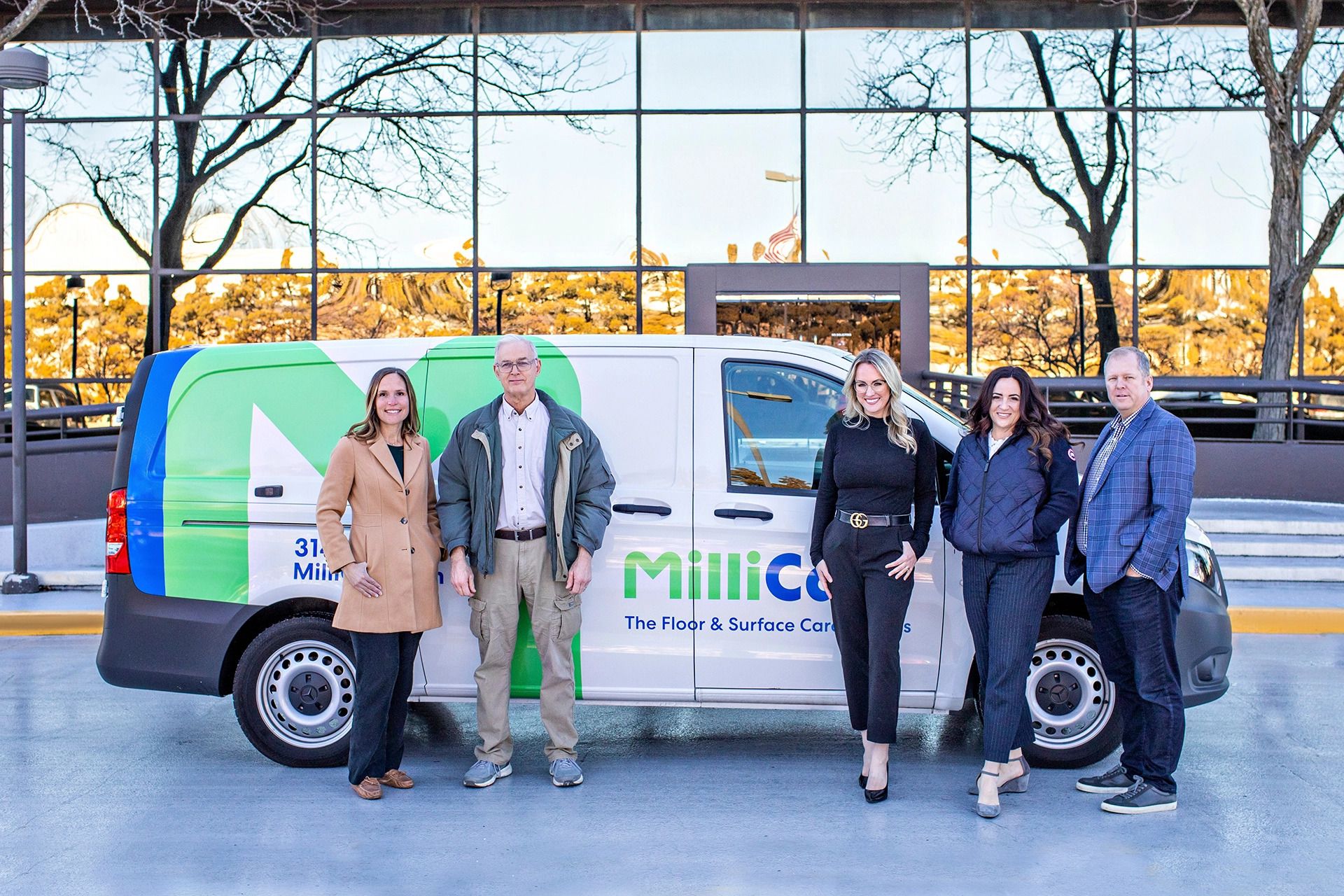
The MilliCare franchise is a B2B floor and surface care system focused on Class A commercial facilities, operating through contracted, scheduled maintenance services.
This MilliCare franchise review explains the 2026 FDD costs, operations, training, territory structure, and ideal owner profile so prospective franchisees can assess fit and prepare focused due diligence questions.
The franchise offers a commercial floor and surface care business that serves office, industrial, and other non-residential properties using a scheduled, contract-based B2B model, working primarily with facility managers and similar decision-makers rather than residential customers.
This article is sponsored by MilliCare and was created in partnership with the brand to provide accurate, compliance-safe information about its business model and franchise opportunity. Nothing in this article should be considered legal, financial, or tax advice. Prospective franchisees should always review the most recent Franchise Disclosure Document (FDD) with qualified advisors before making an investment decision.
Key Facts at a Glance.
- Founded year: 1984 (MilliCare brand origins; franchising in prior corporate structures began before current franchisor).
- Headquarters: Orlando, Florida (6700 Forum Drive, Suite 150).
- Unit count / footprint: As of December 31, 2025, 48 U.S. franchises and 9 international franchises.
- Business model: B2B commercial floor, textile, and surface care for non-residential properties (Class A offices, commercial and industrial facilities).
- Owner profile snapshot: Executive or sales-oriented leader managing a lean team of technicians and focusing on B2B relationships and account management.
- Training highlight: Initial training program plus a structured 60–90 day onboarding process and access to MilliCare Academy.
- Territory note: Franchisees operate within protected territories defined in the franchise agreement and accompanying territory attachments.
Who owns MilliCare, and how did the brand get started?
MilliCare is franchised by MilliCare Franchising, LLC, a Delaware limited liability company backed by EverSmith Brands, whose ultimate ownership traces to investment funds managed by The Riverside Company. The MilliCare brand dates back to the 1980s, evolving from an internal division of Sylvan Chemical Co. and subsequent entities into today’s dedicated B2B floor and textile care franchise.
According to the 2026 FDD, MilliCare Franchising, LLC was formed in 2022 and operates from Orlando, Florida. The business began as a division within Sylvan Chemical Co. in the late 1960s and later operated through Milliken Services, LLC before MilliCare, Inc. acquired the franchise system’s assets in 2021. EverSmith Brands, a franchise platform company, serves as MilliCare’s parent and is ultimately controlled by investment funds managed by The Riverside Company.
Over time, the brand expanded from textile and carpet care into tile and grout, performance coatings, and related interior surface services. MilliCare emphasizes WELL and LEED-related cleaning processes and has built relationships with facility-management associations like IFMA and ALA to support national accounts. As of the latest disclosure, MilliCare does not operate company-owned outlets but manages a network of franchised territories across North America.
How much does it cost to open a MilliCare franchise?
Based on the 2026 MilliCare FDD, the estimated initial investment to open a MilliCare Floor Textile Care business ranges from approximately 201,000 to 253,000, including an initial franchise fee that is part of that total. The investment covers fees paid to the franchisor as well as buildout, equipment, working capital, and other startup costs.
Startup Costs & Fees*
| Category | Low Estimate | High Estimate |
|---|---|---|
| Initial Franchise Fee | 49,000* | 49,000* |
| Training / Travel | 2,500* | 5,000* |
| Equipment / Materials / Marketing Kit | 47,500* | 57,500* |
| Rent (first 3 months) | 1,000* | 7,500* |
| Tenant Improvements | 1,000* | 7,000* |
| Vehicle Expenses (3 months) | 5,000* | 8,000* |
| Computer Equipment, Phones, and Technology Fees | 2,500* | 4,000* |
| Miscellaneous | 20,000* | 30,000* |
| Local Advertising | 7,500* | 7,500* |
| Working Capital (first 3 months) | 65,000* | 80,000* |
| Total Estimated Initial Investment | 201,000* | 253,000* |
Ongoing Fees & Support.
| Category | Low Estimate* | High Estimate* | Notes |
|---|---|---|---|
| Royalty Fee* | 6%* | 6%* | Standard royalty; FDD notes scaled minimum royalties in early months. |
| Brand/Marketing Fund* | 2%* | 2%* | Contribution to system-wide marketing fund. |
| Local Marketing Spend* | Not disclosed | Not disclosed | Franchisees are typically required to spend a minimum amount locally; exact range not specified in the excerpts. |
| Technology / Software* | 499/month* | 499/month* | Monthly technology fee for systems and platforms. |
| Other Periodic Fees* | Not disclosed | Not disclosed | May include training refreshers, conference fees, insurance, or other operational fees as detailed in Item 6. |
Important context: These figures reflect startup and early operating needs only. They do not indicate financial performance or outcomes.
What tends to move the total up or down?
The total initial investment for a MilliCare franchise tends to move up or down based on real estate decisions, vehicle and equipment choices, staffing plans, and how much working capital a candidate wants to reserve. Because the concept can often be run from a modest office or home-based setup, owner decisions about facilities and fleet size play a major role in the budget.
- Real estate and facilities: Whether you choose a home-based office, small industrial suite, or higher-profile office space affects leasehold improvements, rent deposits, and utilities.
- Local labor costs: Starting with a larger technician team or higher starting wages will increase early payroll and working capital needs.
- Inventory and supplies: Decisions about stocking more proprietary cleaning products and backup equipment up front versus phasing purchases over time.
- Vehicles and equipment: Purchasing new vans or trucks, customizing vehicle wraps, and acquiring higher-end equipment can raise upfront costs.
- Local marketing choices: Investing early in networking events, association memberships, digital campaigns, and printed materials will influence early marketing spend.
- Working-capital assumptions: Conservative owners may budget more cash for the first 3–6 months to provide a cushion for payroll, fuel, insurance, and other operating expenses.
If you want help stress-testing your assumptions, the FBA’s online franchise financial calculator can be a useful tool for mapping scenarios and planning your franchise budget.
What is MilliCare’s business model, and what does day-to-day operations look like?
MilliCare operates a B2B commercial floor and surface care model that focuses on contracted maintenance programs for non-residential properties, especially Class A office and institutional environments. Franchisees deliver scheduled cleaning and maintenance services using specialized processes and proprietary products designed to support WELL and LEED-related standards.
The franchise’s activity revolves around selling and fulfilling multi-month or multi-year care plans for interior finishes such as carpet, textiles, tile, grout, and other surfaces. The system emphasizes planning and contracting work 12–18 months in advance, which shapes scheduling, crew deployment, and equipment utilization. A dedicated national accounts team also secures regional and national contracts, which are then serviced locally by franchisees in the relevant territories.
Franchisees typically focus on:
- Building and managing relationships with facility managers, real estate and property professionals, and administrators.
- Coordinating service schedules for contracted work, often outside regular business hours to minimize disruption.
- Overseeing quality-control checks and ensuring adherence to brand standards and environmental certifications.
- Managing a lean technician team, vehicles, equipment, and supply inventory.
What does a typical day look like for an owner-operator?
A typical day for a MilliCare owner-operator is centered on leading a small team, managing scheduled work, and staying visible with key B2B accounts rather than performing the technical cleaning work personally. The role blends field oversight, sales and account management, and operational coordination.
- Staffing and team management: Hiring, training, and supervising an average of four or more service technicians and possibly sales or operations staff, using franchisor guidance and playbooks.
- Service delivery and quality checks: Reviewing completed jobs, spot-checking sites, and ensuring services meet MilliCare’s technical and environmental standards.
- Sales activity and customer outreach: Meeting with facility managers, real estate professionals, and administrators, often through IFMA, ALA, or similar associations, to secure and expand accounts.
- Scheduling and logistics: Planning technician routes and shifts around annual care plans and national-account work booked months in advance.
- Local marketing execution: Implementing local prospecting activities such as targeted outreach, networking events, and digital campaigns supported by franchisor-provided content and tools.
- Administrative and reporting rhythms: Reviewing KPIs, managing invoicing and receivables, handling compliance and insurance requirements, and maintaining communication with the franchisor’s support team.
If you want a deeper orientation to what this kind of executive B2B service franchise entails, consider joining a franchise webinar that walks through common structures, expectations, and questions.
What training, support, and technology does the franchisor provide?
MilliCare provides a structured training and support program that combines initial classroom and hands-on instruction with a 60–90 day onboarding process, field coaching, and ongoing access to operational and marketing tools. The brand also leverages EverSmith Brands’ broader infrastructure to support technology, finance, and best practice sharing across its franchise platforms.
Support & Systems Overview.
| Support Area | Details |
|---|---|
| Initial Training | Initial franchise training program, including technical and business topics, delivered via MilliCare Academy and hands-on service training. |
| Ongoing Training | Continuing education, refresher training, and access to existing owner mentorship and site visits. |
| Field Support | Dedicated field-based franchise business managers provide ongoing coaching on operations, sales, and growth. |
| Manuals / SOPs | Operations Manual, sales and marketing playbooks, and standardized service procedures. |
| Technology Platform | CRM and routing/operating software, localized website presence, and lead routing tools. |
| Marketing Support | National accounts division, local sales and marketing playbooks, content libraries, and guidance on B2B prospecting. |
Franchisees typically attend an initial training program and then work through a structured 60–90 day onboarding process guided by a Franchise Success Manager, balancing technical, operations, sales, and marketing setup. This includes exposure to MilliCare Academy resources, on-site service training, and visits with existing owners to observe real-world operations.
In the field, franchise business managers support owners with coaching on territory planning, sales strategies, performance benchmarking, and operational adjustments. Technology tools cover CRM, job scheduling, and lead management, while marketing support includes playbooks, content assets, and guidance on leveraging industry associations and national accounts to build a pipeline.
What should you confirm during due diligence?
Due diligence is essential for understanding how the MilliCare franchise model functions in practice, what support looks like after launch, and how your local market and territory might perform. The FDD provides important baseline information, but detailed conversations and validation calls fill in real-world context.
- How deep and how long is the initial training program, and what does the 60–90 day onboarding timeline look like in practice?
- What does ongoing field support look like after launch, including frequency and format of coaching touchpoints?
- What technology platforms are required, what do they cost over time, and how are updates handled?
- How are territories defined and enforced in Item 12 and the franchise agreement, and what does “protected territory” practically mean for local competition?
- What are the renewal and transfer terms under Item 17, including non-compete obligations and any transfer fees or conditions?
- What assumptions underlie the Item 7 cost estimates, especially for working capital, staffing, and vehicles?
- Is Item 19 financial performance information available in the FDD?
- Can you speak directly with current and former franchisees?
For additional education and live Q&A around due diligence process, you can join FranPath Live, which focuses on franchise evaluation topics from an owner-candidate perspective.
How do territories, real estate, and equipment requirements typically work?
MilliCare franchisees operate within defined territories that are generally protected, focusing on commercial and institutional clients in a specified geographic area. The model can often be run from a modest office or home-based setup, with most capital invested in vehicles and specialized cleaning equipment rather than retail storefronts.
Item 12 of the FDD and the territory attachments describe each franchisee’s protected territory and the franchisor’s rights to operate or license other services. Equipment and vehicles are core to operations and may need to accommodate specialized cleaning methods and branded presentation.
What real estate profile is typical?
MilliCare is generally positioned as a non-retail, B2B service business that does not require a customer-facing storefront. Many operations can be run from a home office or small industrial or flex space used for storage, dispatch, and administration.
The 2026 FDD acknowledges that a separate facility is not always required, particularly for multi-territory operators whose territories are contiguous. The slides and support documents highlight that the business is often characterized as “home-based – build to scale,” suggesting that office or facility needs can be modest early on and expand as the technician team and fleet grow.
If you have specific expectations around office size or location, confirm with the franchisor whether local zoning, insurance, and branding requirements affect the type of property you must secure.
How does territory protection work?
MilliCare grants a Territory defined in the franchise agreement and attached exhibits, often described as a protected territory for the approved services. Within this territory, franchisees have certain rights to serve commercial, industrial, and office customers, while the franchisor reserves broader rights outside those boundaries and for certain account types.
In general franchise practice, a protected territory means that the franchisor will not license another franchisee with the same brand to operate the same services inside your defined area, subject to the specific carve-outs in the agreement. For MilliCare, Item 12 and the territory attachments describe how the territory is defined and any exceptions for national and key accounts.
Candidates should review the territory language, including any provisions allowing the franchisor to serve clients across territories or adjust territory lines, and then clarify these points directly with the franchisor and current owners.
What equipment or vehicles are commonly required?
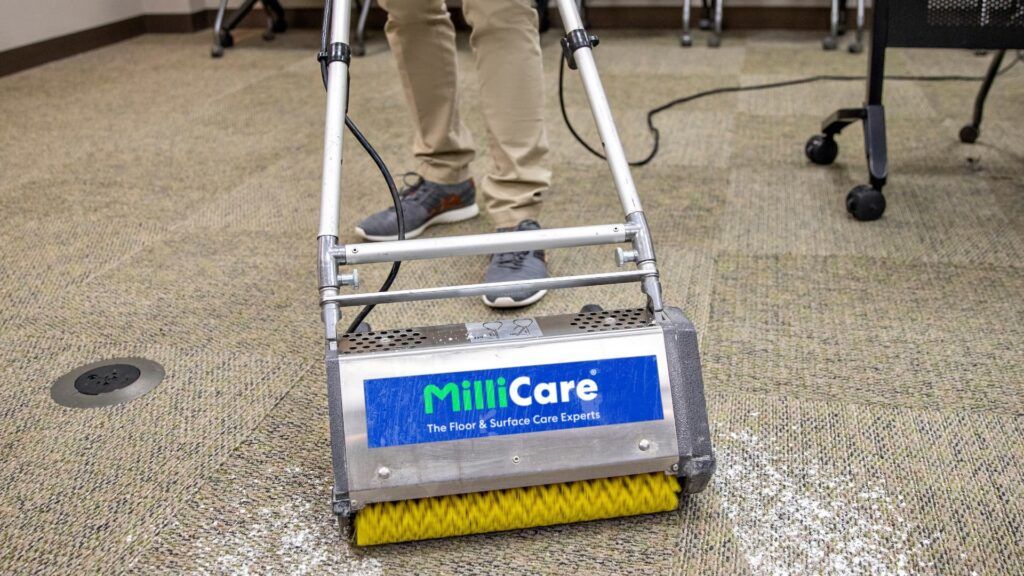
MilliCare franchisees typically need at least one commercial-grade vehicle, such as a van, equipped to transport specialized cleaning equipment, supplies, and technicians to client sites. The brand uses proprietary cleaning products and specialized equipment to deliver services for carpets, textiles, hard surfaces, and entryway protection systems.
Major categories of required equipment and tools may include:
- Commercial-capacity vacuums with HEPA filtration.
- Carpet and textile cleaning systems compatible with MilliCare’s processes.
- Tile and grout restoration tools and related equipment.
- Entryway matting and related protection system components.
- Storage and organization systems for chemicals and supplies.
- Branded vehicle wraps or markings for service vehicles.
Exact specifications, quantities, and vendor requirements are outlined in the Operations Manual and Item 8 of the FDD; these details should be reviewed carefully with the franchisor since they are not fully enumerated in the excerpts here.

Who is the ideal MilliCare owner, and what time commitment is typical?
The ideal MilliCare owner is an executive-style operator with strong leadership, sales, and relationship-management skills who is comfortable managing a B2B service business and a small technician team. The franchise typically expects a full-time commitment from either the franchisee or a designated manager who has completed initial training.
- Leadership and team-management ability: Comfort hiring, coaching, and holding a small team of technicians and sales or operations staff accountable.
- Comfort following systems and processes: Willingness to adopt MilliCare’s playbooks, service standards, and sales processes developed over decades and supported by EverSmith Brands.
- Sales or customer-service aptitude: Ability to communicate value to facility managers, property administrators, and other commercial decision-makers and to nurture long-term relationships.
- Community outreach and local networking comfort: Interest in engaging with associations like IFMA or ALA, attending industry events, and building a referral network.
- Operational discipline and attention to detail: Focus on quality control, scheduling, documentation, and compliance with environmental and brand standards.
- Realistic time commitment: The FDD states that the franchisee or a principal operator must devote full-time and best efforts to managing the business, or else appoint a full-time designated manager with franchisor approval.
If you want an objective view of how your skills and work style match MilliCare’s owner profile, the FBA’s Zorakle fit assessment can help you assess your owner profile against common franchise models.
How does MilliCare compare to similar franchise options?
Compared with many general commercial cleaning franchises, the MilliCare franchise focuses more narrowly on specialized floor, textile, and surface care for higher-end commercial environments, rather than broad janitorial services. It also emphasizes planned, contracted maintenance and national accounts, which may influence the sales cycle and operational rhythms.
- Core product or service focus: MilliCare concentrates on floor and surface care in commercial, industrial, and office properties, not residential cleaning or general janitorial services.
- Operational complexity and staffing model: The model typically uses lean teams of certified technicians, emphasizing technical training and scheduled work rather than large, high-turnover crews.
- Territory approach and protected-area structure: Franchisees operate in defined protected territories, while the franchisor retains rights regarding certain customers and national accounts.
- Service delivery channels: The brand is B2B, mobile, and non-retail, with technicians working at client sites across a territory rather than at a storefront.
- Prior industry experience: Prior floor care or cleaning experience is not required; instead, the brand tends to look for business, operations, and B2B sales backgrounds who can lead teams.
- Training and support depth: MilliCare provides structured onboarding, field-based coaching, and a national accounts division, which differentiates it from smaller or less specialized concepts.
If you want to see how MilliCare stacks up against other B2B service franchises in terms of model, support, and owner role, an FBA consultant can help you explore franchise options and also provide get franchise guidance tailored to your goals and background.
FAQ about the MilliCare Franchise.
How much does it cost to open a MilliCare franchise?
The 2026 MilliCare FDD estimates a total initial investment of approximately 201,000 to 253,000 for a new franchise, including an initial franchise fee. Exact costs depend on factors like vehicles, equipment, local real estate decisions, and working capital needs, so candidates should review Item 7 carefully with advisors.
Do I need prior floor-care or cleaning experience to qualify?
The MilliCare system does not require prior floor-care or cleaning experience; instead, it emphasizes business, operations, or sales leadership backgrounds. Technical expertise is developed through MilliCare Academy, hands-on service training, and ongoing support, while franchisees focus on team leadership and B2B relationship management.
How long is the initial training program?
The FDD describes an initial training program, supported by MilliCare Academy and on-site, hands-on service training, followed by a structured 60–90 day onboarding process led by a Franchise Success Manager. Candidates should confirm exact training length, format, and required attendees for their cohort during the discovery process.
How are territories assigned and protected?
Territories are defined in the franchise agreement and attached exhibits, typically describing a protected territory in which the franchisee may provide approved services to commercial, industrial, and office customers. Item 12 explains how territories are assigned, any exceptions for certain customers, and the franchisor’s reserved rights, which candidates should review and clarify with the franchisor and counsel.
Is Item 19 financial performance data available in the FDD?
The 2026 FDD includes Item 19 financial performance representations based on historical gross billings for selected franchisees. The franchisor may provide financial performance information in Item 19 of the FDD; consult the document with a qualified advisor.
How many MilliCare franchise locations currently operate?
As of December 31, 2025, MilliCare reported 48 franchised territories in the United States and 9 international franchises, with no company-owned outlets. Item 20 of the FDD provides additional detail on openings, transfers, and exits over the prior three-year period.
Is MilliCare the right fit for you?
MilliCare may be a good fit for candidates who want an executive-style, B2B service business and are comfortable leading a small team while building long-term relationships with commercial clients. It may be less suitable for those seeking a retail storefront or a primarily consumer-facing model.
It may be a good fit if you:
- Want to work with facility managers, property professionals, and corporate decision-makers rather than residential customers.
- Enjoy leading and developing a lean technician team and prefer a scheduled, contract-driven operations model.
- Are comfortable with B2B sales cycles, networking, and relationship-based account management.
- Appreciate structured systems, playbooks, and environmental standards such as WELL and LEED-related practices and are ready to follow them.
- Can commit to a full-time management role or appoint a qualified full-time designated manager as required by the FDD.
You may want to be cautious if you:
- Prefer a highly transactional, walk-in retail or consumer-focused business.
- Are uncomfortable with B2B sales, networking, or multi-step proposal processes.
- Are not ready to manage employees or handle scheduling and logistics across a territory.
- Have limited ability or willingness to commit full-time effort during the early years of the business.
- Are seeking informal or loosely structured operations rather than a defined system with brand standards.
If you want to compare this brand with other franchise models, review your fit as an owner, and take a more structured next step, the FBA offers tools, education, and guidance to help you move forward.
Ready to take the next step? The Franchise Brokers Association connects aspiring owners with the guidance, tools, and franchise options they need to make a confident, informed decision. Whether you are still exploring or ready to move forward, explore franchise opportunities with the support of an experienced FBA consultant.