
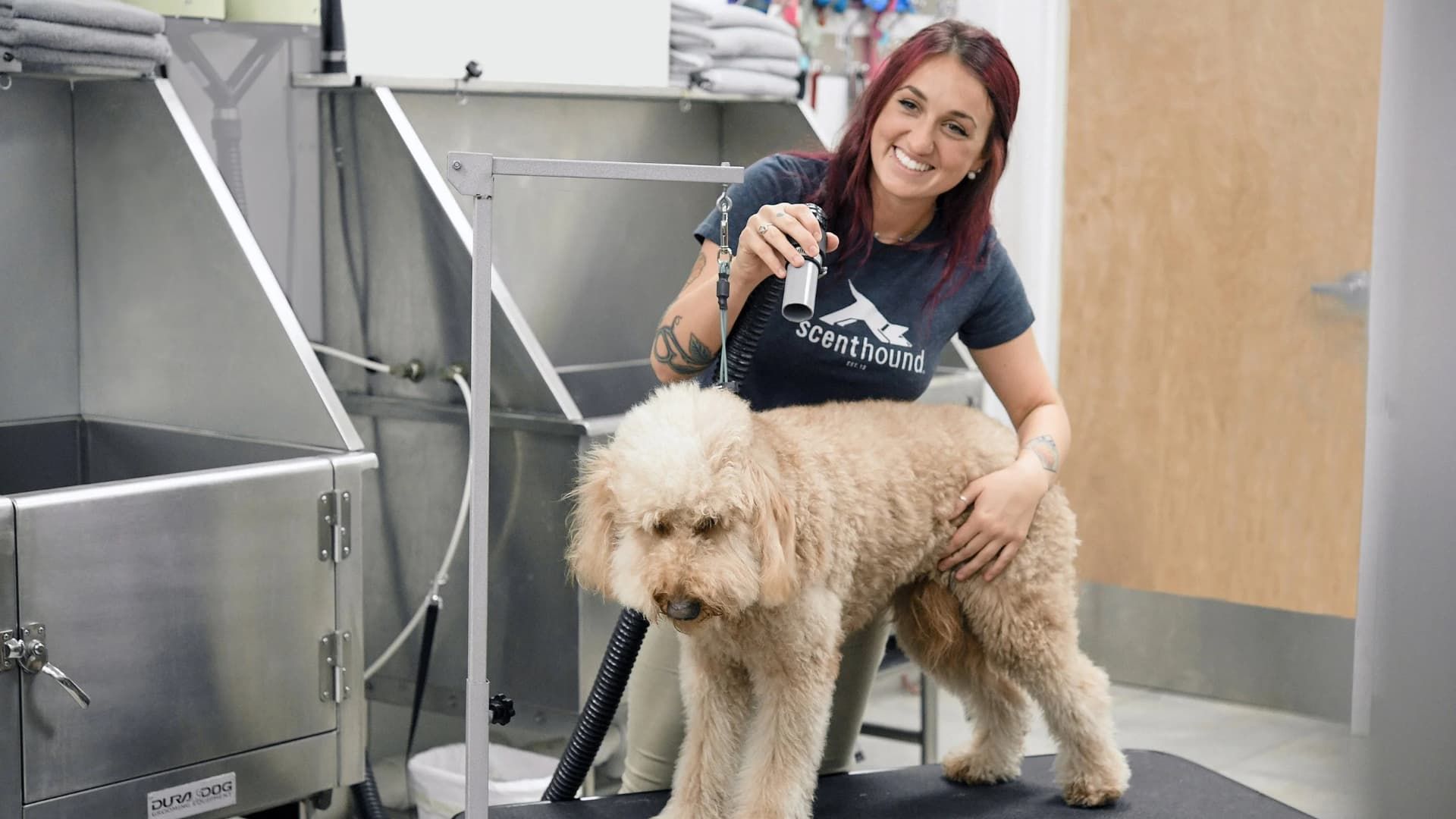
The estimated Scenthound franchise cost to open one Scenter is $322,999 to $550,769, including a $49,900 initial franchise fee, according to Scenthound’s 2026 Franchise Disclosure Document (FDD). Scenthound is a membership-based dog hygiene and wellness franchise that operates small retail locations called Scenters, where customers choose monthly memberships and purchase add-on services as needed.
Scenthound’s 2026 FDD includes historical financial-performance information for qualifying franchised locations. Across 69 franchised Scenters that had been open and operating for at least 24 months as of December 31, 2025, average gross revenue was $507,331 and median gross revenue was $489,150. A separate operating-income table covering 52 reporting Scenters showed average net operating income, or NOI, of $84,406.
Those figures are historical, apply to specific reporting groups, and are not a forecast or guarantee of future results. This Scenthound franchise review explains how the model works, what ownership involves, what it costs, what established Scenters reported, and the questions prospective franchisees should ask before signing.
Financial-performance disclosure: The revenue and operating-income figures in this article are historical results reported in Scenthound’s 2026 FDD for specified groups of franchised Scenters during calendar year 2025. They are not forecasts, guarantees, or representations of the results a prospective franchisee should expect. “Some Scenters have earned this amount. Your individual results may differ. There is no assurance that you’ll earn as much.”
Scenthound franchise at a glance.
| Topic | Disclosed information |
| Estimated initial investment | $322,999 to $550,769 |
| Initial franchise fee | $49,900 |
| Qualified U.S. veteran incentive | $5,000 off the first Scenter’s initial franchise fee |
| Estimated gross revenue | $507,331 average across 69 qualifying Scenters |
| Reported net operating income (NOI) | $84,406 average across 52 reporting Scenters |
| Royalty fee | 6% of gross revenue, with a disclosed maximum of 9% |
| Local marketing | 5.5% of gross revenue, with a $25,000 annual minimum |
| Typical Scenter size | Approximately 1,100 to 1,300 square feet |
| Franchised outlets | 148 at December 31, 2025 |
Source: Scenthound’s 2026 Franchise Disclosure Document. Investment estimates vary by location, timing, financing, and individual circumstances. Revenue and operating-income figures are historical, reflect different reporting groups, and are not forecasts or guarantees.
What is Scenthound?
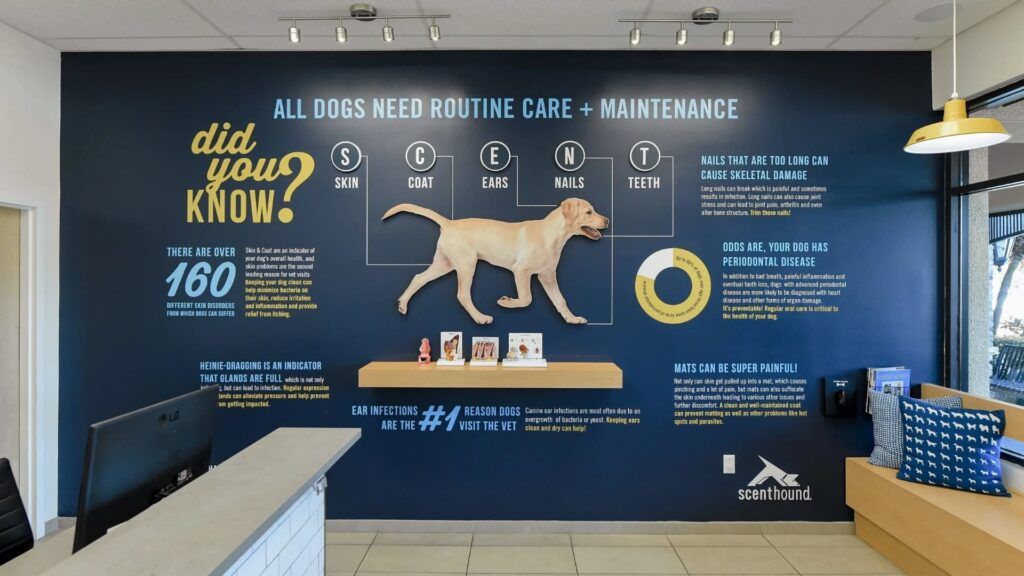
Scenthound is a dog hygiene and wellness franchise focused on routine care in five areas: skin, coat, ears, nails, and teeth. Its retail locations, called Scenters, provide a Basic Hygiene Service that includes a double-conditioning bath, ear cleaning, nail clipping, and teeth brushing.
The business is built around monthly memberships rather than relying only on one-time appointments. Customers select from membership options and may purchase add-on services and retail products based on their dogs’ needs. Current brand materials describe a system that combines routine dog hygiene, wellness tracking, customer education, and technology-enabled communication with pet parents.
The membership model is one of the concept’s key differentiators. In Scenthound’s 2025 financial-performance disclosure, membership fees represented 52% of average gross revenue, while total revenue from members represented 85% of average gross revenue among the 69 qualifying franchised Scenters included in the report.
Scenters are typically small-format retail businesses, occupying approximately 1,100 to 1,300 square feet. The business offers dog grooming, wellness, and essential care services, along with related products and services.
Readers comparing membership-based pet-care concepts with route-based pet-service models can also review the Pet Butler franchise review.
Who is Scenthound a fit for?
Scenthound may appeal to a business leader who wants to build and manage a local membership-based pet-care operation. The model may be more suitable for candidates who prefer team leadership, customer experience, financial oversight, and local marketing over personally performing dog-care services as their primary role.
Current brand materials emphasize leadership, team-building experience, financial capacity, and willingness to follow established systems. The concept may appeal to candidates who have managed employees, supervised service operations, owned businesses, or held responsibility for budgets and operating performance.
Scenthound may fit you if you.
- Want to own and manage a membership-based pet-care business
- Have experience leading employees, managing operating performance, or reviewing financial reports
- Are comfortable hiring, coaching, scheduling, and holding a general manager accountable
- Can remain involved through site selection, build-out, hiring, training, and opening
- Want a manager-led model but are willing to monitor performance and step in when needed
- Have enough capital and financial runway for startup costs, working capital, and early operating uncertainty
- Are interested in a possible multi-unit development path
Scenthound may not fit you if you.
- Want a fully passive or hands-off investment
- Need an immediate salary or guaranteed personal income
- Do not want responsibility for people management, customer experience, local marketing, or service quality
- Would be financially stretched by startup costs, debt service, local-marketing requirements, or site-specific construction costs
- Want to work directly with dogs as the primary service provider
- Are relying on average revenue or top-quartile operating-income figures as an expectation for your own results
If you are still identifying the ownership model that best suits your goals, take the Zorakle owner-fit assessment.
It can also help to understand the difference between a manager-led business and passive franchise ownership, since manager-led ownership still requires oversight, accountability, and contingency planning.
What does a Scenthound owner do?
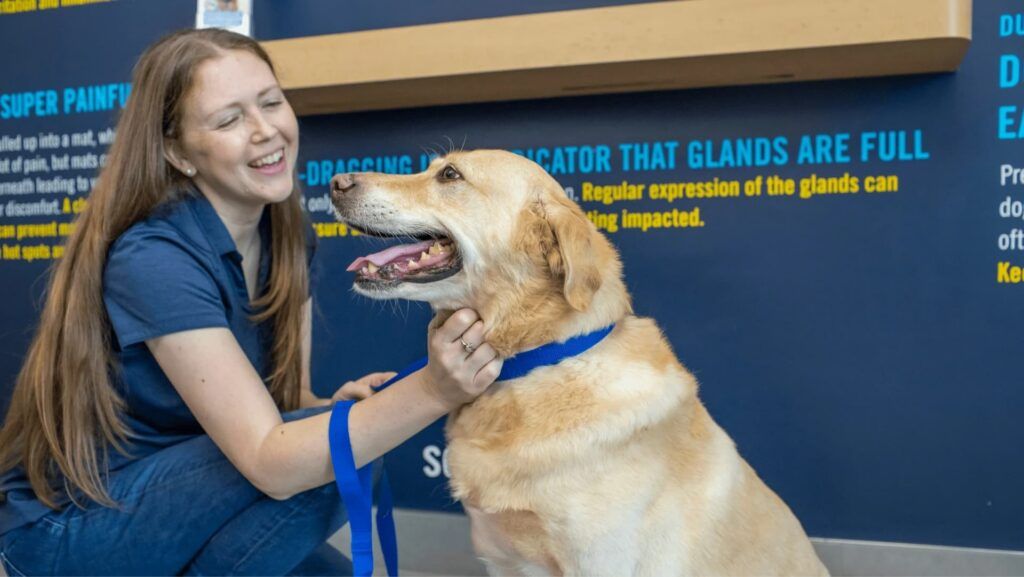
The ownership model is a key part of the fit question. Scenthound describes owner-operator and manager-led paths, but both require active involvement, especially during development and opening.
Current brand materials describe an early stage that may involve real estate search and negotiations, permitting, build-out, equipment and supply ordering, recruitment, team hiring, training, pre-opening marketing, and community visibility. Actual timing can depend on real estate availability, landlord negotiations, local permits, construction, staffing, equipment delivery, and market conditions.
Owner-operator model.
An owner-operator may take a direct role in the business, including:
- Hiring, scheduling, coaching, and supervising Scenter employees
- Monitoring service quality and customer experience
- Managing payroll, inventory, accounts payable, and operating expenses
- Reviewing membership growth, customer retention, sales, labor, and marketing performance
- Supporting customer communications through the CRM and point-of-sale system
- Building local awareness through community outreach and marketing
Manager-led model.
A manager-led owner may focus on:
- Hiring, supporting, and managing the general manager
- Reviewing financial reports, business performance, labor, marketing, and member-retention metrics
- Leading local membership-growth and community-marketing initiatives
- Maintaining communication with the franchisor and following operating standards
- Stepping in when staffing, operations, or customer-service needs require owner involvement
- Keeping multi-unit development commitments on schedule, where applicable
Current franchise materials describe the manager-led model as requiring approximately 20 or more hours per week after the initial setup and opening period. It should not be viewed as fully passive ownership.
A manager-led structure does not remove the franchisee’s responsibility for the business. If the franchisee is a corporation, partnership, or limited liability company, it must designate an individual owner as the Operating Principal. That person must supervise the Scenter and hold at least a 10% voting and ownership interest in the franchisee entity. If the Operating Principal does not supervise the business on a full-time and daily basis, the franchisee must employ a full-time manager who is acceptable to the franchisor.
The franchisee, Operating Principal, or manager must devote full time and best efforts to operating the Scenter. Candidates should review the latest franchise agreement and confirm how these requirements apply to their proposed ownership structure before relying on a manager-led plan.
Candidates who want to evaluate how this ownership structure fits their experience, available time, and investment goals can talk with an FBA franchise consultant.
What training and support does Scenthound provide?
Current brand materials describe training and support that may include online learning, virtual education, live franchisee training, pre-opening assistance, performance tools, technology systems, and ongoing business-development resources.
The current franchise documents describe support that includes:
- Initial training for franchisees and required participants
- Assistance with ordering initial inventory, equipment, signage, and other required items
- Opening assistance and staff training before the business opens
- Site-review guidance and prototype plans or specifications
- Information about approved, required, and preferred products, suppliers, and services
- Guidance on product and service pricing
- Periodic marketing, management, supplier, and operational assistance
- Additional and ongoing training when the franchisor determines it is necessary
- Periodic visits, quality-assurance reviews, and operational guidance when the franchisor determines they are necessary
- Conferences or other educational events that may be required
Current brand materials may describe additional technology, marketing, reporting, CRM, point-of-sale, customer communication, and community-outreach tools. Because support programs and requirements can change, candidates should confirm the current scope, timing, travel obligations, participation requirements, and fees directly with the franchisor before signing.
Scenthound franchise cost and initial investment.
If the ownership model fits your experience and preferred role, the next question is whether the Scenthound franchise cost and ongoing obligations fit your capital plan.
According to Scenthound’s 2026 FDD, the estimated total initial investment for one Scenter is $322,999 to $550,769.
The range includes the $49,900 initial franchise fee, leasehold improvements, fixtures and equipment, signage, technology, supplies, inventory, marketing, rent, permits, insurance, and additional funds for the first three months of operations.
| Cost category | Estimated amount |
| Total initial investment | $322,999 to $550,769 |
| Initial franchise fee | $49,900 |
| Leasehold improvements | $140,500 to $266,000 |
| Fixtures, equipment, and furniture | $33,000 to $45,800 |
| Grand-opening marketing | $20,000 to $35,000 |
| Additional funds for the first three months | $45,000 to $50,000 |
The initial investment estimate includes other costs, such as signage, technology, supplies, inventory, rent, permits, insurance, and training-related travel. Leasehold improvements are one of the largest variables within the Scenthound franchise cost, so candidates should evaluate a proposed site and potential construction obligations before signing a lease.
The estimated additional funds of $45,000 to $50,000 are intended to cover selected operating expenses for the first three months after opening. They do not include a salary or draw for the franchisee or Operating Principal. The disclosure also states that new businesses often generate negative cash flow and that additional working capital may be needed before or after opening.
Qualified U.S. veterans receive $5,000 off the initial franchise fee for their first Scenter.
Scenthound Multi-unit development.
Scenthound offers multi-unit development agreements for candidates who plan to develop two or more Scenters in a defined development area. The 2026 disclosure estimates a total initial investment of $362,999 to $658,269 for a multi-unit developer, depending on the number of Scenters included in the agreement.
Each location operates under a separate franchise agreement, while the multi-unit development agreement includes scheduled opening commitments. Candidates evaluating a multi-unit plan should review the specific development schedule, opening obligations, extension provisions, and capital requirements with qualified advisors.
Before speaking with lenders, it may also help to review franchise financing options and understand the questions lenders commonly ask about liquidity, debt service, and working capital.
For a starting point on financing assumptions, capital needs, and possible funding structure, use FBA’s franchise funding calculator.
What are the Scenthound franchise fees?
The initial investment is only one part of the financial commitment. Prospective franchisees should also account for ongoing Scenthound franchise fees, local marketing, payroll, rent, utilities, insurance, supplies, repairs, merchant-processing costs, taxes, professional services, financing payments, and working-capital needs.
| Ongoing obligation | Disclosed amount | What candidates should know |
| Royalty fee | 6% of gross revenue | May increase by up to 1 percentage point annually, to a maximum of 9% |
| Brand fund contribution | Up to 1.5% of gross revenue | May increase over time, with a disclosed maximum contribution of 3% |
| Local marketing | 5.5% of gross revenue | $25,000 annual minimum; the stated $35,000 annual maximum may be amended if additional local marketing funding is required |
| Technology fee | $200 per month beginning 30 days after signing; $675 per month after POS activation | The franchisor may change the fee |
The royalty starts at 6% of gross revenue, but the franchise documents allow the franchisor to increase it by up to 1 percentage point annually, to a disclosed maximum of 9%. Candidates should test their financial model using both the current royalty rate and the maximum disclosed rate.
Local marketing requires spending equal to 5.5% of gross revenue, subject to a $25,000 annual minimum. The disclosure states a $35,000 annual maximum but reserves the franchisor’s right to amend that limit if it determines that additional local marketing funding is required.
For a first Scenter, the technology fee begins at $200 per month 30 days after signing the franchise agreement and increases to $675 per month when the point-of-sale system is activated. The FDD says POS activation typically occurs about two months before opening.
The franchise documents also describe other possible fees, including training, audit, renewal, transfer, extension, convention, enforcement, default-related, recruiting, and virtual veterinarian service fees. Candidates should review the complete current fee schedule with qualified advisors before investing.
Understanding the full fee schedule is only one part of evaluating affordability. Candidates should also model rent, payroll, taxes, insurance, working capital, and debt service, then review available SBA lender resources and discuss financing assumptions with qualified financial professionals.
What do Scenthound franchisees report in revenue?
After reviewing the startup investment and ongoing franchise fees, the next question is what qualifying franchised Scenters that had been open for at least 24 months historically reported during the 2025 period.
Scenthound’s 2026 FDD includes historical financial-performance information for 69 of 71 franchised Scenters that had been open and operating for at least 24 months as of December 31, 2025. The following results cover the calendar year 2025.
| Measure | Maximum | Median | Minimum | Average |
| Gross revenue | $991,061 | $489,150 | $153,190 | $507,331 |
| Membership fees | $483,073 | $251,327 | $95,810 | $261,348 |
| Membership count | 1,004 | 489 | 129 | 512 |
| Average monthly dog visits | 1,100 | 603 | 218 | 605 |
Across the 69-Scenter revenue group, average gross revenue was $507,331 and median gross revenue was $489,150. The reported gross-revenue range was wide, from $153,190 to $991,061.
Membership fees represented 52% of average gross revenue, while total revenue from members represented 85%. The disclosure shows meaningful variation among the included Scenters.
These figures are historical results for specified franchised Scenters. They are not a forecast for a new Scenter, a particular territory, or an individual franchisee.
What operating income do franchisees report?
Scenthound’s operating-income disclosure covers 52 reporting Scenters, which is a different group from the 69-Scenter revenue disclosure above. The revenue and operating-income tables should not be combined as though they reflect the same locations.
| Reporting group | Scenters | Average gross revenue | Average NOI | NOI margin |
| Top quartile | 13 | $755,858 | $208,890 | 27.6% |
| Top-middle quartile | 13 | $564,675 | $93,346 | 16.5% |
| Bottom-middle quartile | 13 | $518,377 | $44,761 | 8.6% |
| Bottom quartile | 13 | $377,500 | ($9,374) | -2.4% |
| All reporting Scenters | 52 | $554,102 | $84,406 | 15.2% |
For the 52-Scenter operating-income group, average NOI was $84,406 and median NOI was $68,033. The highest reported NOI was $343,146, while the lowest reported individual NOI was a loss of $55,204.
The gap between the top and bottom quartiles shows that operating outcomes were not uniform across the reporting group. The top quartile averaged NOI of $208,890, while the bottom quartile averaged a loss of $9,374.
Candidates should examine local market conditions, site selection, labor management, membership growth, customer retention, local marketing, operating discipline, and financing assumptions carefully.
Net operating income is a defined operating measure. It is not net profit, cash flow, owner compensation, personal income, distributions, or take-home pay. The disclosed calculation includes payroll, payroll taxes, benefits, and independent-contractor costs, with certain adjustments in specific situations. It assumes manager compensation between $45,000 and $60,000, depending on market conditions.
The NOI calculation excludes depreciation, amortization, interest expense, expenses associated with owning more than one Scenter, and certain extraordinary or non-business expenses. Candidates should review the latest financial-performance disclosures, definitions, assumptions, exclusions, and substantiation with qualified advisors before making an investment decision.
“Some Scenters have earned this amount. Your individual results may differ. There is no assurance that you’ll earn as much.”
For a broader explanation of franchise due diligence and financial disclosures, review the Federal Trade Commission’s Consumer’s Guide to Buying a Franchise.
How large is the Scenthound system?
Scenthound Franchising LLC was formed in March 2018 and began offering Scenthound franchises in May 2019. Its parent company, Scenthound Holdings, LLC, was formed in September 2013.
At December 31, 2025, the FDD reported 148 franchised outlets and six company-owned outlets, for 154 total outlets. During 2025, the system opened 33 franchised Scenters, had one termination and one reacquisition, and reported no non-renewals or closures for other reasons.
| Year-end 2025 measure | Reported figure |
| Franchised outlets | 148 |
| Company-owned outlets | 6 |
| Total outlets | 154 |
When reviewing unit counts, distinguish among open locations, company-owned locations, licenses awarded, franchises sold, development commitments, and units in development. The figures above refer to locations reported as open at year-end 2025.
The 2026 FDD states that no litigation is required to be disclosed and no bankruptcy information is required to be disclosed.
What should you review before signing?
A franchise review should help prospective owners ask better questions, not replace individual due diligence. Before signing, review the latest FDD, franchise agreement, financial statements, applicable state addenda, lease, financing terms, and local regulatory requirements with qualified advisors.
Financial and contractual issues.
- The FDD states that the franchisor’s financial condition, as reflected in its financial statements, calls into question its ability to provide services and support to franchisees
- Franchisees may be required to make minimum advertising and other payments regardless of sales levels, and the FDD warns that an inability to make those payments may result in termination and loss of investment
- Royalty, brand-fund, technology, marketing, extension, training, transfer, renewal, and other fees can affect the full cost of ownership
- The startup working-capital estimate does not include a salary or draw for the franchisee or Operating Principal
- Financing payments, rent, taxes, payroll, insurance, supplies, utilities, and working capital are separate from reported NOI
Opening and operating issues.
- The FDD states that a significant number of signed franchise agreements were associated with outlets that had not yet opened
- As of December 31, 2025, the FDD reported 49 signed franchise agreements for outlets not yet open
- Opening timing can depend on real estate, construction, permits, staffing, equipment, and local regulations
- The manager-led model still requires ownership oversight and contingency planning
- Labor, customer acquisition, member retention, local marketing, and service quality can affect operating results
- The franchise agreement requires certain mediation, arbitration, and/or litigation proceedings to take place in Florida, which may increase the cost or inconvenience of resolving disputes for franchisees located outside the state
Questions to ask.
- What factors contributed to the difference between the top and bottom financial-performance quartiles?
- How long did existing Scenters take to build membership levels and reported revenue?
- What staffing levels, wage pressures, and turnover patterns are common in my market?
- How much owner time is expected during the first year in a manager-led model?
- What happens operationally if a general manager or key employee leaves?
- What are the multi-unit development deadlines, extension terms, and consequences of falling behind?
- Under what circumstances can the local-marketing limit be amended, and has the franchisor required amounts above the stated annual maximum in comparable markets?
- How many of the signed franchise agreements for unopened outlets are progressing on schedule, and what are the most common causes of opening delays?
- Which current and former franchisees can I contact in comparable markets?
The latest franchise disclosure document includes contact information for current franchisees and certain former franchisees. Speaking directly with them can help a candidate understand local conditions, staffing, member retention, real estate, ramp-up timing, financial results, and the practical experience of operating a Scenter.
If you want help learning how to evaluate the FDD, Item 19 performance disclosures, franchise fees, and franchisee validation calls, FBA’s free franchise education webinar is a useful starting point.
You can also join FranPath Live sessions for additional franchise-research education and questions.
Frequently asked questions
What is the Scenthound franchise cost?
The estimated Scenthound franchise cost is $322,999 to $550,769 for one Scenter, including a $49,900 initial franchise fee. Actual startup costs can vary based on leasehold improvements, construction, local permitting, real estate conditions, financing, and other market-specific factors.
How much revenue does a Scenthound franchise report?
Across 69 qualifying franchised Scenters in Scenthound’s 2025 revenue disclosure, average gross revenue was $507,331 and median gross revenue was $489,150. The reported range was $153,190 to $991,061. These are historical results for qualifying locations, not a forecast or guarantee for a new franchisee.
Do Scenthound franchises report operating income?
Yes. Scenthound’s 2026 FDD reports operating-income results for 52 Scenters. Average NOI was $84,406, equal to 15.2% of gross revenue for that 52-Scenter reporting group. The top quartile averaged $208,890 in NOI, while the bottom quartile averaged a loss of $9,374. NOI is not the same as net profit, owner income, cash flow, or take-home pay.
What are the Scenthound franchise fees?
The Scenthound franchise fees include a 6% royalty on gross revenue, a brand-fund contribution of up to 1.5% of gross revenue, local marketing of 5.5% of gross revenue with a $25,000 annual minimum, and technology fees. The current fee schedule also includes other possible charges that candidates should review in the latest franchise documents.
Can a Scenthound franchise be manager-led?
Scenthound describes a manager-led ownership model, but it is not fully passive. Current franchise materials describe ongoing owner oversight of financial reports, business performance, marketing, membership initiatives, and the general manager, with an expected commitment of approximately 20 or more hours per week after opening.
If the franchisee is a corporation, partnership, or limited liability company, it must designate an individual owner as the Operating Principal. That person must supervise the Scenter and hold at least a 10% voting and ownership interest in the franchisee entity.
If the Operating Principal does not supervise the business on a full-time and daily basis, the franchisee must employ a full-time manager who is acceptable to the franchisor. The franchisee, Operating Principal, or manager must devote full time and best efforts to operating the Scenter.
How many Scenthound locations are open?
The 2026 FDD reports 148 franchised outlets and six company-owned outlets at December 31, 2025, for 154 total outlets. During 2025, the system opened 33 franchised Scenters, had one termination and one reacquisition, and reported no non-renewals or closures for other reasons.
How long does it take to open a Scenthound franchise?
Current brand materials describe a development and opening process that may take approximately four to five months after signing. Timing can vary based on real estate, permits, construction, staffing, equipment, and local conditions. The FDD states that a franchisee is required to open within nine months of signing unless an extension is granted.
Get expert guidance at no cost.
The Scenthound franchise cost and operating model may appeal to candidates looking for a membership-driven pet-care concept who are willing to lead a team, oversee business metrics, and remain involved through development and early operations.
Its historical financial-performance data shows that reported results varied materially across locations, so candidates should use the figures as a due-diligence starting point rather than an expectation.
Before moving forward, review the latest official franchise documents, franchise agreement, financial statements, state-specific addenda, financing terms, and lease terms with qualified legal, tax, accounting, and financial advisors.
If you would like one-to-one help comparing business models, ownership requirements, investment ranges, and franchise options, receive expert franchise guidance at no cost by completing FBA’s franchise consultation form.
Editorial and financial disclaimer: This article is provided for general educational purposes only. It is not legal, accounting, tax, investment, or financial advice. Franchise ownership involves risk, and individual results vary. Prospective franchisees should review the latest FDD, franchise agreement, applicable state addenda, and all related documents with qualified professional advisors before making an investment decision.