

If you’re searching “is Trader Joe’s a Franchise” or “Trader Joe’s Franchise Cost,” here’s the direct answer: Trader Joe’s does not franchise in the United States; all stores are company-owned and operated.
The brand began as Pronto Markets in 1958, and the first Trader Joe’s store opened in Pasadena, California in 1967. Ownership today ties back to family holdings connected with ALDI Nord, though Trader Joe’s operates independently from ALDI U.S..
Understanding that Trader Joe’s remains privately owned is essential for prospective entrepreneurs seeking business ownership: the opportunity to open a Trader Joe’s franchise simply does not exist at this time, which means your evaluation should focus on how this model differs from true franchising options available elsewhere.
For objective franchise education, industry frameworks, and brand comparison tools, visit our blog, where you can learn how to evaluate and compare leading franchise opportunities with expert guidance.
Trader Joe’s is not affiliated with the Franchise Brokers Association (FBA). This article is for educational purposes only, designed to help readers understand the brand’s structure and compare it with available franchise opportunities.
How Trader Joe’s Came to Be.
Trader Joe’s began in Pasadena in 1967, but its roots trace back to Pronto Markets, a small convenience-store chain Joe Coulombe launched in 1958. Seeing that copycat convenience wouldn’t beat rising competitors, he redesigned the concept around a more curious, travel-influenced shopper.
Coulombe rebranded the business as Trader Joe’s and opened the first store on August 25, 1967, at 610 S. Arroyo Parkway in Pasadena—a location that still operates today. The brand identity leaned into a playful, seafaring vibe and an edited assortment that made discovery easy without overwhelming choice. Coulombe often said he built the store for the “overeducated and underpaid,” which guided everything from product selection to pricing philosophy.
In 1979, the company was acquired by interests tied to Aldi Nord, and it has remained privately held ever since. Coulombe continued as CEO until 1988, after which the chain expanded carefully beyond California while keeping its small-box footprint, private-label focus, and neighborhood feel. That disciplined, corporate-owned model—born from a strategic pivot and a distinct brand personality—still shapes Trader Joe’s growth today.
Cost to Open a Trader Joe’s Franchise.
Trader Joe’s does not franchise in the United States, so there is no fee table, no Franchise Disclosure Document (FDD), and no official “franchise cost.” Any ranges you see online are speculative because the company does not offer a franchise program. If you’re evaluating ownership options, use Trader Joe’s as a reference model—not as a purchasable brand.
If you encounter anyone selling a “Trader Joe’s franchise,” treat it as a red flag and verify directly with the company or a qualified franchise professional.
Business Model & Day-to-Day.
Even without franchising, Trader Joe’s is a useful benchmark for understanding a high-touch, neighborhood-focused retail food concept.
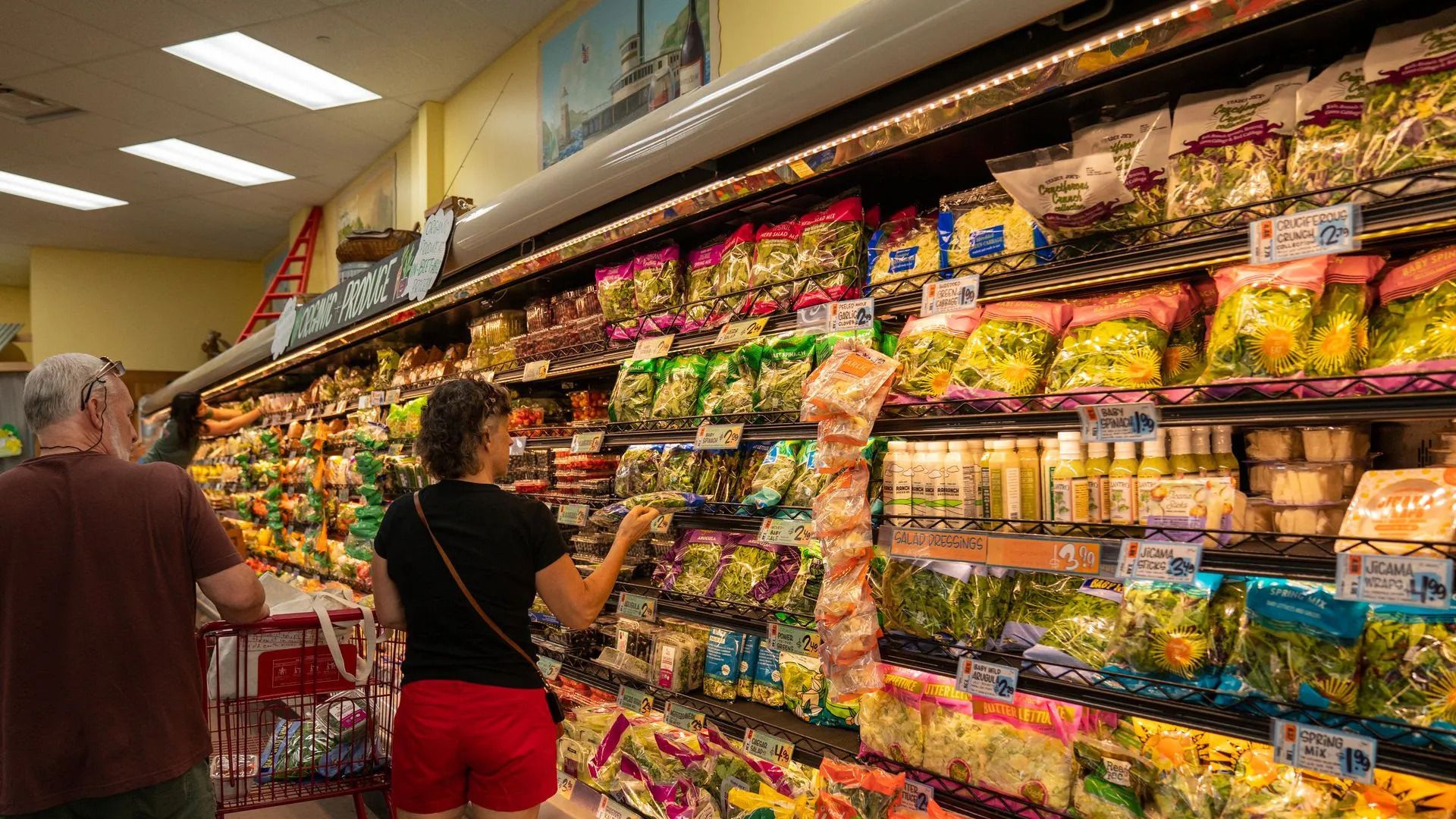
- Footprint & Format: Compact, neighborhood-scale stores—often around 10,000–15,000 sq. ft.—designed for quick trips and easy navigation.
- Curated Assortment: Roughly 4,000 items per store, far fewer than a conventional supermarket, which simplifies choice and speeds turnover.
- Private Label First: The majority of products carry the Trader Joe’s brand, supporting product uniqueness, quality control, and everyday-value pricing.
- Discovery-Led Experience: Seasonal drops, limited-time items, and playful packaging create a “treasure hunt” that keeps shoppers returning.
- Service Culture: Cross-trained teams, friendly tone, and a hands-on, in-aisle presence emphasize human service over complex promotions.
- In-Store Focus: No first-party online ordering, curbside, or delivery; the brand orients traffic to the store for the full experience.
- Operating Rhythm: Frequent deliveries, tight perishable management, and quick merchandising turns; signage and storytelling are part of daily execution.
- Pricing Approach: Everyday prices with restrained discounting; simplicity replaces couponing and elaborate loyalty schemes.
These traits—small box, curated SKUs, strong private label, and a discovery-forward atmosphere—mirror what many franchise buyers seek in specialty retail, even though Trader Joe’s itself isn’t available to own.
Training, Support & Technology.
Because Trader Joe’s doesn’t franchise, there’s no owner training program, field support, or tech stack for franchisees to evaluate. Still, the corporate model offers useful benchmarks for what strong retail systems often include.
- Onboarding & SOPs (internal): Hiring, food safety, and merchandising standards are set centrally; crew members are cross-trained for speed and service.
- Field Operations (corporate): Store leadership and regional oversight come from company teams rather than a franchisor/field-consultant model.
- Marketing & Communications: Brand storytelling leans into in-store signage, seasonal features, and owned media (e.g., printed materials, brand podcast).
- Consumer Tools: Store locator and physical gift cards are available; emphasis remains on the in-store experience.
- POS & In-Store Tech: Standard point-of-sale and scanning systems support fast checkouts and inventory turns; loyalty apps and complex coupon engines are not the focus.
- Digital Commerce Stance: No first-party online ordering, curbside, or delivery; the shopping experience is intentionally in-person.
Use these elements as a reference list when comparing franchise brands—look for clear SOPs, practical tech, and a communication cadence that fits your operating style.
Territory, Real Estate & Equipment.
Trader Joe’s expansion is centrally managed by the company. Shoppers can request locations, but site approvals depend on data and feasibility—not petitions. For franchise buyers evaluating other grocers or specialty retailers, the following specs are a helpful benchmark.
- Territory Structure: No franchise territories exist; market planning and protections don’t apply here.
- Site Selection Priorities: Population density, easy access, parking, and traffic flow; stores favor high-convenience, neighborhood trade areas.
- Prototype Size & Layout: Many locations operate in the ~10,000–15,000 sq. ft. range, with simple, navigable aisles and efficient back-of-house.
- Front-of-House: Multiple POS lanes, clear queuing, prominent signage, and seasonal merchandising zones that refresh frequently.
- Back-of-House (BOH): Walk-in coolers/freezers, dry storage, receiving space, and food-safe prep/staging consistent with grocery standards.
- Refrigeration & Fixtures: Multideck coolers, freezer cases, gondola shelving, and endcaps sized to the small-box footprint.
- Utilities & Compliance: Adequate electrical capacity for refrigeration, ventilation and condensate management, ADA compliance, and local food-retail permits.
- Logistics Cadence: Frequent deliveries and quick turns demand accessible loading and streamlined backroom flow.
- Build-Out Considerations: Branded décor package, durable finishes, and straightforward wayfinding; specifics for franchise build-outs are not disclosed here.
This disciplined, in-house approach explains why site control remains a corporate function—and it’s a useful checklist when you assess franchise concepts that do grant territories and publish prototype specs.
Risks & Watch-outs.
Before spending time on a brand that doesn’t franchise, weigh these realities and use them to sharpen your search among franchiseable options.
- No ownership path: There is no Trader Joe’s franchise or license in the U.S.; you can’t buy into the brand.
- Centralized control: Site selection, merchandising, marketing, and operations are corporate functions, not negotiable with local owners.
- Retail complexity: Grocery demands rigorous inventory control (including shrink management), food-safety compliance, vendor coordination, and labor scheduling across long operating hours.
- Limited digital commerce: With no first-party delivery or curbside, traffic is built around in-store visits—useful to note if you want a digital-forward model.
- Brand and IP protection: The company’s distinctive look and labels are tightly controlled; attempts to imitate can invite legal or reputational risk.
- Scam risk: Any third party offering a “Trader Joe’s franchise” is a red flag—verify with trusted advisors before engaging.
- Transferability: Because there’s no franchise system, there’s no pathway to acquire a unit through a franchisor-managed resale program.
Treat Trader Joe’s as a reference model—not a purchasable system—and channel your due diligence toward franchise brands that publish an FDD and grant territories.
Alternatives to Consider.
If you like the neighborhood retail feel and repeat-purchase cadence, these options can offer similar operations—with actual ownership structures. 24/7 convenience and fuel can be demanding; these may not be the best options for many first-time owners or career changers seeking lighter hours or simpler staffing.
- 7-Eleven (Convenience Retail; owner-operator or manager-led): High-frequency trips, turnkey systems, and national marketing—but long hours and a profit-split model to understand.
- Circle K (Convenience Retail; multi-unit potential): “Grocery-lite” cadence with fuel adjacency, robust supply chain, and strong brand controls; typically capital-intensive and operationally hands-on.
- Pet Supplies Plus (Specialty Retail; consumables + services): Community-centric retail with grooming/self-wash in many markets; often more predictable hours than 24/7 c-stores.
- Grocery Outlet / Save A Lot (license or independent-operator models): Closer to full-line grocery for experienced operators comfortable with inventory and perishables.
Explore curated options via Find Franchises, learn comparison frameworks on the FBA Blog, or browse Resales if you prefer acquiring an existing unit.
How the Franchise Brokers Association Helps You Choose the Right Franchise
When a well-known brand doesn’t franchise—or isn’t the right fit—we focus on matching your skills, time, capital, and lifestyle to brands that do. Our approach is education-first and built to help you make a confident, well-researched decision.
We start with a discovery interview to understand your goals, preferred owner role, budget range, risk tolerance, and industry interests. From there, we create a fit profile and curate a short list of brands aligned to your criteria.
We then walk you through side-by-side comparisons that highlight day-to-day responsibilities, staffing intensity, hours, territory dynamics, and scalability—so you can see what operating the business actually looks like. We guide your due diligence, including how to read the Franchise Disclosure Document (with special attention to Item 7 for costs and Item 19 for any financial performance representations) and how to run productive validation calls with current owners.
When funding is part of the plan, we can introduce reputable providers for SBA loans, equipment financing, and retirement-plan rollovers (ROBS), and connect you with franchise attorneys and CPAs for independent counsel.
If you’re ready to explore brands tailored to your profile, start with FBA’s Find Franchises tool and continue your research with the educational frameworks on the FBA Blog.
FAQ.
Does Trader Joe’s franchise?
No. Trader Joe’s does not offer franchising opportunities; all U.S. stores are corporate-owned. There is no Franchise Disclosure Document (FDD) or franchise application process.
Who owns Trader Joe’s?
The company is privately held by families associated with Aldi Nord and operates independently from Aldi Süd/ALDI U.S. This ownership structure does not create a franchise path for individuals.
How much does a Trader Joe’s franchise cost?
There is no official cost because there is no Trader Joe’s franchise in the U.S. Any figures you see online are speculative and should not be treated as offers or promises.
How many Trader Joe’s stores are there?
Public trackers place the chain at roughly 600+ locations, with some listing about 608 U.S. stores as of October 14, 2025. Store counts change as openings and closures occur, so always verify current numbers.
Does Trader Joe’s offer delivery or curbside pickup?
Not through its own website or app; the brand emphasizes in-store shopping. If delivery appears in your area, it is likely via third-party or limited pilots, not a systemwide program.
What are the typical store hours?
Many locations operate around 8 a.m.–9 p.m. daily, but hours vary by market. Check the store directory for the specific schedule near you.
Is Trader Joe’s the Right Path for You?
If your goal is to own a Trader Joe’s, this isn’t possible today—the company doesn’t franchise. If you love the compact store, curated assortment, and frequent repeat visits, consider convenience or specialty-retail franchises that offer a similar operational feel with actual ownership, support, and territory rights. We can help you translate what you like about Trader Joe’s into viable franchise options matched to your skills, time, and budget.
Ready to take the next step? The Franchise Brokers Association is here to help guide you on your journey into the franchise world. Explore your options today with us.