
An Uptown Cheapskate franchise is a resale fashion store that buys gently used clothing and accessories from local sellers for cash or store credit, then resells them in a boutique-style setting. According to the 2026 Franchise Disclosure Document (FDD), the estimated initial investment is $364,015 to $682,215, including a $35,000 franchise fee. Annual rent is excluded, although the estimate includes an allowance for initial lease payments and deposits. This guide explains the startup costs, ongoing fees, store operations and ownership responsibilities.
About this article. Uptown Cheapskate is a member of the Franchise Brokers Association. FBA publishes reviews of member brands as part of its membership program, and FBA and its brokers may receive a commission from the franchisor if a candidate FBA works with goes on to purchase a franchise. This article was researched and written by FBA from the brand’s current Franchise Disclosure Document and FBA’s own franchise database. The brand did not write, review, or approve it before publication.
Nothing in this article should be considered legal, financial, or tax advice. Prospective franchisees should always review the most recent Franchise Disclosure Document (FDD) with qualified advisors before making an investment decision.
Startup estimates and disclosed fees do not indicate potential revenue, profit or investment returns.
What is an Uptown Cheapskate franchise?
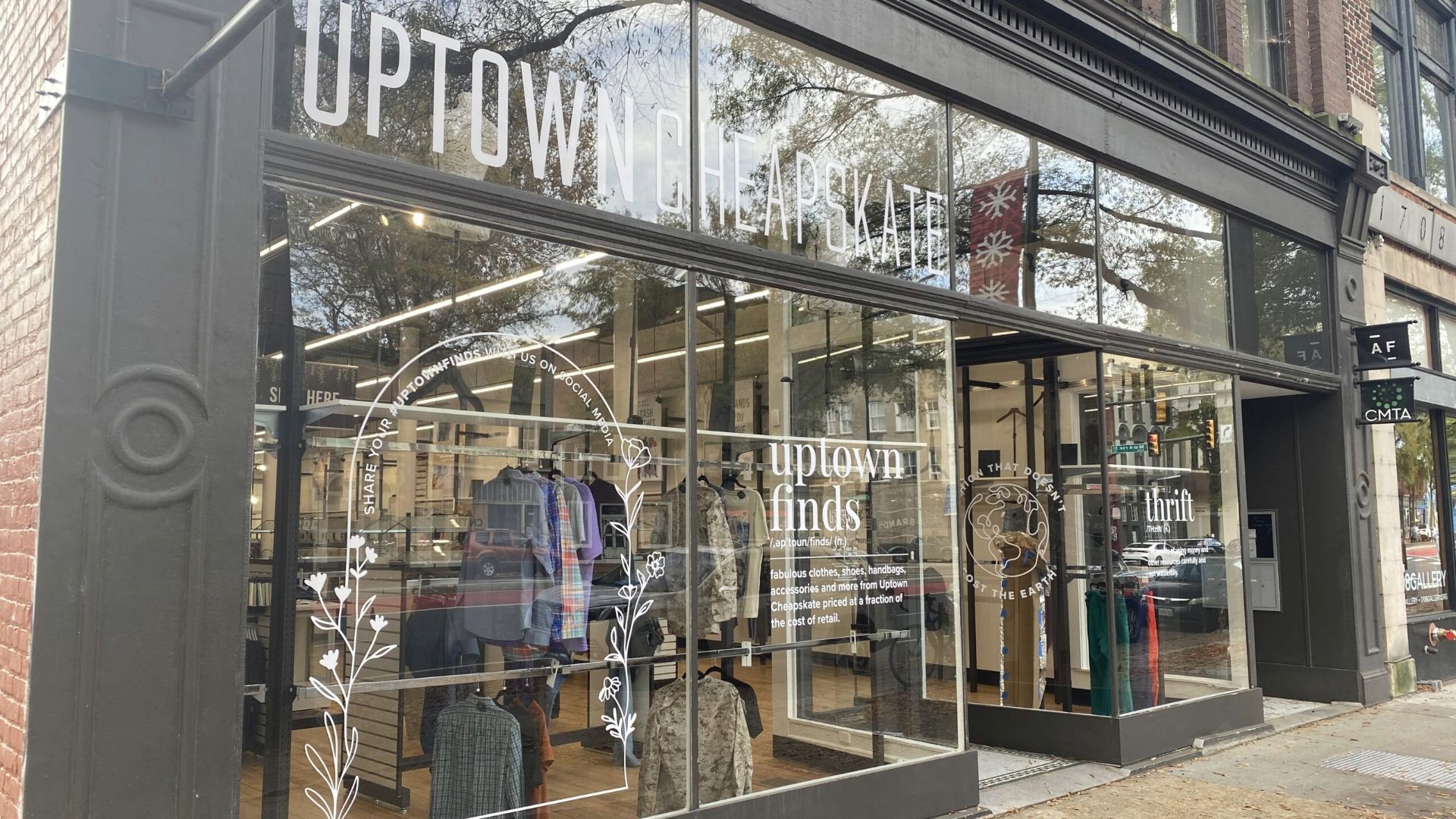
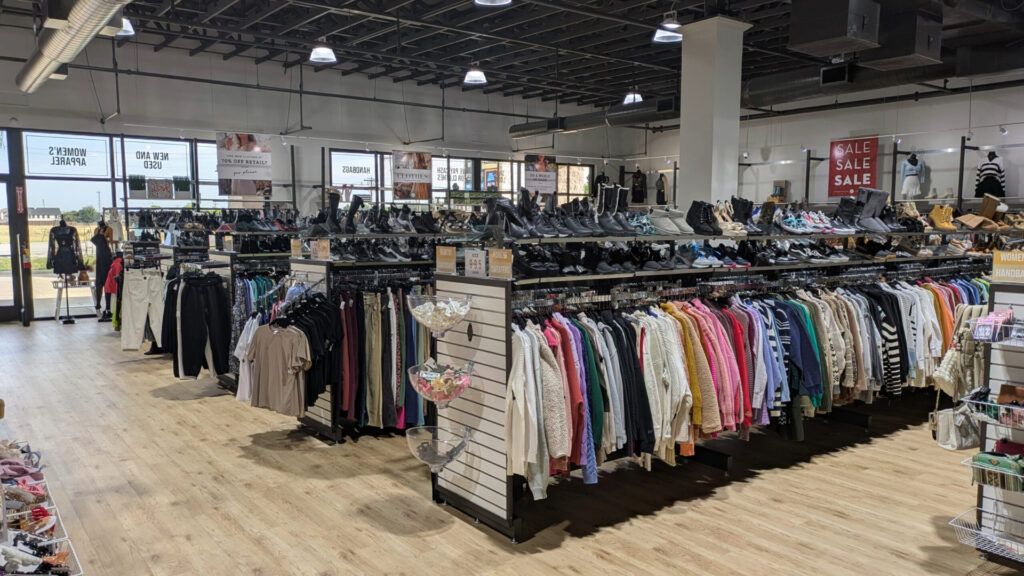
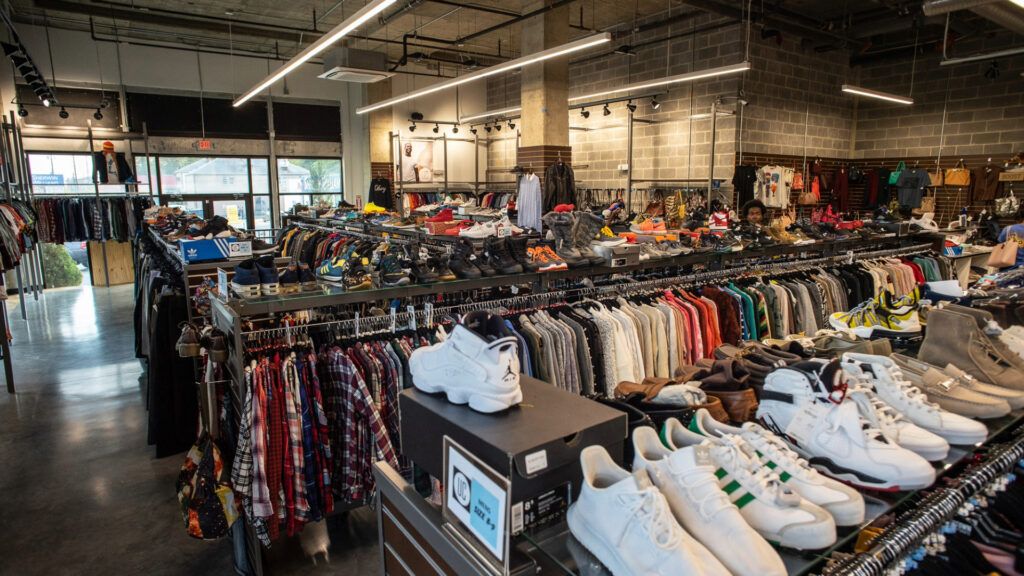
Uptown Cheapskate is a buy-sell-trade retail franchise offering gently used and new clothing and accessories for teens and young adults. Its model combines discounted fashion with a boutique-style shopping environment, emphasizing value, selection and reuse. Stores purchase much of their merchandise directly from people in their communities rather than accepting it on consignment.
The system’s history and the current franchisor’s history are different. The predecessor began franchising in September 2008. The current franchisor, Uptown Cheapskate Franchise System, LLC, was organized in July 2022, acquired the system’s franchise assets that September and began franchising in October 2022.
Its immediate parent, BaseCamp Franchising, provides services that include software, technology support, marketing and bookkeeping. BaseCamp also supports the separate Kid to Kid franchise system, which serves children and expecting mothers.
How does an Uptown Cheapskate store get its inventory?
An Uptown Cheapskate store builds much of its inventory through purchases from local sellers. Customers bring in clothing and accessories, store buyers evaluate the items and accepted merchandise is purchased for resale.
That two-way relationship changes what running the store involves. The business needs to attract people who want to sell as well as people who want to shop. Buying decisions, processing speed and merchandising influence what customers find on the floor.
Three operating priorities follow:
- Buying consistency. Employees need to apply the store’s purchasing standards consistently.
- Inventory flow. Purchased merchandise must be processed, priced and displayed.
- Seller relationships. Someone selling clothing may also become a shopper.
The FDD budgets $75,000 to $110,000 for opening inventory. It says building the required inventory typically takes seven to ten weeks, although it may take longer. Opening requirements include gently used merchandise and at least $10,000 at cost in new products, so the business is not exclusively secondhand.
How much does an Uptown Cheapskate franchise cost?
Opening one Uptown Cheapskate store requires an estimated initial investment of $364,015 to $682,215, according to Item 7 of the 2026 FDD. The estimate assumes approximately 5,000 square feet in a community shopping center.
The budget includes the franchise fee, leasehold improvements, fixtures, technology, opening inventory, grand-opening promotion and an allowance for additional funds.
| Estimated expenditure | Low estimate | High estimate |
| Franchise fee | $35,000 | $35,000 |
| Travel and lodging while training | $1,500 | $7,000 |
| Real estate deposit | $4,500 | $33,000 |
| Real estate improvements | $35,000 | $170,000 |
| Exterior signs and graphics | $10,000 | $21,000 |
| Interior signs | $2,000 | $4,500 |
| Trade fixtures | $75,000 | $105,000 |
| Computers and related equipment | $22,715 | $22,715 |
| BaseCamp software suite | $15,000 | $15,000 |
| Security camera system | $2,000 | $8,000 |
| Grand-opening promotion | $20,000 | $20,000 |
| Opening inventory | $75,000 | $110,000 |
| Incorporation documents | $300 | $1,500 |
| Loan fees | $0 | $25,000 |
| Licenses, permits and utility deposits | $1,000 | $2,000 |
| Supplies, hangers and miscellaneous expenses | $25,000 | $35,000 |
| Additional funds, initial three-month period | $40,000 | $67,500 |
| Total estimated initial investment | $364,015 | $682,215 |
These figures summarize estimated expenditures in the 2026 FDD. They are not historical store-performance results or projections of financial outcomes. Actual costs vary by location and circumstances.
For the most accurate and current information, review the latest Franchise Disclosure Document (FDD) for Uptown Cheapskate. The financial figures presented here are historical results from franchised businesses as disclosed in Item 7 and Item 19 of the 2026 FDD.
Important context: These figures reflect startup and early operating needs only. They do not indicate financial performance or outcomes.
What does the estimate include for rent?
The FDD excludes annual rent from the stated initial investment. However, the real estate deposit allowance includes initial payments such as first and last months’ rent and/or a security deposit. It would therefore be inaccurate to describe the entire estimate as being “before rent.”
Before signing a lease, build a location-specific budget that accounts for actual occupancy costs, financing obligations and available operating cash. FBA’s franchise funding calculator can help organize those assumptions.
What does the additional-funds allowance cover?
The $40,000 to $67,500 allowance covers expenses during the inventory-buying period and the period directly following the grand opening. Examples include employee payroll, facilities costs, utilities, internet and other operating expenses. The FDD states that this allowance excludes financing costs associated with purchasing the franchise.
Treat the allowance as an estimate, not an assurance that it will meet every store’s needs or fund operations until a particular financial milestone.
What are the upfront fees beyond the franchise fee?
The initial franchise fee is $35,000, payable when the franchise agreement is signed. Item 5 also identifies a $15,000 software payment and a $15,000 New Store Service payment to BaseCamp after the lease is signed.
| Upfront payment | Amount | Timing |
| Initial franchise fee | $35,000 | At signing of the franchise agreement |
| BaseCamp software suite | $15,000 | After signing the lease |
| New Store Service | $15,000 | After signing the lease, with advertising-payment timing detailed in the FDD |
| Area development fee | $35,000 per store | At signing of the development agreement; credited toward each store’s franchise fee |
Confirm current amounts, payment timing and refund conditions in the applicable FDD and agreements.
For the most accurate and current information, review the latest Franchise Disclosure Document (FDD) for Uptown Cheapskate. The financial figures presented here are historical results from franchised businesses as disclosed in Item 7 and Item 19 of the 2026 FDD.
The first three payments total $65,000, but they should not be added to the investment estimate again. The software payment already appears in Item 7, and the $15,000 New Store Service counts toward the $20,000 grand-opening promotion budget.
The franchise fee is refunded in full within ten days if the application is not approved. Item 5 states that it is not refundable under other circumstances. The software and New Store Service payments are non-refundable.
What if you want to open two stores?
Item 7 provides a two-store area development example totaling $728,030 to $1,364,430. That consists of a $70,000 development fee plus $658,030 to $1,294,430 in other estimated investment expenditures.
The development fee is credited toward the two stores’ franchise fees. It is not an additional charge on top of two complete single-store investment estimates.
Multi-unit development also involves a development schedule and additional requirements. Review those obligations before committing to more than one location.
What are Uptown Cheapskate’s ongoing fees?
The royalty is 5% of gross sales, and the marketing fund contribution is 0.5%. Franchisees must also meet an advertising spending requirement and pay applicable support fees.
| Ongoing fee or obligation | Disclosed amount and conditions |
| Royalty | 5% of gross sales, payable monthly |
| Marketing fund | 0.5% of gross sales, payable monthly |
| Advertising spending requirement | Greater of 5% of gross sales or $2,000 monthly, measured quarterly; subject to modification |
| National Marketing Program | $2,000 monthly initially, with later adjustments subject to the FDD’s timing and sales calculations |
| Computer support | $350 monthly; subject to adjustment |
| Bookkeeping service | $225 monthly; required for the first year and potentially an additional 12 months if required reports are not submitted afterward |
| Additional technology support | $50 hourly, $25 minimum per consultation, when Computer System Standards are not met |
| Renewal fee | 25% of the then-current initial franchise fee |
| Transfer fee | $35,000 to a new franchisee; $20,000 to an existing franchisee |
This table summarizes selected obligations in the 2026 FDD. It is not a complete list of every potential fee. Review the full fee schedule, adjustment provisions and applicable conditions.
For the most accurate and current information, review the latest Franchise Disclosure Document (FDD) for Uptown Cheapskate. The financial figures presented here are historical results from franchised businesses as disclosed in Item 7 and Item 19 of the 2026 FDD.
How do the marketing requirements overlap?
National Marketing Program expenditures count toward the advertising minimum. They should not automatically be added on top of it. The separate 0.5% marketing fund contribution is additional.
The national program initially requires $2,000 monthly during the calendar year the store opens. At the applicable year-end review, stores with sufficient operating history move to the lesser of 2.5% of average monthly gross sales or $2,500 monthly. Stores without six full months of sales remain at the initial amount. The FDD explains the calculation and applicable reporting period.
Failure to satisfy the advertising requirement can trigger a penalty equal to 1% of the prior month’s gross sales for each of the next six calendar months. Those penalty payments do not count toward required advertising spending.
What do Uptown Cheapskate franchisees earn?
The 2026 FDD includes an Item 19 financial performance representation. This article does not reproduce sales, income, profit-margin or return figures, and it does not estimate what a prospective owner could earn.
When reviewing the disclosure with your advisors, examine:
- The reporting period and whether it differs from the franchisor’s fiscal year.
- Which stores were included and excluded.
- Whether the financial reports were audited.
- The distinction between franchised and company-owned locations.
- How the disclosure defines its financial measures.
- The average, median, range and lower-performing groups.
- Differences between the disclosed stores and your proposed location.
The disclosure’s measure labeled “net income” excludes interest, taxes, depreciation, amortization and owner compensation. It should not be interpreted as an owner’s take-home pay or after-tax profit.
Speak with current and former franchisees across different store ages and markets. Read the complete financial performance representation and its qualifications rather than relying on isolated figures from marketing materials.
Historical results do not guarantee future performance. Your individual results may differ, and there is no assurance that you will achieve the results disclosed.
How big is the Uptown Cheapskate system?
Item 20 reports 162 Uptown Cheapskate outlets at year-end 2025, comprising 148 franchised stores and 14 company-owned stores. Franchised outlets increased from 129 to 148 during 2025.
| Outlet type | Year-end 2024 | Year-end 2025 |
| Franchised | 129 | 148 |
| Company-owned | 14 | 14 |
| Total | 143 | 162 |
These are dated outlet totals, not a live count. When comparing them with marketing materials, distinguish later reporting dates, locations under development and figures that combine Uptown Cheapskate with Kid to Kid.
Outlet growth alone does not establish the financial performance of individual stores.
What does an Uptown Cheapskate owner do in year one?
An owner leads a staffed retail operation. Responsibilities may include reviewing reports, setting priorities, coaching employees, overseeing buying and inventory flow, helping customers and planning local promotions.
The work combines people management with operating discipline. The store needs consistent buying decisions, merchandise moving to the sales floor and a team capable of serving sellers and shoppers.
How much owner involvement is required?
Item 15 requires an individual franchisee to work in the store full-time and directly supervise the business for at least the first six months after opening or taking ownership.
For an entity-owned franchise, that initial supervision must be provided by someone holding at least a 10% ownership interest. After the initial period, or when an additional store opens, the business must be managed on-site by the owner or a manager who completed the required training and internship. The franchisor recommends ongoing on-site owner management.
The brand’s candidate materials describe full-time involvement for at least the first year, a longer planning expectation than the FDD’s stated minimum.
Delegating some daily responsibilities may become possible over time, but it depends on the management team, contractual requirements and needs of the business. Do not assume a guaranteed transition to passive ownership.
What training and support does Uptown Cheapskate provide?
Initial training includes approximately three days of classroom and in-store instruction at the corporate office and a Salt Lake City area store, plus a six-day, 50-hour internship at an agreed Uptown Cheapskate location.
The franchise fee includes training and internship costs for the owner and one other individual. Travel, lodging, meals, compensation and incidental expenses are separate. Additional attendees cost $1,250 each, and the store manager must complete the required internship.
The FDD describes a typical opening timeline of eight to twelve months from the earlier of signing the agreement or first paying franchise fees. Site selection, leasing, build-out and inventory preparation affect that schedule.
Support includes:
- Proprietary software for purchasing, pricing, point of sale and inventory management.
- Technology support, subject to applicable fees and system standards.
- Bookkeeping services under the disclosed requirements.
- Marketing services through the required programs.
- Opening assistance for a franchisee’s first store on the day before, day of and day after the grand opening.
Additional on-site assistance is available at the disclosed rate of $300 daily plus transportation and lodging, subject to the FDD’s conditions.
FBA’s franchise education webinar and FranPath Live sessions can help you prepare for document review and franchisor conversations.
How do territory and real estate work?
The investment estimate assumes approximately 5,000 square feet in a community shopping center. Site evaluation should account for customer access, visibility, parking and the practical needs of inventory intake, processing and display.
Item 12 provides a protected area around an approved store location. Within that area, the franchisor promises not to permit another corporate or franchised Uptown Cheapskate storefront during the agreement’s term.
However, this is not an exclusive territory:
- Other Uptown stores may advertise to and serve customers within the area.
- The franchisor retains certain distribution rights.
- Other brands, including affiliated concepts, may operate within the area.
The protected area depends on the FDD’s distance, population and market considerations. Do not assume every store receives a five-mile radius. Review the actual territory description and reserved rights before committing to a site.
Who is an Uptown Cheapskate franchise right for?
The model may suit someone who wants to lead a staffed retail business and understands the required initial involvement.
It may be a fit if you:
- Enjoy managing and developing employees.
- Prefer a structured operating system.
- Are comfortable overseeing buying, inventory and daily store operations.
- Can fund the build-out and maintain adequate operating cash.
- Want an active business rather than a hands-off investment.
- Understand that delegating management takes time and capable staff.
It may be less suitable if you:
- Need passive ownership from the beginning.
- Prefer a home-based or mobile operation.
- Want a business with minimal staffing.
- Dislike the ongoing work of acquiring and processing inventory.
- Cannot accommodate the disclosed investment and financial obligations.
An existing Kid to Kid owner may recognize similarities in BaseCamp’s support platform, but the brands remain separate franchise systems. Confirm any combined-ownership conditions or available fee arrangements rather than assuming they apply.
FBA’s Zorakle owner-fit assessment can help organize a discussion about your strengths, while a franchise consultant can help compare ownership models.
What risks should prospective owners review?
The FDD highlights concerns about the franchisor’s financial condition and ability to provide services and support. It also identifies risks involving unopened franchises, mandatory minimum payments, inventory requirements, personal guarantees and dispute resolution in Utah.
These disclosures deserve attention alongside the investment estimate and financial performance representation. Review the financial statements and contractual obligations with your franchise attorney and accountant.
Item 3 describes a predecessor-related arbitration with an award confirmed in 2016. The disclosure includes findings concerning both franchisee breach and the predecessor’s lease-related advice. Read the complete account rather than treating it as an unspecified current dispute.
What should you ask before buying?
Use the FDD and franchisee conversations to investigate practical questions:
- Investment: Which expenses have differed from the initial estimates, and why?
- Inventory: How long did recent stores take to build opening stock?
- Marketing: How are required expenditures tracked and credited?
- Management: What staffing and owner involvement do comparable stores require?
- Financial disclosures: What do the definitions, exclusions and reporting criteria mean for your evaluation?
- Outlets: What do openings, closures and transfers show over the reporting period?
- Territory: What competition can occur within and around the protected area?
- Support: What should you understand about the franchisor’s financial condition and contractual support commitments?
Speak with current and former owners, not only references suggested during the sales process. Review the complete FDD, agreement and relevant financial statements before committing.
Uptown Cheapskate franchise FAQ
How much does it cost to open an Uptown Cheapskate?
The estimated initial investment is $364,015 to $682,215, including a $35,000 franchise fee. Annual rent is excluded, although the estimate includes certain initial lease payments and deposits. Actual costs vary, and the estimate does not indicate potential financial results.
What is the Uptown Cheapskate royalty?
The royalty is 5% of gross sales, payable monthly. Franchisees also contribute 0.5% to the marketing fund and must meet the advertising minimum. National Marketing Program spending counts toward that minimum. Other fees apply.
Is the New Store Service an extra $15,000 beyond the investment estimate?
No. The $15,000 New Store Service expenditure counts toward the $20,000 grand-opening promotion budget included in Item 7. It should not be added to that budget again.
Do I have to work in the store?
The FDD requires full-time owner supervision for at least the first six months, with specific ownership requirements for entity-owned franchises. Afterward, the owner or a properly trained manager must manage the business on-site. The franchisor recommends continued on-site owner management.
How long is the training?
Initial training includes approximately three days of classroom and in-store instruction plus a six-day, 50-hour internship. The franchise fee covers the owner and one other individual; travel and related expenses are separate.
Does Uptown Cheapskate offer an exclusive territory?
No. It provides a protected area limiting additional Uptown Cheapskate storefronts, subject to the agreement. Other stores may serve customers there, and the franchisor retains other competitive and distribution rights.
Can I own an Uptown Cheapskate and a Kid to Kid?
The brands are separate systems supported by BaseCamp. Discuss eligibility, agreements, management requirements and any applicable fee arrangements with each franchisor before planning combined ownership.
Explore your franchise options
Choosing a franchise means evaluating the investment, daily responsibilities, risks and contractual obligations together. Uptown Cheapskate is a staffed resale retail model, and its suitability depends on your resources, management strengths and willingness to participate in the business.
Explore franchise opportunities with FBA to compare options and prepare questions for your next franchisor conversation.