



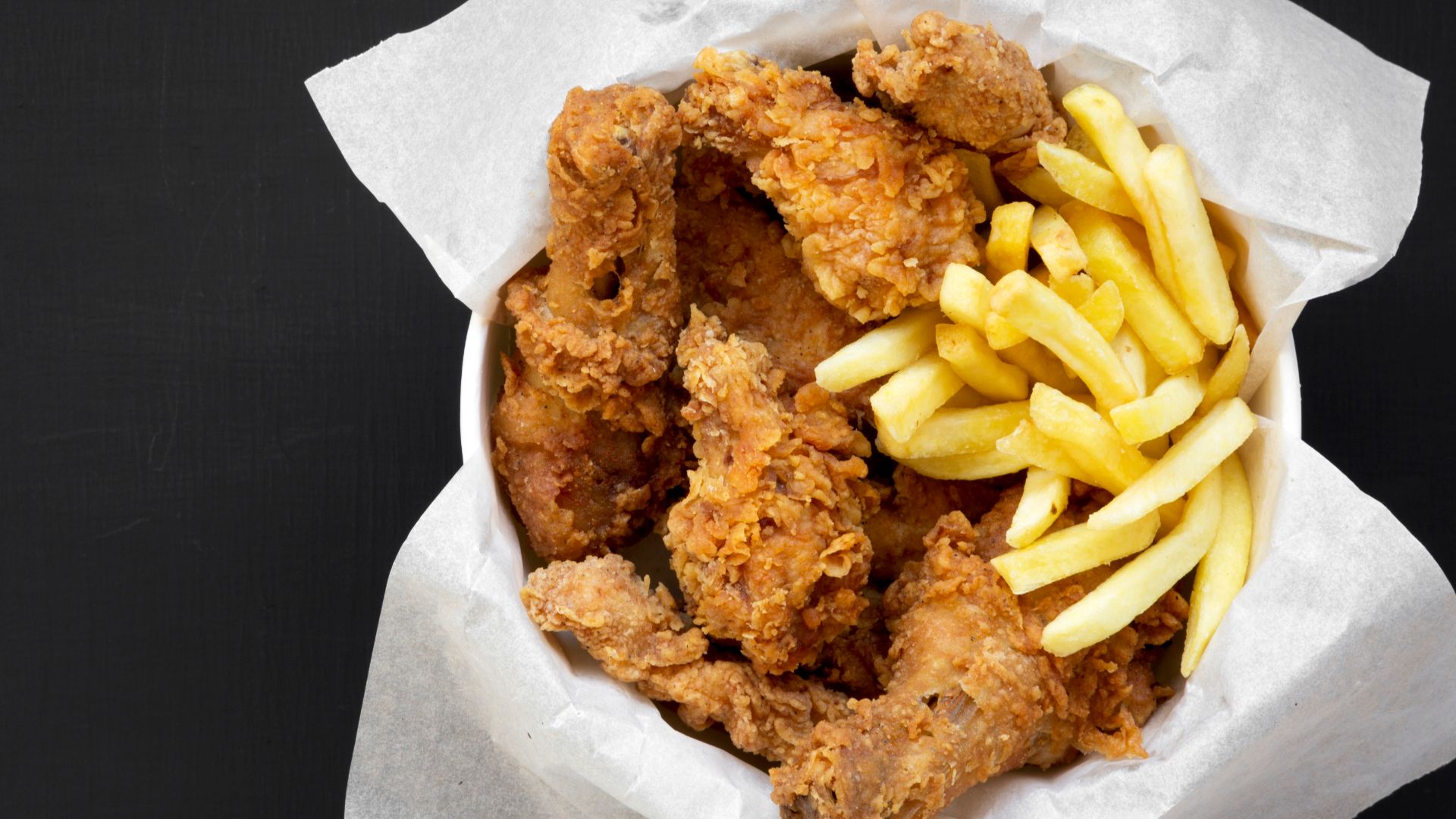
Can you buy a Raising Cane’s franchise? Raising Cane’s is a fast-growing chicken-finger brand that runs mostly company-owned restaurants and is extremely selective about franchise partners. Most U.S. investors cannot simply apply to open a Raising Cane’s location, but the concept is still one of the most researched “dream” chicken franchises.
Even if you never own a Raising Cane’s, understanding its business model can help you compare other restaurant franchises. The brand is built around a focused menu, high-volume drive-thru traffic, and a strong people-first culture. Studying how Raising Cane’s approaches site selection, operations, and unit economics gives you a useful framework for evaluating other chicken and quick-service franchises that are actually available to new owners.
This guide explains the origins of Raising Cane’s, its current franchise strategy, and the practical pros and cons for would-be operators. You’ll also see alternative chicken and fast-food franchise options to consider if you’re looking for a similar focused, high-volume concept.
For objective franchise education, industry frameworks, and brand-comparison tools, visit the Franchise Brokers Association (FBA) Blog and our ongoing franchise webinar series. There you can learn how to read Franchise Disclosure Documents (FDDs), compare brands side by side, and work with a professional franchise consultant as you narrow your options.
Important disclosure: Raising Cane’s is not part of the Franchise Brokers Association’s portfolio, and FBA does not represent, endorse, or sell this brand. This article is an independent educational resource and does not constitute legal, financial, or investment advice.
Origins, Ownership & Brand Positioning.
Raising Cane’s Chicken Fingers opened its first restaurant in 1996 in Baton Rouge, Louisiana, near the Louisiana State University campus. Founder Todd Graves and co-founder Craig Silvey built the brand around a single idea: focus on chicken fingers and execute that one product extremely well. The menu has stayed intentionally narrow—hand-battered chicken fingers, crinkle-cut fries, Texas toast, coleslaw, fountain drinks, and the signature Cane’s Sauce—with the name inspired by Graves’ yellow Labrador, Cane. You can read the company’s official story on the Raising Cane’s “Who We Are” page.
The company is privately held and headquartered in Baton Rouge. Todd Graves maintains a controlling ownership stake and serves as co-CEO alongside AJ Kumaran, a veteran restaurant executive who oversees large-scale operations. This combination of founder leadership and professional management has helped the chain scale while protecting its culture and operating standards.
From a single college-town restaurant, Raising Cane’s has grown into one of the largest chicken concepts in the U.S., with roughly 900 locations and an estimated systemwide sales volume around $5 billion in 2024, placing it among the top chicken chains by sales. Industry profiles of Raising Cane’s growth and trade coverage of recent chicken-chain rankings show how quickly the brand has scaled in a relatively short time. These figures describe the overall brand, not what any individual owner or location earns.
Raising Cane’s positioning is deliberately focused:
- “One Love” product focus: chicken fingers as the hero item, not a broad menu.
- Crew-first culture: emphasis on competitive pay, training, recognition, and promotion from within.
- Local flavor and community ties: store décor and marketing that highlight local schools, teams, and causes.
Leadership has publicly discussed a long-term goal of becoming a top-10 U.S. restaurant brand by sales, with a development pipeline aiming toward 1,600+ locations. For prospective investors studying the chicken category, Raising Cane’s offers a clear example of how a narrowly focused, culture-driven concept can scale to national prominence—even when direct franchise access is very limited.
Key Facts at a Glance.
If you’re evaluating Raising Cane’s as a potential franchise-style concept, here are the core facts to know:
- Founding year & place: 1996, Baton Rouge, Louisiana
- Founders: Todd Graves (founder) and Craig Silvey (co-founder)
- Ownership & structure: Privately held, headquartered in Baton Rouge; the vast majority of locations are corporate-owned, with a small number of legacy or highly selective franchise/partner stores.
- Category: Quick-service / fast-casual restaurant specializing in chicken fingers and a highly focused supporting menu.
- Scale: Roughly 900+ restaurants across the U.S. and select international markets, with continued double-digit annual unit growth.
- Franchising in the U.S.: Access is very limited; current expansion is centered on company-owned development rather than broad acceptance of new U.S. franchise applications.
- Operating model: High-volume chicken-finger restaurants featuring drive-thru and dine-in service, strong lunch and dinner dayparts, and late-night traffic in many college and event-driven markets.
- Lifestyle considerations for operators: Early prep and closing routines, intense rush periods (especially lunch, dinner, weekends, and game days), and hands-on, fast-paced foodservice work with large hourly teams.
Cost to Open a Raising Cane’s (If/When Access Is Available).
As of 2025, Raising Cane’s does not offer standard U.S. franchise opportunities to most independent investors. The company is focused on company-owned growth and is not accepting open franchise applications in the United States, with only a limited number of legacy or highly selective partners in place.
Because there is no active U.S. franchise program, any “Raising Cane’s franchise cost” numbers you see online are historical or third-party estimates, often based on older Franchise Disclosure Documents (FDDs) and cost modeling for similar drive-thru chicken concepts. Taken together, those sources generally point to the ranges below as a ballpark for what a Raising Cane’s–style buildout could require if access ever reopens. Articles such as this SuperFranchise profile of Raising Cane’s on Franchise Chatter are one example of how analysts present historical estimates and brand background.
Indicative Cost Ranges (Historical / Third-Party Estimates Only)
Important: These figures are not an offer from Raising Cane’s and may not reflect current corporate requirements. Always rely on the brand’s current FDD if it ever resumes broad franchising.
| Cost element | Indicative range (historical / third-party) | What it covers / notes |
|---|---|---|
| Initial franchise fee (historical) | $45,000–$50,000 per restaurant | Reported in earlier FDD summaries and 2024–2025 franchise directories for prior Cane’s programs. |
| Total initial investment (all-in buildout) | $1.3 million–$3.5+ million (often ~$1.8–$3.0M) | Full project cost for a freestanding or end-cap location with drive-thru, including buildout and opening costs. |
| Real estate, construction & leasehold improvements | Hundreds of thousands up to $2.0–$2.2+ million | Site work, building shell, interior buildout, drive-thru infrastructure, exterior signage. |
| Equipment & signage (kitchen, POS, menu boards) | $200,000–$450,000+ | Commercial fryers, refrigeration, prep lines, POS systems, interior décor, interior/exterior menu boards. |
| Opening inventory & smallwares | $10,000–$30,000+ | Initial food and paper inventory, uniforms, and smallwares (based on historical FDD “inventory/supplies”). |
| Training, travel & initial marketing | $20,000–$50,000+ | Management training expenses, travel, pre-opening marketing, and grand-opening promotions. |
| Working capital / additional funds | $50,000–$250,000+ | Additional funds to cover payroll, utilities, and operating losses during the ramp-up period. |
| Suggested financial profile (historical) | $1.5–$2.5M net worth; $500,000–$750,000 liquid | Frequently cited minimums per restaurant in prior Cane’s analyses and similar full-build QSR brands. |
| Ongoing royalties & marketing fees (historical) | ~5% royalty; ~4% advertising/marketing fund | Typical structure reported in past FDD-based directories for national quick-service chains. |
These ranges are broadly consistent with other full-build, drive-thru quick-service restaurant franchises, which typically require multi-million-dollar projects and substantial liquidity. They also help explain why Raising Cane’s tends to work with sophisticated, well-capitalized operators rather than first-time, single-unit investors.
If you’re primarily interested in the economics of a Raising Cane’s–type concept, you can use these third-party ranges as a benchmark when you review Item 7 (initial investment) and fee tables for other chicken or fast-food franchises that are actively franchising—and that your Franchise Brokers Association advisor can help you compare side by side.
To stress-test the numbers for your own situation, tools like FBA’s Franchise Financial Calculator can help you model scenarios and think through capital needs with your professional advisors
Business Model & Day-to-Day Operations.
Raising Cane’s is a focused chicken-finger QSR built around speed, consistency, and a simple menu. Instead of juggling a long list of products, the model pushes complexity into systems, training, and culture—running the same playbook at high volume, every day.
Owner / operator role: The brand has historically favored company-owned restaurants and a small group of experienced multi-unit or institutional partners. In a Cane’s-style operation, the owner or operating partner is expected to lead from the front: setting culture, managing managers, controlling labor and food costs, and driving local store marketing and community involvement.
Hours, flow & operational demands: Most locations focus on heavy lunch and dinner traffic, with late-night hours in college, nightlife, or entertainment districts. The menu is narrow, but operations are not: success depends on standardized chicken prep and frying, strict food-safety and quality routines, and aggressive ticket-time and drive-thru throughput goals during peaks.
Staffing & service channels: A typical unit fields multiple crew members per shift plus shift leads and managers, often overseeing a large team of younger employees. Service flows through drive-thru, dine-in, takeout, and—depending on the market—digital orders and event catering, especially on game days or around local events.
In-store experience & fit: In the restaurant, Cane’s leans into high-energy music, local décor, and sports tie-ins, encouraging crew enthusiasm and guest engagement while maintaining tight standards for speed and cleanliness. This model tends to fit owners who want to be present in the building, enjoy leading teams on the floor, and thrive in a fast-paced, detail-driven environment.
For prospective operators, understanding this day-to-day reality is essential: it helps you decide whether a Raising Cane’s–style concept matches your leadership style, schedule, and risk tolerance—or whether a different chicken or quick-service franchise might be a better operational fit.
Training, Support & Technology in the Raising Cane’s Franchise Model.
Where Raising Cane’s works with operators—whether internal company operators or a very selective group of partners—the support system is designed to replicate a highly specific operating playbook. The goal is to make every restaurant feel and perform like a Raising Cane’s flagship location.
Initial training: Leaders and managers typically go through multi-week training that covers:
- Crew culture and service standards
- Kitchen operations and food safety
- Leadership, scheduling, and labor management
- Brand standards for cleanliness, speed, and guest experience
Pre-opening support: Before opening, operators receive guidance on:
- Kitchen layout and equipment specifications
- Décor packages and local customization within brand guidelines
- Pre-opening checklists, staffing plans, and soft-opening procedures
Ongoing field support: Once the restaurant is running, Raising Cane’s leans on structured field support, including:
- Regional operations teams and scheduled restaurant visits
- Performance reviews using key metrics like ticket times, accuracy, and guest satisfaction
- Coaching on cost control, staffing, and execution during peak periods
Marketing support: The Raising Cane’s franchise playbook also extends to marketing, with a mix of:
- National brand campaigns and social media content
- High-profile partnerships with celebrities, athletes, and musicians
- Local-store marketing templates and community engagement playbooks
- Grand opening events, often tied to giveaways and charitable donations
Technology & systems: Cane’s uses standardized technology across the system to make execution repeatable:
- POS and drive-thru order systems tuned for speed and accuracy
- Reporting dashboards that track sales, labor, and key operational metrics
- Internal communication tools that reinforce culture, recognition, and best practices
Product development: Menu innovation is centralized. The core chicken-finger menu remains stable, with occasional limited-time offers, size variations, or combo tweaks instead of constant menu turnover. This protects speed, training simplicity, and supply-chain efficiency.
Even if you never own a Raising Cane’s franchise, studying its training, support, and technology model gives you a useful benchmark when you evaluate other QSR franchises—and when you compare how different brands support new owners after the ink is dry on the franchise agreement.
Territory, Real Estate & Equipment in the Raising Cane’s Franchise Model.
Raising Cane’s success is closely linked to how and where it builds restaurants. The brand is known for targeting high-traffic, “can’t-miss” corners and trade areas that can support sustained high volumes, especially through the drive-thru.
Territory approach: Because Raising Cane’s relies heavily on company-owned growth and highly selective partners, any development-area rights tend to be limited and strategic. Widely available exclusive territories are not currently offered to new independent U.S. investors, which is very different from traditional franchise systems that sell defined geographic territories.
Real estate focus: When you look at Raising Cane’s site selection, the pattern is clear:
- High visibility along busy arterials and commuter routes
- Strong daytime and evening population, often near major retail centers
- Proximity to college campuses, stadiums, or dense residential areas
- Sites that allow efficient drive-thru stacking and smooth traffic flow
Restaurant formats: Most Raising Cane’s locations follow one of a few proven formats:
- Freestanding buildings with drive-thru lanes (the dominant model)
- End-cap spaces with drive-thru in high-quality centers where land is tighter
- High-profile urban flagships in iconic locations that function as brand billboards as much as sales drivers
Core equipment & layout: Inside the box, the equipment package is designed for volume and repetition:
- High-capacity fryers and ventilation
- Walk-in coolers/freezers and cold storage
- Prep tables and assembly lines set up for speed
- Beverage stations, POS terminals, and drive-thru communication systems
- Branded exterior and interior signage that reinforces the Cane’s look and feel
Parking, access & traffic management: Site plans emphasize:
- Ample parking and clear directional signage
- Drive-thru lanes that can hold long queues without blocking roads or parking
- Convenient entry and exit points to keep cars moving and protect guest satisfaction
For anyone comparing other QSR or chicken concepts to the Raising Cane’s franchise model, it’s worth studying how each brand handles territories, site selection, and drive-thru design—because the right corner and layout can matter just as much as the menu when it comes to long-term sales and unit economics.
Why Entrepreneurs Are Drawn to the Raising Cane’s Franchise Model.
Even though you can’t simply buy a Raising Cane’s franchise today, many entrepreneurs and multi-unit operators study the brand closely. The pull is less about access to a specific franchise agreement and more about what the Raising Cane’s franchise model represents: a focused, disciplined way to run a high-volume QSR concept.
Key points that attract entrepreneurs include:
- Clear, simple concept: Raising Cane’s is built around one primary product category—chicken fingers—with a tightly edited supporting menu. That simplicity reduces operational complexity, strengthens brand identity, and makes training and execution more repeatable across locations.
- Strong brand momentum: The chain has expanded rapidly across the U.S., adding new markets and high-profile urban locations while maintaining a consistent look and feel. National media coverage and social buzz reinforce the perception of a growth brand with staying power.
- Systemwide performance (brand level, not a guarantee): Industry sources have reported systemwide sales in the mid-billion range and robust average unit volumes in recent years. These numbers describe the performance of existing company and partner-operated restaurants as a whole, not earnings guarantees or projections for any future owner. They do, however, help explain why operators often use Raising Cane’s as a benchmark when evaluating other chicken and QSR concepts.
- Culture-first narrative: The brand puts heavy emphasis on crew appreciation, leadership conferences, internal recognition, and community involvement. For entrepreneurs who believe culture is a competitive advantage, the Raising Cane’s story illustrates how people-first systems can support both growth and retention.
- Distinctive guest experience: Signature Cane’s Sauce, a playful and localized décor style, high-energy music, and social-media-friendly grand openings create a recognizable experience that fans talk about and share. This kind of “earned media” appeal is something many franchise buyers look for in comparable concepts.
- Disciplined, data-driven expansion: Raising Cane’s is selective about trade areas and sites, emphasizing high-traffic corners, strong drive-thru potential, and long-term volume. That measured, pipeline-driven approach to growth is attractive to investors who prefer disciplined market planning over opportunistic, scattershot expansion.
Taken together, these factors explain why Raising Cane’s often appears in conversations about standout fast-food brands—and why serious buyers researching chicken or QSR opportunities frequently compare other franchises to the Raising Cane’s franchise model, even if they can’t access the brand itself.
Risks & Watch-outs for Would-Be Owners.
Even when a brand is as popular as Raising Cane’s, the model comes with real trade-offs. If you’re drawn to the Raising Cane’s franchise concept—or to similar chicken/QSR brands—keep these risks on your radar:
- Limited access to the brand: Raising Cane’s is not broadly open to new U.S. franchisees. Growth is driven primarily by corporate-owned locations and a very small group of selective partners, so most investors will never get direct access to the brand.
- High capital requirements: Historical estimates and third-party analyses suggest multi-million-dollar project costs for a single Raising Cane’s–style restaurant, once you factor in land (or build-to-suit leases), construction, equipment, and working capital. These are big, long-term commitments that require strong balance sheets and lending relationships.
- Operational intensity and execution risk: A Raising Cane’s franchise–style operation is high-volume foodservice, with strict standards for food safety, ticket times, drive-thru throughput, and guest experience. That level of precision can be demanding—especially for first-time restaurant owners or investors who prefer a more hands-off role.
- Labor and scheduling challenges: Units typically rely on large crews, often with many younger employees, and must staff around heavy lunch/dinner peaks, weekends, and occasional late nights. Recruiting, training, scheduling, and retention become ongoing management challenges, not one-time problems to “solve.”
- Supplier and menu concentration: The model is heavily concentrated on one primary protein (chicken) and a single core menu platform. That focus is part of the brand’s strength, but it also means less diversification if input costs spike, supply chains tighten, or consumer preferences shift.
- Centralized brand control: Raising Cane’s keeps tight control over menu, décor, and marketing. Owners and operating partners are expected to follow the system rather than improvise. For entrepreneurs who want freedom to innovate or localize, that level of control can feel restrictive.
- Crowded competitive landscape: The chicken/QSR segment is intensely competitive, with national and regional players all fighting for the same guests and real estate. Price sensitivity, evolving health preferences, digital ordering, and delivery platforms can all affect traffic and margins over time.
Anyone seriously considering a Raising Cane’s–style franchise opportunity—or any other QSR brand—should review the most recent Franchise Disclosure Document (FDD) with qualified legal and financial advisors, stress-test capital needs, and make sure the day-to-day operational reality matches their skills, risk tolerance, and lifestyle.
When Is Raising Cane’s NOT the Best Fit?
Raising Cane’s may be a compelling brand to study, but the Raising Cane’s franchise model (and similar chicken/QSR concepts) won’t match every investor’s goals. It’s likely not the right fit if:
- You want an easy, widely available franchise path. You’re looking for a brand with an online application, many open territories, and a straightforward approval process right now.
- You prefer a lower investment level. You’d rather avoid the multi-million-dollar buildout, equipment, and working-capital commitments that typically come with full-build, drive-thru restaurant brands.
- You don’t enjoy leading big frontline teams. Managing dozens of employees—often younger crew members—through busy lunch/dinner rushes, nights, weekends, and game days does not appeal to you.
- You want lots of menu creativity. You’d like the freedom to add local dishes, test new recipes frequently, or customize the menu beyond a tightly controlled system.
- You’re seeking a part-time or mostly absentee role. You prefer businesses where you can be off-site most of the time, with minimal involvement in day-to-day operations.
- You’re drawn to B2B or appointment-based models. You’re more interested in franchises built around scheduled services, professional clients, or recurring contracts than walk-in, high-traffic restaurant operations.
If several of these points describe you, other food or non-food franchises will likely align better with your capital, lifestyle, and risk tolerance—and a knowledgeable franchise advisor (such as the team at the Franchise Brokers Association) can help you compare those options against the Raising Cane’s–style model.
Alternatives to Consider.
If you can’t buy a Raising Cane’s franchise—or decide the model doesn’t fit your life—there are still plenty of ways to participate in franchising with similar or better overall fit.
1. Owner-operator chicken or QSR concepts: If you like the energy of a Raising Cane’s–style restaurant, look at other chicken, tenders, wings, burger, or sandwich brands that do actively franchise. Many offer:
- High-traffic, drive-thru-centric models
- Focused menus with strong systems and training
- Well-defined territories and support structures
When comparing options, pay close attention to:
- How clear and detailed the Franchise Disclosure Document (FDD) is
- The quality of initial training and ongoing field support
- Territory protections and real estate criteria
You can also use FBA’s Find Franchises tool to quickly scan concepts across multiple food categories and narrow down those that match your budget and region.
2. Semi-absentee fast-casual or QSR franchises: If you want restaurant exposure but not full-time on the line, some concepts are built around strong general managers and systems. In these models, owners:
- Hire and develop a GM to run day-to-day operations
- Focus on financial performance, culture, and local marketing
- Spend more time on strategy and oversight than on the fry station
This can provide restaurant upside with a more leveraged use of your time—though it still isn’t truly “hands off.”
3. Mobile or food truck chicken / comfort-food models: Food trucks and small-format restaurants can offer:
- Lower fixed real estate commitments
- More flexible hours and locations (events, festivals, catering)
- A way to test a concept before committing to a full brick-and-mortar build
For people who like events, catering, and creativity, this path can scratch the “restaurant” itch with less long-term fixed overhead.
4. B2B foodservice or catering franchises: If you like feeding people but not late nights and weekend rushes, consider:
- Office catering or corporate lunch programs
- Institutional and contract foodservice
- Prepared-meal or meal-delivery models
These often feature more predictable hours, scheduled orders, and less reliance on walk-in traffic.
5. Non-food franchises: If what really excites you is the franchise model—systems, brand leverage, recurring revenue—rather than restaurant work, you might be better served outside of food entirely. Strong categories include:
- Home services (restoration, cleaning, remodeling, lawn care)
- Pet care (daycare, grooming, pet services)
- Fitness and wellness
- Children’s education and enrichment
- B2B services (marketing, consulting, staffing, logistics, etc.)
A knowledgeable franchise advisor, such as those at the Franchise Brokers Association, can help you translate what you like about the Raising Cane’s franchise concept (focus, culture, growth) into a shortlist of food and non-food brands that better match your budget, lifestyle, and long-term goals.
Competitive Set & Category Context for the Raising Cane’s Franchise Model.
Raising Cane’s competes in a crowded but growing niche of U.S. chicken-focused QSR brands. Its closest peers include Chick-fil-A, Popeyes, KFC, Wingstop, Zaxby’s, and other tender- and wings-focused chains. Industry rankings now place Raising Cane’s as one of the top U.S. chicken chains by sales, with some recent analyses noting that it has overtaken legacy competitors in U.S. system sales—another data point you can cross-reference with independent trade coverage and rankings.
What differentiates Raising Cane’s is its ultra-focused menu and consistent guest experience, not a broad product lineup. The brand has stayed loyal to chicken fingers, fries, toast, coleslaw, drinks, and Cane’s Sauce, supported by culture-driven marketing and highly repeatable operations. Many competing chicken brands offer larger menus, breakfast platforms, or heavy customization, trading simplicity for additional complexity, different labor needs, and more moving parts—factors worth comparing carefully when you evaluate alternative chicken or QSR franchises.
How the Franchise Brokers Association Helps You Find the Right Franchise.
If you’re drawn to the Raising Cane’s franchise model but can’t access the brand—or you’re simply exploring franchising in general—the Franchise Brokers Association (FBA) helps you find options that actually fit your life, budget, and risk tolerance.
An FBA broker typically starts with a discovery interview to understand:
- Your financial profile and investment range.
- Your goals (income, lifestyle, equity, legacy).
- Your preferred role (hands-on operator vs. semi-absentee).
- Your comfort with staffing, sales, and operations.
- Whether you’re more interested in food, home services, B2B, fitness, education, or other categories.
From that conversation, they build a personalized fit profile and use it to curate franchises across multiple industries—restaurant and QSR concepts, home and property services, pet care, children’s enrichment, fitness and wellness, professional and B2B services, and more. Instead of scrolling endless directories on your own, you get a focused shortlist of brands that match your criteria and are actually available in your region.
Many candidates also complete tools like the Zorakle Assessment to clarify how their personality, strengths, and preferences line up with different franchise models. If you like to learn from real-world stories, you can listen to franchisee and franchisor interviews on FranPath Live as part of your research.
FBA professionals then guide you through a structured evaluation process, which can include:
- Comparing business models side by side (capital needs, staffing, hours, scalability).
- Reviewing Franchise Disclosure Documents (FDDs) with qualified legal and financial advisors.
- Preparing smart questions for franchisor discovery days.
- Encouraging candid conversations with existing franchisees about their real-world experience.
They can also point you toward funding resources and help you avoid concepts that don’t fit your risk tolerance, time availability, or long-term goals—without promising any specific earnings, success, or outcome.
In short, while Raising Cane’s itself is not in FBA’s portfolio and is not available as a standard U.S. franchise, FBA uses the same disciplined, education-first approach to help you find other franchises that align with what you like about the Raising Cane’s model—focus, systems, culture, and growth—while still fitting your personal situation.
FAQ: Raising Cane’s & Franchising.
Is Raising Cane’s a franchise?
Yes. Raising Cane’s uses a mix of corporate-owned and franchise/partner-operated locations, including select international and domestic arrangements. However, the majority of units today are company-owned, and the brand is highly selective about any new partnerships.
Can you buy a Raising Cane’s franchise today?
For most independent U.S. investors, no. Public sources indicate that Raising Cane’s is currently not accepting open franchise applications in the United States, focusing instead on corporate-owned growth and a small pool of strategic partners.
What is the cost to open a Raising Cane’s franchise?
Historical disclosures and third-party analyses suggest:
- An initial franchise fee of about $45,000–$50,000 per restaurant*
- A total initial investment of roughly $1.3–$3.5+ million for a single restaurant*, depending on land, construction, and equipment
These figures are historical / indicative only and reflect periods when franchising was more accessible. Actual costs can vary widely by location and over time and would only be confirmed in a current Franchise Disclosure Document (FDD) and franchise agreement, if the brand ever reopens broad franchising.
Who owns Raising Cane’s?
Raising Cane’s is a privately held company based in Baton Rouge, Louisiana. Founder Todd Graves remains a principal owner and serves as co-CEO, working alongside co-CEO and COO AJ Kumaran and a broader executive leadership team.
Do they allow multi-unit or area development?
Historically, Raising Cane’s has partnered with a limited number of multi-unit and international operators. These arrangements are highly selective and individually negotiated—not widely marketed area-development or territory packages for new U.S. investors.
What are typical hours for a Raising Cane’s restaurant?
Most locations emphasize lunch and dinner, with heavy evening and game-day traffic in some markets. Many restaurants close late evening; some in college, nightlife, or entertainment districts may operate later. Exact hours vary by site, region, and local regulations, and can change as the chain adapts to guest demand.
Is Raising Cane’s part of the Franchise Brokers Association portfolio?
No. Raising Cane’s is not part of the Franchise Brokers Association’s portfolio, and FBA does not represent, endorse, or sell the Raising Cane’s franchise. Information in this FAQ is for educational comparison only and is not legal, financial, or investment advice.
Is Raising Cane’s the Right Path for You?
If you love high-energy restaurant environments, simple menus executed at scale, and culture-driven brands, the Raising Cane’s franchise model is one of the most interesting QSR concepts to study. Its growth, laser focus on chicken fingers, and crew-first ethos make it a strong benchmark for how a modern chicken chain can operate.
As an ownership path, however, the Raising Cane’s franchise is not broadly available to new U.S. franchisees, and its multi-million-dollar investment level and hands-on operating profile are demanding. If you’re looking for open territories right now, a lower initial investment, fewer nights and weekends, or a more semi-absentee role, you’ll likely find better fits in other food and non-food franchise systems.
The most practical way to use Raising Cane’s in your franchise search is as a reference point: a clear example of tight execution, focused branding, and disciplined growth that you can compare against brands that are actively recruiting new owners and publishing transparent, current FDDs.
Ready to explore options that are available? The Franchise Brokers Association can help you translate what you like about the Raising Cane’s franchise model into a shortlist of brands that match your budget, lifestyle, and risk tolerance. You can start exploring opportunities here.