



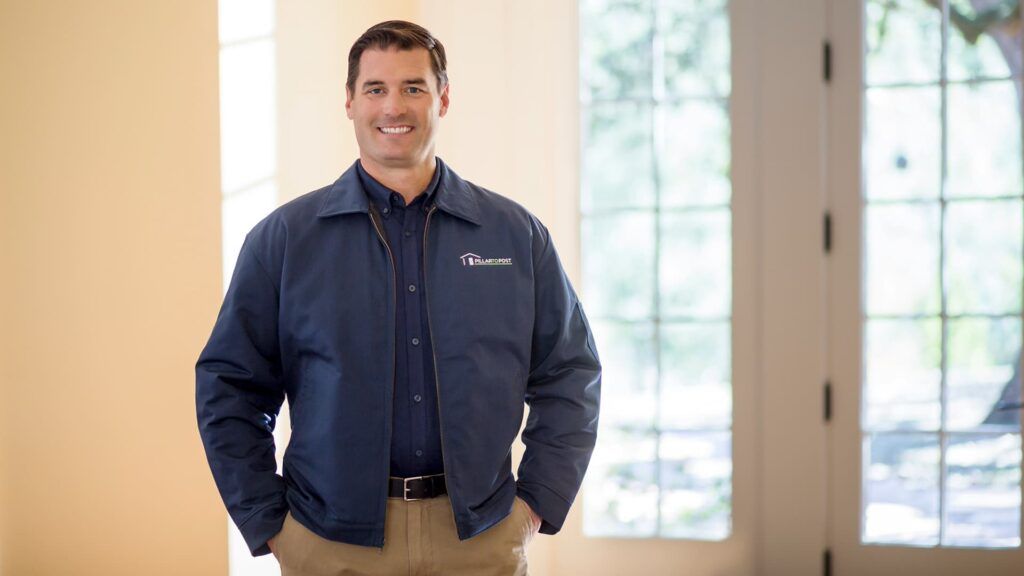
A Pillar To Post franchise is a home-based, executive-style business in residential home inspection where the owner leads a team of inspectors instead of spending the day on ladders and in crawl spaces.
The model centers on building long-term relationships with real estate professionals and delivering consistent, tech-enabled inspections within a defined territory. This review looks at how the franchise operates day to day, what it costs to get started, the training and support provided, and the kind of owner who tends to do well, so you can judge whether Pillar To Post is a fit for your goals.
This article is sponsored by Pillar To Post Home Inspectors and was created in partnership with the brand to provide accurate, compliance-safe information about its business model and franchise opportunity.
Nothing in this article should be considered legal, financial, or tax advice. Prospective franchisees should always review the most recent Franchise Disclosure Document (FDD) with qualified advisors before making an investment decision.
Key Facts at a Glance.
- Founded year: 1993; franchising in the U.S. since 1995.
- Headquarters: Tampa, Florida (U.S. corporate office); Toronto, Ontario (international home office).
- Business model: Home-based, executive-model residential home inspection with a team of certified inspectors.
- Owner profile snapshot: Sales or operations leaders and real-estate-adjacent professionals who want to lead teams and build referral networks.
- Training highlight: “Foundations for Success” 11-week blended training (virtual and hands-on) plus ongoing coaching and regional/annual meetings.
- Territory note: Non-exclusive, geographically defined territories based on board-of-realtors boundaries, housing units, and transaction activity.
Who owns Pillar To Post, and how did the brand get started?
Pillar To Post, Inc. is part of the FS Brands family (FirstService Brands), a group that includes other home-services franchise systems, and operates as a Delaware corporation with U.S. headquarters in Tampa, Florida.
The brand was founded in 1993 by entrepreneur Mike Brewer, who saw an opportunity to professionalize and standardize home inspection services. He launched the business after experiencing inconsistent home inspections and identifying a lack of structured technical training, clear standards of practice, and standardized reporting in the industry.
By 1994, Pillar To Post had formalized a technical training program, business startup support, and a standardized report format. By 2000, the company had become the largest home inspection company in North America.
In 2003, Mike Brewer sold the company to The Franchise Company, which is now aligned under FS Brands. Today, Pillar To Post Home Inspectors remains part of a larger home-services platform that also includes brands such as California Closets, CertaPro Painters, Floor Coverings International, and Paul Davis Restoration.
Current leadership includes President and CEO Charles Furlough, who previously operated as a franchisee before joining the corporate team. The leadership bench also includes executives in field operations, finance, marketing, technology, technical standards, business development, and franchise development.
How much does it cost to open a Pillar To Post Home Inspectors franchise?
According to the 2026 FDD, the total estimated initial investment to open a Pillar To Post franchise ranges from $102,690 to $134,290. Because this is a home-based service franchise, the investment profile differs from a retail concept, but candidates should still expect costs related to fees, equipment, technology, training support, marketing, and working capital.
Estimated Initial Investment.
| Item | Low Estimate ($)* | High Estimate ($)* |
|---|---|---|
| Initial Franchise Fee* | 58,500* | 58,500* |
| Real Estate and Improvements* | Not Included in Total | Not Included in Total |
| Pillar To Post Tool Bundle* | 3,500* | 4,500* |
| Local Tool/Equipment Purchases* | 1,000* | 2,000* |
| Computer Equipment and Software* | 3,500* | 6,000* |
| PTP360 Equipment Package* | 800* | 1,100* |
| Office Equipment, Furniture and Supplies* | 750* | 1,000* |
| Business Telephone Service – Setup* | 190* | 190* |
| Connected Services* | 300* | 600* |
| Foundations for Success Marketing Bundle* | 3,000* | 5,000* |
| Business Licenses and Name Registration* | 300* | 1,000* |
| Foundations for Success Automated Marketing Campaign* | 10,000* | 15,000* |
| Vehicle* | 3,000* | 6,000* |
| Vehicle Branding* | 3,000* | 4,000* |
| Professional Services* | 1,500* | 2,500* |
| Pillar To Post Attire* | 500* | 1,000* |
| Various Account Set Up Fees and Organization Dues* | 600* | 1,000* |
| Errors and Omissions and Other Insurance Premiums for First 3 Months* | 750* | 1,000* |
| Pillar To Post Annual Conference and Regional Meetings* | 1,500* | 4,000* |
| Additional Funds – 3 Months* | 10,000* | 20,000* |
| Total Estimated Investment* | 102,690* | 134,290 |
Ongoing Fees & Support.
| Category | Low Estimate* | High Estimate* |
|---|---|---|
| Royalty Fee* | 7%* | 7%* |
| Brand/Marketing Fund* | 4%* | 4%* |
| Local Marketing Spend* | Not disclosed | Not disclosed |
| Technology / Software* | 5.50* per inspection | Not disclosed |
| Other Periodic Fees* | Not disclosed | Not disclose |
Important context: These figures reflect startup and early operating needs only. They do not indicate financial performance or outcomes.
What tends to move the total up or down?
The total startup range can move based on local operating choices, hiring plans, technology needs, and the amount of working capital a candidate wants to reserve. Even though the concept is home-based, the cost range still reflects real differences in market conditions and owner decisions.
- Real estate choices: A home office can keep occupancy costs low, but local regulations or personal preferences may push some owners toward outside office space.
- Local labor: Staffing timing and wage levels can affect the amount of working capital needed in the early months.
- Inventory and equipment: Cameras, tools, office setup, and branded materials can shift the final startup total.
- Vehicles and branding: Vehicle condition, wrap choices, and related setup can move this category higher or lower.
- Local marketing decisions: Launch strategy and local outreach intensity can influence opening and early operating spend.
- Working-capital assumptions: Candidates with a more conservative cushion may budget above the minimum estimate.
Using the FBA’s franchise financial calculator can help candidates model different startup scenarios in a more structured way.
What is Pillar To Post’s business model, and what does day-to-day operations look like?
Pillar To Post operates as a residential home inspection franchise with an executive ownership model. In practical terms, the franchisee builds and leads the business while trained inspectors handle the field inspections themselves.
The business serves homebuyers, sellers, and people involved in residential real estate transactions. It also offers related services such as radon testing, mold testing, septic inspections, sewer scoping, water system testing, and pool or spa inspections, depending on the market and operating setup.
The franchisor positions this as a leadership and relationship-driven business, not a passive model and not a role built around the owner climbing roofs or completing the inspections personally. Franchisees are expected to drive local business development, manage a team, oversee customer experience, and run the operation according to the brand’s systems and standards.
What does a typical day look like for an owner-operator?
A typical Pillar To Post franchise owner spends the day leading people, managing schedules, building referral relationships, and making sure service quality stays consistent. The role is much closer to sales and operations management than technical field work.
- Staffing and team management: Hiring inspectors and support staff, coaching employees, and creating accountability around service standards.
- Service delivery and quality checks: Reviewing reports, handling customer or agent concerns, and checking that inspections meet brand expectations.
- Sales activity and customer outreach: Meeting with real estate agents, brokers, and related referral partners to maintain and grow local relationships.
- Scheduling and logistics: Monitoring the calendar, managing inspection volume, and coordinating routes, add-ons, and booking flow.
- Local marketing execution: Supporting digital outreach, presentations, community visibility, and local relationship-building.
- Administrative and reporting rhythms: Reviewing dashboards, maintaining records, and staying current on licensing, insurance, and compliance details.
Candidates who want a clearer view of how owner responsibilities compare across franchise models may benefit from attending or reviewing an franchise education webinar.
What training, support, and technology does the franchisor provide?
Pillar To Post provides a structured support system that includes onboarding, operating procedures, technology, coaching, and ongoing education. The support model is designed to help owners run the business as leaders while maintaining a consistent customer experience across markets.
Support & Systems Overview.
| Support Area | Details |
|---|---|
| Initial Training | Foundations for Success 11-week program with virtual and hands-on instruction covering business ownership, inspections, sales, and marketing |
| Ongoing Training | Continuing education, annual Brand Conference, at least one regional meeting per year, and additional training opportunities |
| Field Support | Regional directors and field operations leadership provide coaching and ongoing support |
| Manuals / SOPs | Operations Manual, standards of practice, and required system procedures |
| Technology Platform | OnePoint platform, PTP360, and related systems for scheduling, reporting, communication, and service delivery |
| Marketing Support | Brand-level marketing, launch support, digital assets, and local marketing tools |
Additional support typically includes:
- Training format and duration: The Foundations for Success program is described as an 11-week blended learning experience.
- Field support cadence: Regional and field leaders support owners after launch through coaching and operational guidance.
- Manuals and operating procedures: The franchise system uses formal standards, procedures, and required tools to keep operations consistent.
- Technology systems: Owners are required to use the brand’s technology stack for reporting, workflow, booking, and customer communication.
- Marketing guidance: The system provides brand-level resources and local execution support without promising specific results.
What should you confirm during due diligence?
This is the stage where candidates should pressure-test the opportunity and fill in the gaps that marketing materials do not answer on their own. Good due diligence helps separate what is clearly documented from what still needs clarification before a decision is made.
Questions to ask during due diligence include:
- How deep and how long is the initial training program?
- What does ongoing field support look like after launch?
- What technology is required, and what does it cost?
- How are territories defined and enforced?
- What are the renewal and transfer terms?
- What assumptions underlie the Item 7 cost estimates?
- Is Item 19 financial performance information available in the FDD?
- Can you speak directly with current and former franchisees?
Candidates who want a broader framework for evaluating opportunities can also review live education programming such as FranPath Live.

How do territories, real estate, and equipment requirements typically work?
Pillar To Post uses a territory-based structure tied to real estate activity, while the operating model remains largely home-based and mobile. For most candidates, the practical questions here are less about storefront selection and more about territory design, required equipment, and how the business functions in the field.
What real estate profile is typical?
The typical setup is home-based rather than retail-based. That means most franchisees are not opening a storefront, and the FDD does not present the model as a traditional brick-and-mortar business.
That said, the business still needs an approved operating location in the territory. Local zoning, HOA restrictions, and business-use rules can affect whether a home office is practical, so candidates should confirm those details early in the process.
How does territory protection work?
Pillar To Post currently offers non-exclusive territories. Territory boundaries are established with reference to local boards of realtors and other demographic and housing-related factors.
That distinction matters. In franchise terms, a protected territory usually means the franchisor limits where other operators can actively compete or solicit business, but Pillar To Post’s current offering is not framed as a fully exclusive territory system for new buyers.
Candidates should review Item 12 carefully and ask how territory boundaries, overlap, and referral-source access work in practice in their target market.
What equipment or vehicles are commonly required?
The required operating package is more about mobile tools and technology than leasehold buildout. Owners should expect to invest in inspection-related equipment, office setup, communication tools, and branded business materials.
Common requirements include:
- Inspection tablet computer
- Office computer and internet setup
- 360-degree camera and related package
- Infrared camera and inspection tools
- Branded attire and printed materials
- Vehicle and vehicle branding
Specific equipment packages can change over time, so candidates should confirm the current required list and replacement expectations during due diligence.
Who is the ideal Pillar To Post owner, and what time commitment is typical?
The best fit is usually someone who wants a full-time leadership role in a structured, service-based business. Pillar To Post presents the concept as an executive model, which means the owner is expected to lead the business rather than treat it as a passive investment.
Fit factors often include:
- Leadership and team-management ability
- Comfort following systems and processes
- Sales or customer-service aptitude
- Community outreach and local networking comfort
- Operational discipline and attention to detail
- Realistic expectation of full-time involvement
The candidate profile described in the brand materials leans toward experienced sales leaders, operations professionals, and real-estate-adjacent candidates who want to own and grow a team-based business. Candidates who want a more structured self-assessment can use the Zorakle fit assessment as part of their evaluation.
How does Pillar To Post compare to similar franchise options?
Pillar To Post sits in the home services category, but its operating rhythm is closely connected to residential real estate activity. That gives it a different day-to-day profile from franchises built around walk-in traffic, recurring household services, or retail visibility.
Helpful comparison points include:
- Core service focus: Residential home inspections and related add-on services.
- Operational complexity: A leadership-driven model with inspectors, support systems, and ongoing local relationship management.
- Territory structure: Defined territory boundaries, but a non-exclusive structure for current offerings.
- Service delivery channels: Mobile, home-based, and heavily dependent on direct and referral-based local business development.
- Experience requirements: Prior inspection experience is not required, but leadership, networking, and process discipline matter.
- Support depth: Formal training, operating systems, and field support are central parts of the value proposition.
Candidates comparing several concepts can explore franchise options and also get franchise guidance to better understand differences in owner fit, operating style, and category demands.
FAQ about the Pillar To Post Home Inspectors franchise.
What is the total investment to open a Pillar To Post franchise?
The 2026 FDD estimates a total initial investment between $102,690 and $134,290. Actual startup needs can vary based on local operating choices, staffing, equipment, and working capital assumptions.
Do I need home inspection or construction experience to own a Pillar To Post franchise?
No. Pillar To Post presents the model so franchisees lead the business and hire trained inspectors rather than performing inspections themselves.
How long does Pillar To Post’s initial training program take?
The Foundations for Success program is described as an 11-week blended learning system totaling approximately 383 hours. It covers business ownership, inspections, sales, and marketing.
How are Pillar To Post territories defined?
Territories are defined using local real estate and demographic factors, and the current offering is non-exclusive. Candidates should review Item 12 and confirm exactly how the territory structure works in their intended market.
Does Pillar To Post provide Item 19 financial performance information?
The franchisor may provide financial performance information in Item 19 of the FDD; consult the document with a qualified advisor.
How many Pillar To Post locations are there?
As of December 31, 2025, the FDD reports 381 U.S. franchise units and 35 Canadian franchise units.
Is Pillar To Post the right fit for you?
Pillar To Post may be a strong fit for candidates who want to lead a team, build referral relationships, and operate a home-based service business tied to the housing market. It may be a weaker fit for people looking for passive ownership, limited sales activity, or a more independent technical role.
It may be a good fit if you:
- Want an executive ownership role instead of a technician role
- Are comfortable leading people and building systems
- Like relationship-based local business development
- Prefer a home-based service model over a storefront
- Want a structured brand with defined training and operating tools
You may want to be cautious if you:
- Want a passive or semi-absentee model
- Dislike hiring, coaching, or managing employees
- Are uncomfortable with referral-based sales activity
- Prefer a business with less connection to real estate transaction cycles
- Want broad territory exclusivity without carefully reviewing Item 12
If you want to compare this franchise with other models and evaluate your fit as an owner in a more structured way, consider using independent tools, educational resources, and professional advisors to guide your next steps.
Ready to take the next step? The Franchise Brokers Association connects aspiring owners with the guidance, tools, and franchise options they need to make a confident, informed decision. Whether you are still exploring or ready to move forward, explore franchise opportunitie with the support of an experienced FBA consultant.