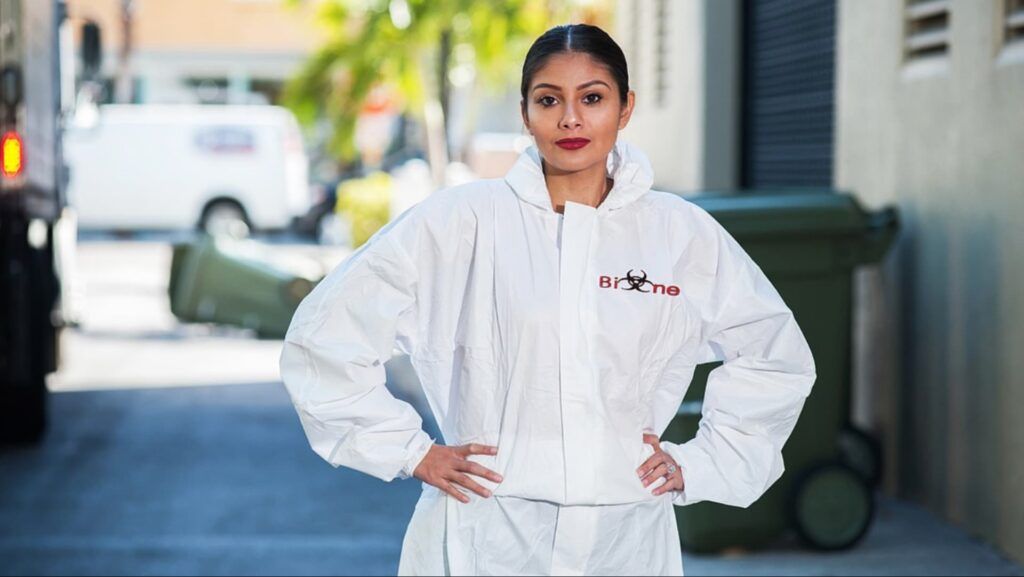

Bio-One is a home-based franchise providing biohazard cleanup, crime and trauma scene cleanup, hoarding remediation, and related services. Its 2026 Franchise Disclosure Document (FDD) estimates an initial investment of $134,645 to $221,095, including a $60,000 franchise fee. This guide examines startup costs, ongoing obligations, customer acquisition, training, territory protections, adverse disclosures, and owner fit.
About this article. Bio-One is a paying member of the Franchise Brokers Association (FBA). FBA is paid by the franchisors it works with, and FBA brokers earn a commission when a candidate they work with buys a franchise. Check every figure here against Bio-One’s current Franchise Disclosure Document (FDD), and review it with a franchise attorney before you invest.
What is a Bio-One franchise?
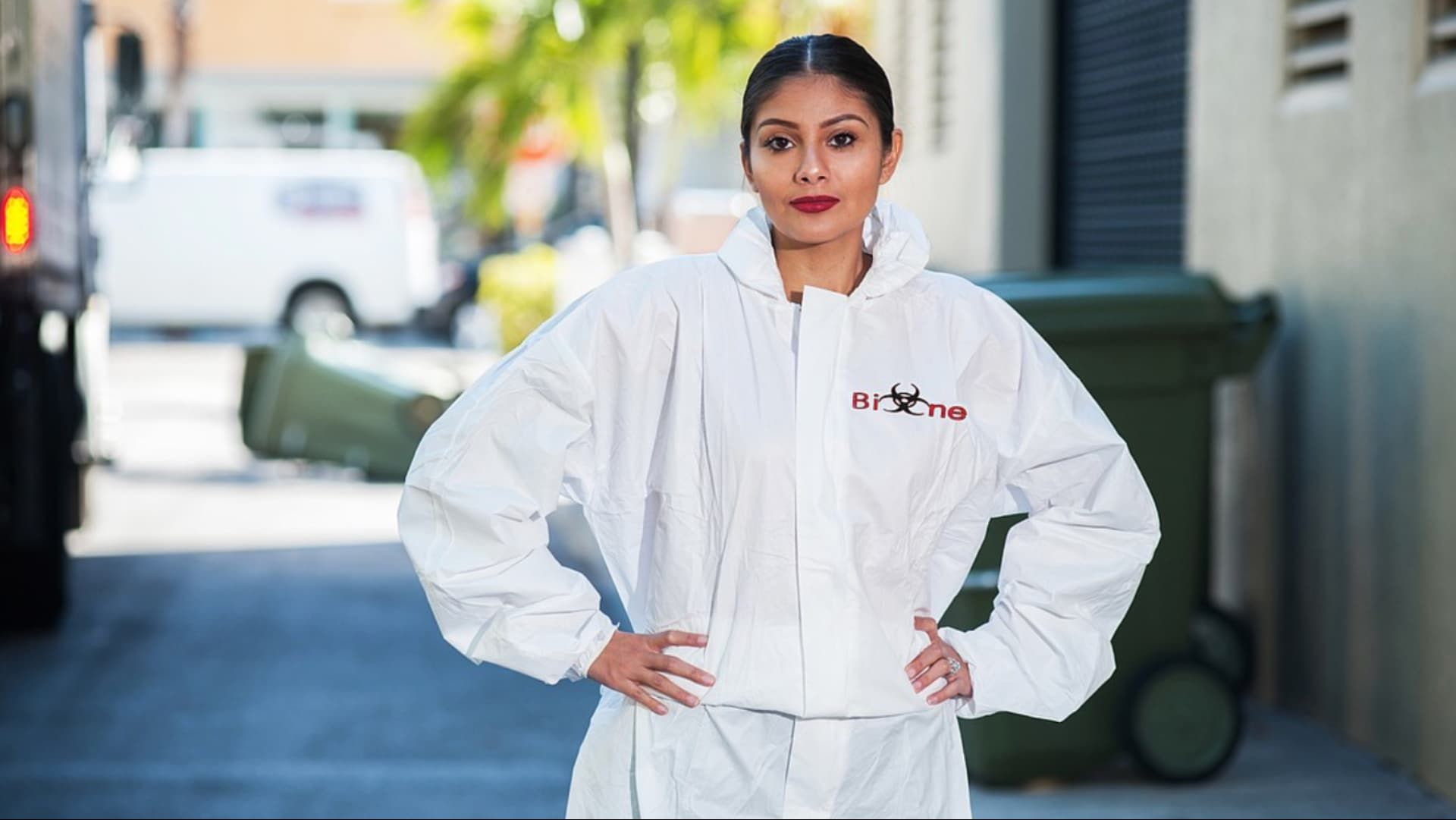
A Bio-One franchise provides specialized cleaning and decontamination services for residential and commercial properties. The FDD describes services including removal of regulated and non-regulated biomedical waste, cleaning and disinfecting, hoarding remediation, medical waste services, and sharps removal. The business is intended to operate from the franchisee’s home, although franchisees may choose to rent space.
The franchisor is Ringside Development Company d/b/a Bio-One Colorado, Inc., an Arizona corporation that has franchised since 2010. Its parent has been FS PEP Holdco, LLC, an affiliate of Princeton Equity Group, since July 2021. An affiliate, Five Star Connect, Inc., doing business as Pronexis, provides centralized call center services.
This is not simply a general cleaning business. Prospective owners need to evaluate the safety requirements, emotional demands, licensing obligations, and customer relationships involved in specialized cleanup work. Item 1 places responsibility for applicable licenses, certifications, and legal compliance on the franchisee.
How does a Bio-One owner find customers?
Bio-One combines relationship-based marketing with local advertising and digital lead generation. The FDD identifies the general public, police departments, and fire stations among the audiences franchisees market to. It also requires local advertising, internet marketing, and call tracking to attribute leads and jobs to marketing sources.
FBA’s Members information describes owners developing tailored pitches, visiting community contacts, and remaining available to coordinate incoming jobs. It also describes local websites, SEO guidance, and social media resources.
The customer-acquisition model therefore involves several responsibilities:
- Building professional relationships before a cleanup need arises.
- Maintaining visibility through approved local and digital marketing.
- Responding promptly to inquiries and coordinating job availability.
- Preparing estimates, documenting work, and managing billing.
- Working with clients or insurers when applicable.
Referral relationships are an important part of the model, but this article does not claim they generate a particular share of revenue. Ask current franchisees how their work is divided among professional referrals, online inquiries, repeat customers, and other sources.
What does a Bio-One owner do day to day?
FBA’s Members information describes a mix of marketing, job coordination, hands-on cleanup, and administration. An owner may spend part of the day meeting community contacts, then coordinate technicians or attend a job site when a call arrives. Afterward, the work includes pricing, invoicing, and communicating with the client or insurer.
An illustrative day—not an actual franchisee account—might include visiting property management offices in the morning, coordinating an afternoon cleanup, and finishing with job documentation and invoices. Actual schedules depend on demand, staffing, and the owner’s operating role.
Owners can hire technicians and may structure daily management around a trained principal operator or designated manager. Item 15 requires the owner, principal operator, or designated manager to complete training and personally participate in day-to-day operations. The franchise agreement also requires that responsible person to devote full time, attention, and best efforts to management and operation.
Hiring a crew should not be confused with creating a hands-off investment. Confirm the proposed management structure, training obligations, and owner responsibilities before signing.
How much does a Bio-One franchise cost?
Bio-One’s 2026 FDD estimates an initial investment of $134,645 to $221,095. The cover page states that this includes $103,095 payable to the franchisor or an affiliate. The investment estimate generally covers opening the business and the first three months that follow, unless otherwise stated.
| Selected startup cost | Estimated amount |
|---|---|
| Initial franchise fee | $60,000 |
| Quick Start Package | $39,500, plus applicable tax, tariff, and freight/shipping |
| Technology Startup Fee | $1,595 |
| OSHA Training Fee | $2,000 |
| Annual conference registration deposit | $2,000 |
| Local marketing | $9,000 to $15,000 |
| Business vehicle | $0 to $45,000 |
| Additional funds for three months | $15,000 to $25,000 |
| Total estimated initial investment | $134,645 to $221,095 |
Source: Bio-One 2026 FDD, Item 7. These are the franchisor’s estimates of startup costs, not results.
Selected lines are shown; they are components of the total, not additional amounts to add on top. Review Item 7 for every expenditure and its notes.
The Quick Start Package, or QSP, includes equipment, tools, and supplies such as cleaning products, protective suits, gloves, masks, hazardous-waste transport containers, vacuums, and certain vehicle shelving. Consumables must be replenished as they are used.
The home-based format avoids a required retail storefront, but it does not eliminate vehicle, equipment, insurance, licensing, or working-capital needs. Item 7 includes allowances for optional rented space and states that additional capital may be necessary beyond its estimates.
These are startup estimates—not historical revenue or profit results. Actual costs can vary by location, vehicle needs, training travel, and other circumstances.
Are franchise-fee discounts available?
Item 5 states that eligible veterans and first responders may qualify for a 15% franchise-fee discount. It also discloses a $10,000 multi-unit discount when more than one franchise is acquired at the same time. Ask the franchisor to confirm eligibility, application, and whether discounts can be combined.
Does Bio-One provide financing?
Item 10 states that the franchisor does not offer direct or indirect financing and does not guarantee franchisees’ notes, leases, or obligations.
Before committing, estimate your franchise budget with FBA’s franchise funding calculator, then review financing options and cash-flow assumptions with qualified advisors.
What are Bio-One’s ongoing fees?
The royalty is the greater of 7.5% of Gross Sales or an escalating monthly minimum. Franchisees also have national marketing, local advertising, technology, and other obligations.
| Ongoing obligation | Amount disclosed in the 2026 FDD |
|---|---|
| Royalty | Greater of 7.5% of Gross Sales or the applicable minimum |
| Minimum royalty | $750 initially; $1,500 from month 13; $2,250 from month 25 through the initial term |
| National marketing fee | Greater of $200 per month or 2% of Gross Sales; may increase to 3% with notice |
| Local advertising expenditure | Items 6 and 11 specify the greater of $3,000 per month or 5% of Gross Sales |
| Technology maintenance fee | $650 per month at issuance |
| Accounting software | $0 to $250 per month |
Source: Bio-One 2026 FDD, Items 6 and 11. This is a selected summary, not the complete fee schedule.
The local advertising obligation is not simply another payment to the franchisor. Item 6 says franchisees pay local suppliers, subject to approval, and the franchisor may allocate expenditure to a regional advertising cooperative.
There is also wording to clarify before signing: although Items 6 and 11 specify the $3,000-or-5% requirement, Item 7’s notes and another passage in Item 11 refer to a $2,000 monthly local-marketing minimum. Ask the franchisor to reconcile these provisions in writing and explain whether the amounts overlap or create separate requirements.
What do the minimum commitments mean for budgeting?
Using the $3,000 local-advertising floor in Items 6 and 11, the initial minimum royalty, national marketing, local advertising, and technology amounts total $4,600 per month once applicable:
- $750 minimum royalty.
- $200 minimum national marketing fee.
- $3,000 local advertising expenditure.
- $650 technology maintenance fee.
This is a selected subtotal, not the total cost of operating the business. It excludes payroll, vehicle expenses, insurance, supplies, debt payments, and other costs. It also does not resolve the local-marketing wording described above.
Item 6 states that royalties and fees collected with the royalty begin within 90 days after signing or the month following the business’s first Gross Sales, whichever comes first. The technology fee may also increase with at least 60 days’ notice. Review payment commencement dates and increase provisions when building your cash-flow plan.
What do Bio-One franchisees earn?
Bio-One’s 2026 FDD includes 2025 franchisee revenue information organized into four tiers, along with a separate expense and Adjusted EBITDA presentation. This article does not reproduce those financial-performance figures.
The revenue section states that 110 franchisees fit within its table, while the four tier populations total 113. The expense presentation also refers to different reporting populations. Prospective buyers should ask the franchisor to reconcile the counts and explain the reporting bases before using the tables in an investment model.
Source: Bio-One 2026 FDD, Item 19. Results are for the outlets the franchisor describes; yours may differ. Read the full Item 19 in the FDD.
Item 19 does include this qualification:
“Some outlets have sold this amount. Your individual results may differ. There is no assurance you’ll sell as much.”
Source: Bio-One 2026 FDD, Item 19. Results are for the outlets the franchisor describes; yours may differ. Read the full Item 19 in the FDD.
When reviewing the disclosure:
- Read all four tiers, including the lowest tier.
- Confirm how “revenue” is defined and whether it matches the agreement’s definition of Gross Sales.
- Identify excluded or non-reporting franchisees.
- Distinguish franchisees from locations.
- Review all expense and Adjusted EBITDA notes before making comparisons.
- Request the written substantiation the FDD says is available upon reasonable request.
Revenue is not owner take-home income. Do not treat a revenue figure, an expense percentage, or Adjusted EBITDA as interchangeable measures of what an individual owner will earn.
What do Bio-One’s litigation and outlet disclosures show?
Prospective buyers should review Item 3’s litigation disclosures and Item 20’s outlet changes together, while keeping the categories distinct.
What litigation has Bio-One disclosed?
The FDD issued April 8, 2026, describes:
- Five former-franchisee matters involving claims related to the franchise relationship, including breach of contract and required supplies. One court action was stayed pending arbitration; the other matters were in arbitration.
- Three franchisor-initiated arbitrations alleging that former franchisees stopped reporting and appeared to operate competing businesses.
- Four historical state regulatory matters: California consent orders from 2018 and 2021, an Illinois assurance from 2020, and a Washington consent order from 2020.
The historical matters include unregistered franchise sales and a California finding that the franchisor omitted a former president’s 2007 felony convictions from its 2021 registration application. The Washington matter was resolved without an admission or denial of the allegations, according to the FDD.
These descriptions reflect the filing’s disclosures, not independently verified current case statuses. Pending allegations are not findings of wrongdoing, and FBA does not judge the merits of the disputes. Ask the franchisor for updates and have a franchise attorney review Item 3.
How has the number of Bio-One outlets changed?
Item 20 reports the following changes in franchised outlets during 2025:
| Franchised-outlet movement | Count |
|---|---|
| Beginning of year | 152 |
| Opened | 12 |
| Terminated | 17 |
| Non-renewed | 0 |
| Reacquired by franchisor | 3 |
| Ceased operations for other reasons | 0 |
| End of year | 144 |
The three reacquired outlets appear as company-owned outlets, bringing the year-end system total to 147: 144 franchised and three company-owned.
The franchised-outlet table records 11 terminations in 2024 and 17 in 2025. These are outlet events—not necessarily counts of distinct owners—and the tables do not explain each termination’s circumstances.
Ask the franchisor to explain the terminations and reacquisitions, and speak with current and former franchisees about their experiences.
What training and support does Bio-One provide?
Item 11 describes approximately five days of initial training, comprising about 30 classroom hours and 10 on-the-job hours. Training is held at the franchisor’s headquarters or another designated facility. The headquarters identified in the FDD is in Springville, Utah.
FBA’s Members information describes training and onboarding that include:
- In-person instruction on operations and marketing.
- Practice with staged cleanup jobs.
- Personal protective equipment and worksite safety.
- Chemical and equipment selection.
- Opportunities to assist on live job sites.
- Website information, marketing materials, billing, and invoicing setup.
The Members information also describes a corporate mentor, SEO guidance, a social media content library, and an owners-only discussion group. Prospective buyers should distinguish these program descriptions from the contractual assistance commitments in Item 11.
What about OSHA and specialized training?
The FDD requires separate OSHA training for the applicable owner or equity owner. It describes approximately 24 hours or more of classroom instruction and quarterly scheduling. If the course is not available before opening, Item 11 says the attendee must take it at the next available time. Confirm the current calendar and course duration directly.
There is an important service limitation: the FDD states that Bio-One does not provide training for cleaning or removing controlled substances such as fentanyl. Franchisees cannot accept those jobs without appropriate third-party training and the necessary federal and state licenses.
For broader franchise education before speaking with a franchisor, FBA offers a free franchise education webinar and FranPath Live sessions.
How long does it take to open a Bio-One franchise?
Item 11 says franchisees typically open within 60–90 days after the agreement is signed by both parties and generally must open within 90 days of its effective date. The franchisor may grant an extension of up to 20 days for qualifying circumstances beyond the franchisee’s reasonable control.
Opening depends on completing required initial training, obtaining permits and licenses, securing equipment, and providing evidence of insurance. The separately scheduled OSHA course may follow opening if the next available session occurs later.
How does a Bio-One territory work?
Bio-One does not grant an exclusive service territory. Instead, Item 12 describes a Protected Marketing Territory, or PMT, typically covering approximately 1,000,000 people, although the franchisor may grant a smaller one.
The distinction matters:
- Marketing and solicitation generally must remain within the PMT unless permission is granted.
- The PMT provides certain protections against other franchisees’ marketing activities, subject to stated exceptions.
- Franchisees may serve customers outside their PMT.
- Other franchisees and company- or affiliate-owned businesses may also serve customers within it.
A protected marketing area is therefore not the same as exclusive rights to all customers or jobs in that area. Have an attorney review the protections, pre-existing rights, national-account provisions, and franchisor reservations before relying on a territory map.
Who is a Bio-One franchise right for?
FBA’s Members information emphasizes communication, relationship building, business leadership, community involvement, and a willingness to help people through difficult circumstances. It states that prior industry experience is not required.
The model may suit someone who:
- Enjoys developing professional relationships and following up consistently.
- Can communicate calmly and compassionately.
- Is comfortable managing safety-sensitive work.
- Can recruit, train, and coordinate technicians.
- Wants a home-based operating model.
- Can manage marketing commitments and operating expenses while developing demand.
An owner does not necessarily have to perform every cleanup personally. However, the business requires a trained, participating operator or designated manager, and hiring staff does not remove the franchisee’s obligations.
The model deserves additional caution if you:
- Want a business that runs without an accountable daily operator.
- Are uncomfortable overseeing traumatic or hazardous work.
- Require an exclusive service territory.
- Have limited reserves beyond the initial investment.
- Expect referrals, insurance payments, or financial results to be guaranteed.
The Zorakle owner-fit assessment can support a broader discussion of ownership fit. You can also talk with a franchise consultant about how Bio-One compares with other specialized cleaning and restoration opportunities.
What should you ask before buying a Bio-One franchise?
Before committing, review the complete FDD and agreement with qualified advisors and speak with current and former franchisees. Focus on questions that connect the disclosures to operating conditions in your proposed market:
- Litigation: What has changed in the Item 3 matters since the FDD was issued?
- Outlet changes: What led to the 17 terminations and three franchisor reacquisitions reported for 2025?
- Advertising: How do the $3,000-or-5% requirement and the separate $2,000 references fit together?
- Item 19: Why do the stated population and tier counts differ, and how are revenue and reporting groups defined?
- Cash flow: When do required payments begin, and what expenses should be budgeted beyond Item 7’s three-month allowance?
- Lead sources: Which referral partners and advertising channels generate work in comparable markets?
- Insurance billing: How are estimates, claims documentation, disputes, and collection delays handled?
- Staffing: Which responsibilities can technicians or a designated manager perform, and what remains with the owner?
- Territory: What marketing protections apply, and who else can provide services in the area?
- Training: Which services require additional third-party training, licenses, or certifications?
Ask owners about both the strengths and difficulties of the model. Use their experiences to test assumptions—not as guarantees of your own results.
Bio-One franchise FAQ
How much does it cost to open a Bio-One franchise?
The 2026 FDD estimates an initial investment of $134,645 to $221,095, including a $60,000 franchise fee. Item 7 generally covers opening and the first three months afterward, unless otherwise stated. Actual costs may differ.
What is the Bio-One royalty?
The royalty is the greater of 7.5% of Gross Sales or the applicable monthly minimum: $750 initially, $1,500 from month 13, and $2,250 from month 25 through the initial term. Additional marketing, advertising, technology, and other obligations apply.
Do I need cleanup experience to own Bio-One?
FBA’s Members information states that prior industry experience is not required. The FDD requires initial training and separate OSHA training for the applicable participants. Certain services require additional training and licenses.
Can a Bio-One owner hire a manager instead of handling every job?
Item 15 permits the owner, principal operator, or designated manager to fulfill day-to-day participation requirements. The responsible operator must complete training, and the agreement requires full-time attention to management and operation. Confirm how those provisions apply to your proposed structure.
How long does it take to open a Bio-One franchise?
The FDD states a typical opening period of 60–90 days and a general 90-day deadline, with a possible limited extension. Training, permits, equipment, and insurance affect readiness to open.
Does Bio-One provide an exclusive territory?
No. Item 12 provides a Protected Marketing Territory rather than an exclusive service territory. A typical PMT covers approximately 1,000,000 people, but other Bio-One operators may still serve customers within it under the disclosed terms.
Does Bio-One offer financing?
Item 10 states that the franchisor does not offer direct or indirect financing or guarantee franchisees’ financial obligations. Discuss any third-party options separately and verify their terms.
Ready to take the next step?
The Franchise Brokers Association helps prospective owners compare franchise models, explore ownership fit, and identify questions for further investigation. Explore franchise opportunities with an FBA consultant while conducting your own financial, legal, and franchisee due diligence.
Source notes and link list
- Ringside Development Company d/b/a Bio-One Colorado, Inc., 2026 Franchise Disclosure Document, issued April 8, 2026. Accessed November 2026. Items 1, 3, 5, 6, 7, 10, 11, 12, 15, 19 and 20.
- Bio-One franchise site, bioonefranchising.com. Accessed November 2026. Brand background and training description (franchisor-stated).
- FBA franchise records for Bio-One (franchisor-provided profile). Accessed November 2026. Day-to-day, training, support and candidate-fit descriptions (franchisor-stated).
- Federal Trade Commission, A Consumer’s Guide to Buying a Franchise, ftc.gov. Accessed November 2026. General franchise due-diligence guidance.