

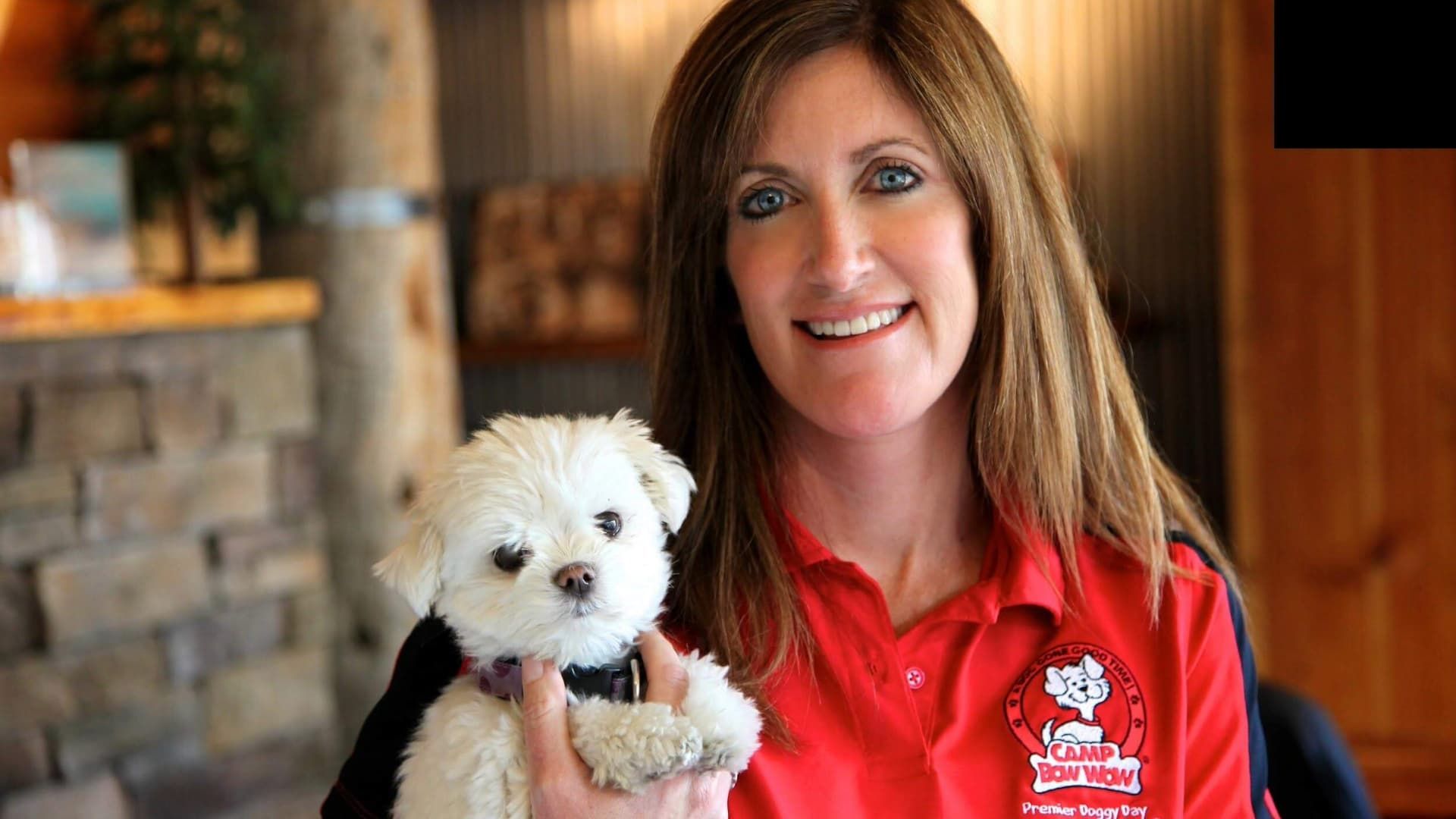
Opening a standard Camp Bow Wow franchise requires an estimated initial investment of $954,606 to $1,229,536, including a $50,000 initial franchise fee, according to the company’s 2026 Franchise Disclosure Document (FDD). Camp Bow Wow also offers multi-unit development and conversion options for qualified candidates.
About this article. Camp Bow Wow is a member of the Franchise Brokers Association. FBA publishes reviews of member brands as part of its membership program, and FBA and its brokers may receive a commission from the franchisor if a candidate FBA works with goes on to purchase a franchise. This article was researched and written by FBA from the brand’s current Franchise Disclosure Document and FBA’s own franchise database. The brand did not write, review, or approve it before publication.
Nothing in this article should be considered legal, financial, or tax advice. Prospective franchisees should always review the most recent Franchise Disclosure Document (FDD) with qualified advisors before making an investment decision.
Camp Bow Wow is a facility-based dog care franchise offering day care, overnight boarding, enrichment, and certain grooming services. Prospective owners should expect to manage, or oversee a manager responsible for, a staffed operation involving animal care, customer service, local marketing, and facility management.
What is Camp Bow Wow?
Camp Bow Wow provides dog care through physical facilities known as Camps. Required services generally include dog day care, overnight boarding, enrichment, and certain grooming services unless the franchisor agrees otherwise in writing. Full-service grooming and certain approved dog-training services are optional and require approval.
Propelled Brands acquired Camp Bow Wow in January 2024. As of December 31, 2025, Item 20 of the 2026 FDD reported 225 franchised Camps, 224 in the United States and one in Canada, plus one company-owned Camp.
This is a staffed service business rather than an owner-only pet care practice. It requires a suitable commercial facility, trained personnel, operating systems, and ongoing attention to customer and animal-care needs.
Services and customer experience
| Service | How customers may use it |
| Dog day care | Care and supervised activities while the dog owner is away |
| Overnight boarding | Accommodation during travel or other absences |
| Enrichment | Approved activities offered within the care model |
| Certain grooming services | Required grooming offerings under brand standards |
| Optional full-service grooming | Additional grooming services where approved |
| Optional dog training | Approved training delivered by qualified personnel |
A customer might use day care during the workweek and boarding while traveling. This example illustrates how services can fit together; it does not establish customer frequency, spending, retention, or financial performance.
Camp Bow Wow also requires webcam technology that lets customers view dogs remotely. The feature adds visibility to the service but does not guarantee customer retention, revenue, or profitability.
Visiting a Camp can help candidates understand the facility and customer experience. Conversations with current and former franchisees can provide additional insight into staffing, scheduling, maintenance, and day-to-day operating responsibilities.
Ownership and owner fit
A franchisee remains responsible for the Camp whether the owner works in the facility daily or appoints a manager to oversee daily operations. Ownership requires more than an interest in dogs; it also involves hiring, scheduling, customer service, local marketing, expense control, and compliance with operating standards.
Hands-on and manager-led ownership
Camp Bow Wow permits a manager to handle daily operations, but the franchisee remains responsible for the business. Under the FDD, the franchisee, the Majority Owner if the franchisee is an entity, or the manager must devote full time and best efforts to managing and operating the Camp. Required participants must also complete the Initial Camp Services Training program to the franchisor’s satisfaction.
| Ownership approach | Practical focus |
| Direct daily involvement | Participating in staff supervision, customer service, care routines, and facility oversight |
| Manager-led daily operations | Recruiting and overseeing a trained manager while retaining responsibility for the business |
A manager-led structure should not be interpreted as passive, absentee, limited-hours, or remote-only ownership.
For example, an owner’s meeting with a manager might cover staffing, customer concerns, maintenance, upcoming reservations, and marketing activity. This illustrates possible responsibilities rather than a typical schedule or guaranteed ownership experience.
FBA’s owner-fit assessment can help organize a discussion about your preferred role. You can also talk with a franchise consultant about owner-operated and manager-led businesses.
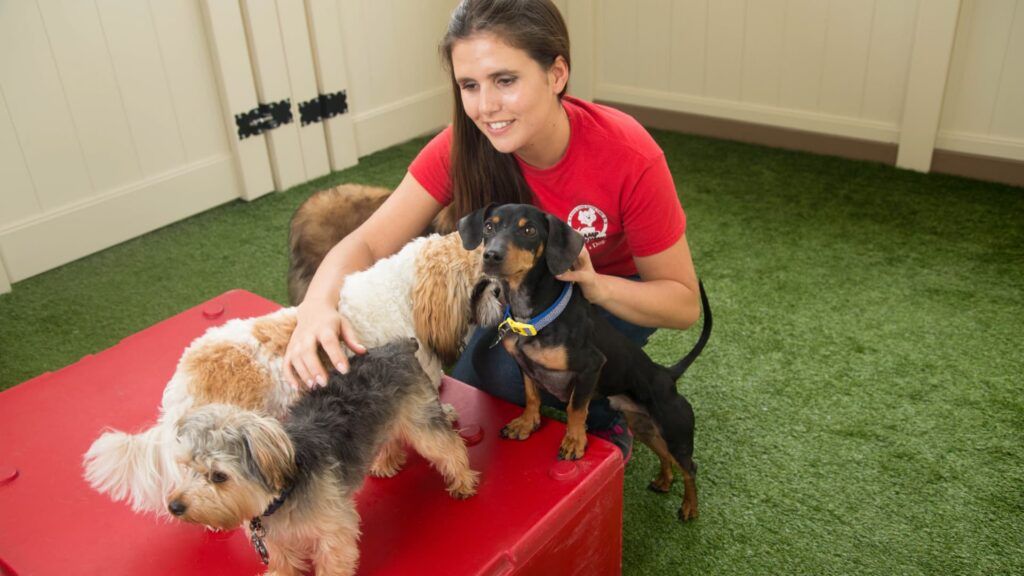
Training and opening support
The 2026 FDD describes 80 hours of initial training, consisting of 48 classroom hours and 32 hours of on-the-job training. It separately describes 32 hours of opening-week support at the Camp Site, which may be provided in person or virtually.
The seven-day classroom and in-Camp program is typically associated with the Westminster, Colorado office and a corporate Camp, although the franchisor may change the locations, delivery format, or training requirements. Portions may be delivered through webinars or online learning systems.
Initial training tuition for the franchisee or Majority Owner and the manager is included in the initial franchise fee. The franchisee remains responsible for travel, lodging, meals, wages, ground transportation, and other attendee expenses. Additional or repeat initial training is currently listed at $100 per person per day, plus applicable expenses.
Required participants must complete training to the franchisor’s satisfaction. Franchisees remain responsible for adequately training their employees, including personnel who do not attend the initial program.
Ask current owners how well training prepared them for staffing, customer service, operating technology, animal-care routines, and facility management, not only whether they enjoyed the program.
FBA’s free franchise webinar covers what to ask about training before you sign. You can also join a FranPath Live session to compare support models across brands.
Site and territory requirements
The FDD describes a standard prototype of approximately 6,000 square feet, with the possibility of approving a site about 15% larger or smaller depending on local real estate availability.
A property must satisfy the franchisor’s layout, equipment, safety, and operating standards. Before committing to a location, investigate zoning, kennel licensing, construction approvals, noise restrictions, insurance, environmental requirements, and any permits needed for optional services.
The initial Site Selection Area does not itself establish protected territorial rights. The Authorized Territory is finalized in the applicable franchise documentation. Even within an Authorized Territory, the franchisor retains specified rights involving other brands, alternative distribution channels, online activity, and other activities described in Item 12.
Confirm market availability, territory boundaries, retained franchisor rights, site-approval obligations, and lease requirements before signing a lease or purchase agreement.
Who may fit this business?
Camp Bow Wow may suit candidates who want to lead a staffed animal-care business and are prepared for facility, employee, customer-service, local-marketing, and financial-management responsibilities.
The brand’s franchise investment page lists minimum financial qualifications of $500,000 in liquid capital and $1.2 million in net worth. These are screening requirements, not the total capital needed to open or operate a Camp.
The model may not suit someone seeking a home-based business, minimal staffing, guaranteed owner income, or a hands-off investment.
Camp Bow Wow franchise cost
The estimated initial investment for a standard Camp is $954,606 to $1,229,536. The range includes opening expenses and $80,000 in additional funds for the first three months of operations.
These estimates come from the 2026 FDD issued May 1, 2026. They are not forecasts of revenue, profitability, cash flow, or investment returns.
Standard franchise startup expenses
| Startup expense | Low estimate | High estimate |
| Initial franchise fee | $50,000 | $50,000 |
| Travel costs for initial training | $1,000 | $2,965 |
| Improvements for pre-existing leased buildings | $516,735 | $663,917 |
| Equipment, supplies, and opening inventory | $136,799 | $136,799 |
| Dog cabins and interior fencing | $76,750 | $76,750 |
| Signage | $4,846 | $8,000 |
| Webcam system | $23,639 | $29,000 |
| Personnel costs | $5,592 | $34,281 |
| Deposits | $7,335 | $11,460 |
| Plans and permits | $31,000 | $65,000 |
| Professional services | $910 | $11,864 |
| Camp launch advertising | $15,000 | $15,000 |
| Financing fees | $0 | $39,500 |
| Additional funds for the first three months | $80,000 | $80,000 |
| Project-management fee | $5,000 | $5,000 |
| Total estimated initial investment | $954,606 | $1,229,536 |
For the most accurate and current information, review the latest Franchise Disclosure Document (FDD) for Camp Bow Wow. The financial figures presented here are historical results from franchised businesses as disclosed in Item 7 and Item 19 of the 2026 FDD.
Important context: These figures reflect startup and early operating needs only. They do not indicate financial performance or outcomes.
Facility improvements are the largest disclosed expense category. The estimate assumes leased premises and reflects improvement costs after subtracting anticipated landlord contributions or allowances.
Actual expenses depend on the property, construction conditions, permitting, financing, insurance, labor, market conditions, and other variables. The additional-funds estimate excludes salaries, benefits, and personal living expenses for the owner or managers and should not be treated as a complete first-year budget.
Separately plan for living expenses, excluded compensation, debt payments, taxes, and contingency reserves. FBA’s franchise financial calculator can help organize a discussion with qualified advisors.
Three entry paths
| Entry path | Estimated investment | What the range covers |
| Standard franchise | $954,606–$1,229,536 | Opening one new Camp under the standard estimate |
| Multi-unit development | $1,029,606–$1,304,536 | The $125,000 development fee and estimated investment for the first Camp |
| Conversion franchise | $70,846–$406,715 | Converting an existing business, including acquisition-conversion situations |
For the most accurate and current information, review the latest Franchise Disclosure Document (FDD) for Camp Bow Wow. The financial figures presented here are historical results from franchised businesses as disclosed in Item 7 and Item 19 of the 2026 FDD.
The multi-unit agreement requires the development of three Camps according to a development schedule and carries a $125,000 development fee. The disclosed investment range covers the development fee and the estimated investment for the first Camp only; it does not include the cost of opening all three locations.
The second and third Camps require additional capital. No separate initial franchise fee is required for the three covered Camps if the franchisee satisfies the development obligations, but other startup costs and ongoing fees apply.
The conversion option applies when a candidate converts an existing independent pet care business they already operate or acquire. Costs depend on the facility’s condition and the changes required to meet Camp Bow Wow standards. Any price paid to acquire an existing business should be evaluated separately.
Discounts and financing
The standard initial franchise fee is $50,000. The 2026 FDD describes a $35,000 fee for an additional Camp awarded to an existing franchisee and a $25,000 fee for qualifying U.S. military veterans or first responders. Eligibility requirements apply, and the veteran and first-responder discounts cannot be combined.
The franchisor does not offer direct or indirect financing for a new standard Camp. Qualified conversion franchisees may be offered direct financing for $35,000 of the initial franchise fee after paying $15,000 upfront.
The disclosed conversion financing is repaid over 36 months at 0% annual interest, subject to credit approval and the promissory note’s terms. Financing the full $35,000 produces a disclosed monthly payment of $972.22, with the first payment due 30 days after the conversion business begins operating.
Ongoing fees and marketing
Ongoing obligations include royalties, advertising, technology, software, and other charges in addition to payroll, rent, utilities, insurance, maintenance, supplies, and debt service.
| Obligation | Disclosed amount | Important condition |
| First-year royalty | 3.5% of Net Revenue | First 12 months while the franchisee remains in good standing |
| Later royalty | Greater of 7% of Net Revenue or the applicable minimum | Begins in month 13, or earlier if good standing is lost |
| Advertising fund | Currently 1% of Net Revenue | May increase to 3% upon notice |
| Local advertising | At least 3% of Net Revenue | Begins after 90 days of operation; allocation rules apply |
| Technology fee | Currently $250 monthly per location | Begins in the month operations start; may increase |
| Required third-party software | Estimated at up to $1,000 monthly | Varies by software needs and use |
| Marketing platform fee | Currently $300 monthly per location | Begins the month after the Real Estate Documents are executed; counts toward local advertising after opening |
For the most accurate and current information, review the latest Franchise Disclosure Document (FDD) for Camp Bow Wow. The financial figures presented here are historical results from franchised businesses as disclosed in Item 7 and Item 19 of the 2026 FDD.
Net Revenue is a contractual calculation based on receipts and specified deductions or exclusions. It is not profit, cash flow, or owner take-home pay.
The FDD contains two different webcam-subscription ranges: Item 7 states $199 to $239 per month, while Item 11 states $179 to $239 per month. Candidates should ask the franchisor to confirm the current vendor price and required configuration.
Minimum monthly royalties
| Months of operation | Minimum monthly royalty |
| 0–6 | $0 |
| 7–12 | $1,500 |
| 13–18 | $1,750 |
| 19–24 | $2,000 |
| 25 onward | $2,500 |
For the most accurate and current information, review the latest Franchise Disclosure Document (FDD) for Camp Bow Wow. The financial figures presented here are historical results from franchised businesses as disclosed in Item 7 and Item 19 of the 2026 FDD.
The minimum monthly royalty is waived during the first 12 months while the franchisee remains in good standing. If good standing is lost during that period, the royalty can increase immediately to the greater of 7% of Net Revenue or the applicable minimum.
If the franchisor extends the deadline to secure a site or begin operations, it may impose a $2,500 monthly minimum royalty during the extension period.
At least $15,000 in Camp launch advertising is required from the time a site is secured through the first three months of operations. Confirm how launch advertising, local advertising, the marketing platform fee, approved-vendor charges, and any regional cooperative obligations work together.
How much do Camp Bow Wow franchisees make?
Camp Bow Wow’s 2026 FDD includes historical financial-performance information covering gross sales, cost of goods sold, labor, rent and facility expenses, other operating expenses, EBITDA, owner compensation, and Total Franchise Owners Benefit.
Financial-performance disclaimer: Item 19 reports historical results for qualifying franchised locations, not expected results for a new Camp. Gross sales are not profit. EBITDA and Total Franchise Owners Benefit are not personal take-home pay, cash flow, or guaranteed returns. This article does not reproduce Item 19’s numerical performance results. Review the complete Item 19, including its definitions, methodology, qualifications, and notes, with qualified advisors.
Which locations are included?
| Reporting group | Qualifying locations | Main criteria |
| Group One | 207 | U.S. franchised locations open continuously for at least 24 full months and submitting all required reports during 2025 |
| Group Two | 155 | The Group One criteria, limited to Camps operating in facilities of 9,000 square feet or less |
For the most accurate and current information, review the latest Franchise Disclosure Document (FDD) for Camp Bow Wow. The financial figures presented here are historical results from franchised businesses as disclosed in Item 7 and Item 19 of the 2026 FDD.
The reporting groups are not all system locations and are not samples of new openings. Item 19 also presents top- and bottom-quartile tables ranked using Total Franchise Owners Benefit.
The franchisor states that it relied on information reported by franchisees and did not audit or independently verify the reports. Some Camps achieved the disclosed results, but individual results may differ, and there is no assurance that a new owner will perform as well.
What do the terms mean?
- Gross Sales: Reported sales of approved products and services, subject to the FDD’s stated exclusions.
- EBITDA: Earnings before interest, taxes, depreciation, and amortization; the FDD’s calculation also excludes debt service and other specified items.
- Owner compensation: Owner salary recorded as an expense; owner draws are not captured.
- Total Franchise Owners Benefit: EBITDA plus reported owner compensation under the FDD’s definition.
These distinctions matter because a business-level accounting measure does not necessarily represent cash available for an owner to spend. Ask an accountant to evaluate debt service, taxes, compensation, capital spending, working capital, and expenses relevant to your proposed Camp.
Other disclosures to review
Read the complete outlet history, litigation and bankruptcy disclosures, franchise agreement, financial statements, lease provisions, state addenda, and other exhibits with qualified advisors.
The 2026 FDD contains an internal outlet-count difference worth clarifying. Item 19 says 225 U.S. franchised locations were open as of December 31, 2025, while Item 20 reports 224 U.S. franchised locations and one Canadian franchised location, for 225 franchised locations systemwide. This discrepancy does not change the disclosed Item 19 group sizes, but candidates should ask the franchisor for an explanation.
Item 3 describes a former-franchisee arbitration settled in 2018 and a shareholder derivative action settled in 2024 involving a director of Camp Bow Wow’s parent. Item 4 discloses TGI Fridays’ November 2024 Chapter 11 filing because Camp Bow Wow’s current General Counsel previously served as an officer there; the filing is not a Camp Bow Wow bankruptcy.
The FTC’s guide to buying a franchise and the SBA’s franchise guidance provide additional due-diligence context.
Questions for franchisees
- How much capital did you need beyond the Item 7 estimate?
- What delayed site approval, construction, permitting, or opening?
- How difficult has recruiting and retaining staff been?
- How involved was the owner during the first year?
- How does manager-led ownership work in practice?
- Which expenses were higher than expected?
- Which forms of franchisor support were most useful after opening?
- What would you do differently if buying the franchise again?
Current and former franchisee contacts appear in Exhibit E of the 2026 FDD. The FDD states that some current and former franchisees have signed provisions restricting their ability to speak openly about their experience, so not every contact may be able to discuss every issue.
Camp Bow Wow franchise FAQs
How much does a Camp Bow Wow franchise cost?
The standard estimated initial investment is $954,606 to $1,229,536, including a $50,000 initial franchise fee. Costs vary by site, construction, permitting, financing, and local conditions.
What is the Camp Bow Wow franchise fee?
The standard initial franchise fee is $50,000. The 2026 FDD also describes reduced fees for qualifying veterans, first responders, and existing franchisees opening an additional Camp.
Does the multi-unit range cover all three Camps?
No. The range of $1,029,606 to $1,304,536 includes the $125,000 development fee and the estimated investment for the first Camp. The second and third Camps require additional capital.
Can a manager operate the Camp day to day?
Yes, subject to training and operating requirements. The franchisee remains responsible for the business, and the franchisee or Majority Owner or the manager must provide full-time management and best efforts as described in the FDD.
Does Item 19 show what a new owner will earn?
No. Item 19 presents historical information for qualifying locations. It does not guarantee a new franchisee’s sales, income, cash flow, profit, owner compensation, or investment return.
Can an existing pet care business convert?
Potentially. Camp Bow Wow’s conversion option applies to an existing independent business that the candidate operates or acquires. The estimated conversion investment is $70,846 to $406,715, excluding any separately negotiated business acquisition price.
Is Camp Bow Wow a passive franchise?
No. The FDD permits manager-led daily operations, but the franchisee remains responsible for the Camp. Candidates should not interpret this structure as passive or absentee ownership.
Exploring the opportunity.
Before moving forward, assess your available capital, preferred ownership role, tolerance for facility development, and willingness to oversee a staffed animal-care business. Request the current FDD, verify territory availability, speak with current and former franchisees, and review the documents with qualified advisors.
Ready to take the next step? The Franchise Brokers Association connects aspiring owners with the guidance, tools, and franchise options they need to make a confident, informed decision. Whether you are still exploring or ready to move forward, explore franchise opportunities with the support of an experienced FBA consultant.