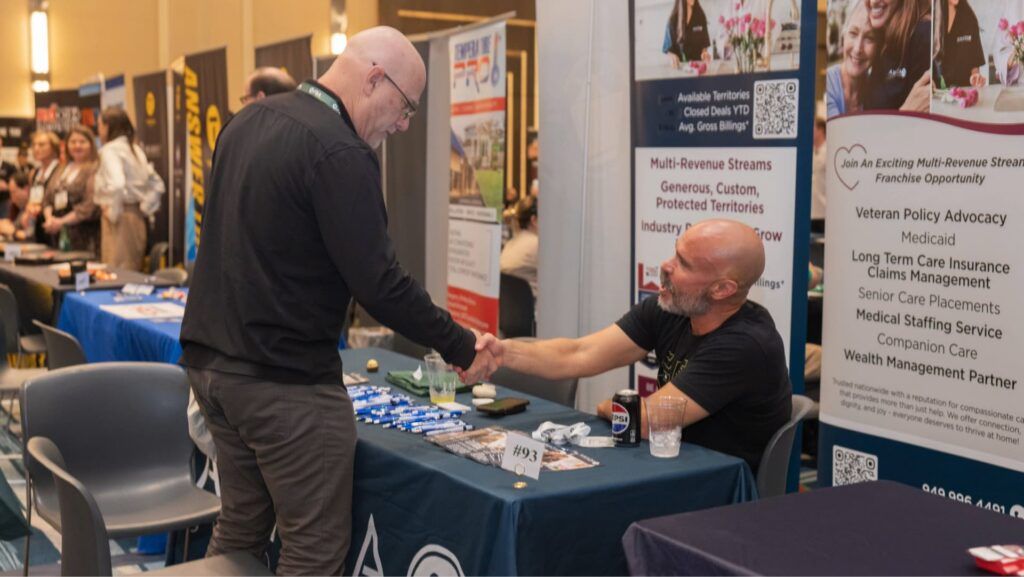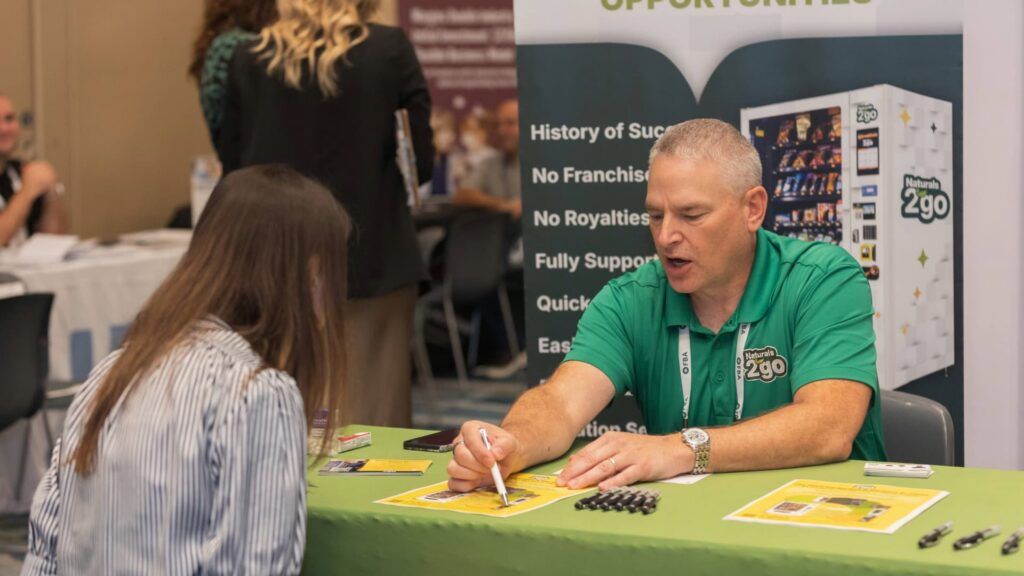



Franchise brand evaluation should cover current disclosures, investment requirements, owner responsibilities, support, territory terms, system history, and candidate fit. Before recommending an opportunity, brokers should know what is verified, what remains uncertain, and why the business deserves further investigation.
A recommendation is not a guarantee of profitability or suitability. It is an informed starting point for the candidate’s research.
The strongest recommendations answer three questions:
- Why might this opportunity fit the candidate?
- Which tradeoffs would the candidate need to accept?
- What must be verified before moving forward?
What Is Franchise Brand Evaluation?
Franchise brand evaluation is a structured review of how a franchise operates, what ownership requires, and whether its requirements align with a candidate’s circumstances.
It combines two separate assessments:
| Assessment | Main question |
|---|---|
| Brand understanding | “Do I have current, reliable information about this franchise?” |
| Candidate suitability | “Does this model align with this person’s resources, goals, and responsibilities?” |
A well-established franchise can still be unsuitable for someone who dislikes its sales demands or cannot accommodate its schedule. Likewise, an interested candidate cannot resolve an unavailable territory or an investment requirement beyond their comfort level.
Review the brand first. Then test the match.
1. Verify Current Disclosures and Brand Information
Start with the current Franchise Disclosure Document, applicable updates, and approved broker materials.
Marketing presentations can introduce a concept, but they should not become the sole basis for a recommendation.
Confirm:
- FDD issuance date and applicable updates.
- Initial investment estimates and fees.
- Financial qualification requirements.
- Ownership models currently offered.
- Territory availability.
- Training and support details.
- Outlet information.
- Development contacts and referral procedures.
Record the source and review date for key information. When materials conflict, ask the franchisor to clarify the discrepancy before repeating either statement.
FBA’s brand at-a-glance slide guide provides a useful structure for a concise brand profile. Treat that profile as a reference—not a replacement for the underlying disclosures.
Keep a Simple Source Record
For important figures and claims, document:
- The information reviewed.
- Its source.
- The date checked.
- Any qualification or limitation.
- The person responsible for resolving open questions.
This makes future updates easier and reduces reliance on memory.
2. Understand the Business Model and Owner Role
Before recommending a franchise, understand how customers are acquired, how the product or service is delivered, and what the owner must do.
Ask:
- Who is the customer?
- What generates new business?
- Are sales recurring, seasonal, project-based, or transactional?
- What facilities, equipment, vehicles, or inventory are required?
- How does staffing affect service delivery?
- Which responsibilities remain with the owner?
A candidate may like the product while disliking the work behind it.
Separate Launch Duties From Long-Term Ownership
Clarify what the owner handles before opening, during launch, and after operations stabilize.
Ask the franchisor:
“What must happen before the owner can delegate more responsibility, and which duties remain with the owner afterward?”
Avoid using “manager-led” or “semi-absentee” as a complete job description. Those labels need operational detail.
FBA’s passive franchise ownership guide helps brokers distinguish passive-investment expectations from active oversight and launch-stage involvement.
3. Review Startup Costs and Continuing Obligations
Financial fit requires more than comparing the franchise fee with a candidate’s available funds.
Review initial costs, ongoing charges, required purchases, and operating assumptions together.
| Financial area | FDD starting point | What to investigate |
|---|---|---|
| Initial fees | Item 5 | Initial payments, conditions, and refund provisions |
| Other fees | Item 6 | Recurring, conditional, and event-based charges |
| Estimated initial investment | Item 7 | Cost ranges, assumptions, and additional-funds periods |
| Required purchases | Item 8 | Supplier restrictions and purchasing requirements |
| Financial performance information | Item 19, if provided | What the figures measure and exclude |
FBA’s FDD Item 7 guide provides context for reviewing estimated startup costs and working-capital assumptions.
Then compare those requirements with the candidate’s funding approach and household needs.
Do not present the minimum investment as a complete funding plan. Financing obligations, personal expenses, and a slower launch may require separate assessment.
The FTC’s consumer guide to buying a franchise explains why buyers should investigate startup costs, continuing fees, financing, and financial risk before investing.
4. Examine Item 19 Without Predicting Results
If the franchisor provides a financial performance representation, examine its basis and limitations before discussing it with candidates.
Review:
- The reporting period.
- The outlets included.
- Whether company-owned and franchised outlets are separated.
- Whether the information concerns revenue, expenses, or profit.
- Exclusions involving newer, closed, or other outlets.
- The use of averages, medians, ranges, or subsets.
- Material assumptions and qualifications.
Gross sales do not establish owner income. A system average does not predict the candidate’s results.
Use current, approved information without changing its meaning. Do not turn disclosed figures into an informal earnings forecast, return estimate, or promised payback period.
If Item 19 does not provide performance information, do not fill the gap with anecdotes or personal estimates. Refer unusual financial-claim questions to the franchisor’s compliance team and qualified counsel.
A responsible explanation is:
“This information gives us something to investigate. It does not tell us what you will earn. Let’s identify the limitations and prepare questions for your advisors and franchisee validation.”
5. Evaluate Training and Support in Practical Terms
“Comprehensive support” does not explain what a franchisee receives.
Review what is provided, when it is available, who receives it, and what costs or conditions apply. FDD Item 11 is an important starting point.
| Support area | Questions to ask |
|---|---|
| Initial training | Who attends, what is covered, and what completion requirements apply? |
| Opening assistance | What help is provided, for how long, and at what cost? |
| Field support | How is support delivered, and what does it cover? |
| Marketing | Which resources are provided, and which activities remain local responsibilities? |
| Technology | Which systems are required, and what fees and training apply? |
| Staffing | Is the franchisor providing guidance, recruiting services, or something else? |
| Continuing education | What training continues after opening? |
Also ask how support resources relate to growth plans.
Expansion alone does not show whether the support team can serve new franchisees effectively. Investigate staffing, experience, and processes rather than relying on growth headlines.
6. Review Territory and Local-Market Questions
An available territory is not proof of sufficient demand.
Confirm availability through the franchisor’s process. Then identify questions about:
- Territory boundaries.
- Exclusivity or protection.
- Reserved sales channels.
- Online sales and national accounts.
- Performance conditions.
- Relocation and expansion rights.
- Site approval, where applicable.
Do not describe territory protection as protection from every competitor or sales channel.
Separately, candidates should investigate customer demand, competition, workforce availability, licensing, and local operating costs.
The franchise agreement and related disclosures require professional review. A broker’s impression of a market should not replace that investigation.
7. Look Beyond Outlet Growth
System size and expansion provide context, but neither establishes franchisee success.
Review relevant FDD information about:
- Franchisor history and leadership experience.
- Disclosed litigation and bankruptcy.
- Openings, closures, terminations, transfers, and other outlet changes.
- Current and former franchisee contacts.
- Financial statements.
Items 1–4, 20, and 21 are useful starting points.
Interpret outlet changes carefully. A transfer does not automatically mean failure, and a closure does not establish its cause.
Likewise, limited disclosed litigation does not prove that no operational concerns exist.
The purpose is to identify questions that deserve investigation—not assign a simple “safe” or “unsafe” label.
8. Prepare Balanced Franchisee Validation Questions
A broker’s review should support the candidate’s independent investigation, not replace it.
Help candidates prepare questions for current and former franchisees where available. Encourage a range of perspectives rather than relying only on selected success stories.
Useful questions include:
- “How closely did startup costs match your expectations?”
- “What took most of your time during launch?”
- “Which support resources were most useful?”
- “What staffing or customer-acquisition challenges did you encounter?”
- “Which responsibilities did you initially underestimate?”
- “What would you investigate more carefully before buying again?”
Look for patterns, differences, and unresolved questions.
If franchisee accounts conflict with the candidate’s understanding, return to the franchisor with specific questions. Do not dismiss the difference or treat one account as representative of the entire system.
9. Compare the Brand With This Candidate
A brand review becomes useful when connected to a specific candidate profile.
Compare the opportunity with the candidate’s:
- Investment comfort and funding assumptions.
- Available time.
- Sales and staffing willingness.
- Relevant experience and learning needs.
- Schedule and geographic restrictions.
- Household or partner priorities.
- Risk tolerance and decision timeline.
Use FBA’s franchise brand comparison call framework to assess opportunities consistently.
Present both alignment and friction:
“This model appears aligned with your team-leadership experience and preferred location. The main question is whether you are comfortable with owner-led customer acquisition during launch.”
Do not allow enthusiasm to erase a genuine deal-breaker.
10. Explain Your Recommendation and Business Relationships
Candidates should understand your compensation, participating brand relationships, and recommendation scope.
Explain whether you consider a selected inventory rather than the entire franchise market. Discuss relevant compensation arrangements accurately and follow applicable disclosure requirements.
Then check your language.
Avoid:
- “This is a guaranteed winner.”
- “The brand has been reviewed, so the risk is minimal.”
- “You should earn the system average.”
- “The franchisor will handle everything.”
- “An available territory means a proven market.”
Use:
“Based on your profile and the current information, this opportunity deserves further investigation. Here is why it may fit, the tradeoffs to consider, and what remains unverified.”
That statement gives the candidate a useful starting point without implying certainty.
Franchise Brand Evaluation Checklist
Before recommending an opportunity, confirm that you have:
- Reviewed current disclosures and approved materials.
- Recorded sources and review dates.
- Understood launch-stage and ongoing owner responsibilities.
- Reviewed initial investment and continuing obligations.
- Examined Item 19 information, if provided, without predicting results.
- Clarified support scope, costs, and franchisee responsibilities.
- Confirmed the territory-review process.
- Examined outlet changes and professional-review questions.
- Prepared balanced validation topics.
- Compared the model with the candidate’s actual profile.
- Explained compensation and recommendation scope.
- Documented unresolved questions and next steps.
If important information is missing, pause the recommendation or clearly limit what you are suggesting. An invitation to learn more should not sound like a completed endorsement.
Document Why You Recommended the Brand
Keep a concise internal record:
| Field | What to record |
|---|---|
| Brand and review date | The opportunity reviewed and when |
| Sources | Current disclosures, approved materials, and relevant confirmations |
| Fit reasons | Specific connections to the candidate’s profile |
| Tradeoffs | Responsibilities or constraints requiring consideration |
| Open questions | Information that still needs verification |
| Next action | Task, responsible person, and follow-up date |
FBA’s candidate introduction checklist helps turn this review into a focused referral.
The record should make your reasoning understandable even months after the introduction.
Frequently Asked Questions
What should brokers review before recommending a franchise?
Review current disclosures, financial requirements, owner responsibilities, training, support, territory terms, system history, and candidate suitability. Record what remains unverified and who should investigate it.
Is a franchise presentation enough to recommend a brand?
No. A presentation introduces the concept. Brokers should check important statements against current disclosures and approved information before relying on them.
Does rapid growth make a franchise a strong recommendation?
Not by itself. Growth should be considered alongside outlet changes, support resources, financial information, and candidate fit. It does not establish individual franchisee results.
Can brokers recommend franchises without Item 19 performance information?
The absence of financial performance information does not automatically make a franchise unsuitable. However, brokers must not replace missing information with informal earnings estimates. Candidates should investigate the opportunity with qualified advisors.
Does a broker’s review replace candidate due diligence?
No. Candidates still need to review disclosures and agreements, investigate the market, speak with franchisees, and obtain independent professional advice.
Can franchise broker training improve brand evaluation?
A structured franchise broker training program can help brokers develop consistent review procedures, discovery questions, documentation practices, and compliance awareness. Compare current curricula, practical exercises, and ongoing support before enrolling.
Strengthen Your Brand Review Process
A responsible recommendation connects current brand information with a specific candidate’s circumstances.
Before presenting an opportunity, ask:
“Can I explain why this brand deserves investigation, which tradeoffs the candidate must consider, and what still needs verification?”
To develop these skills, explore FBA’s franchise broker training and support pathway. Ask about current training options, franchise broker certification requirements, and continuing support before selecting a professional-development program.
The goal is not to promise certainty. It is to give the candidate a clear, evidence-informed starting point.