


Franchise broker deal coaching works best when you bring a clear question and enough context to answer it. Before an FBA mentoring session, prepare a one-page brief covering the candidate’s goals, current stage, last meaningful conversation, stated concern, and actions you have already tried. Afterward, turn the advice into one task with an owner, deadline, and review point.
That preparation shifts the discussion from “How do I save this deal?” to a more useful question: “What should happen next, and what do I need to understand first?”
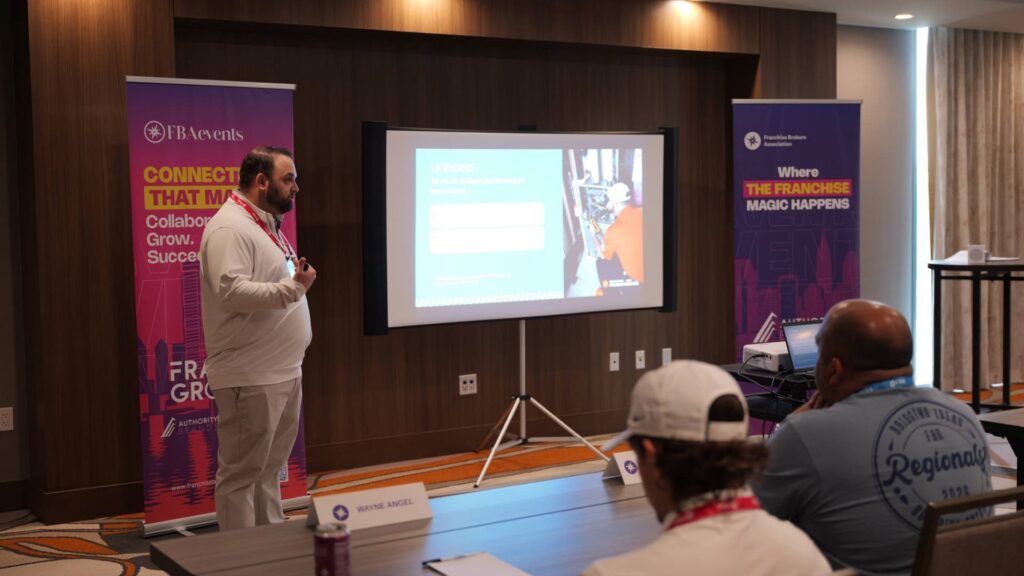
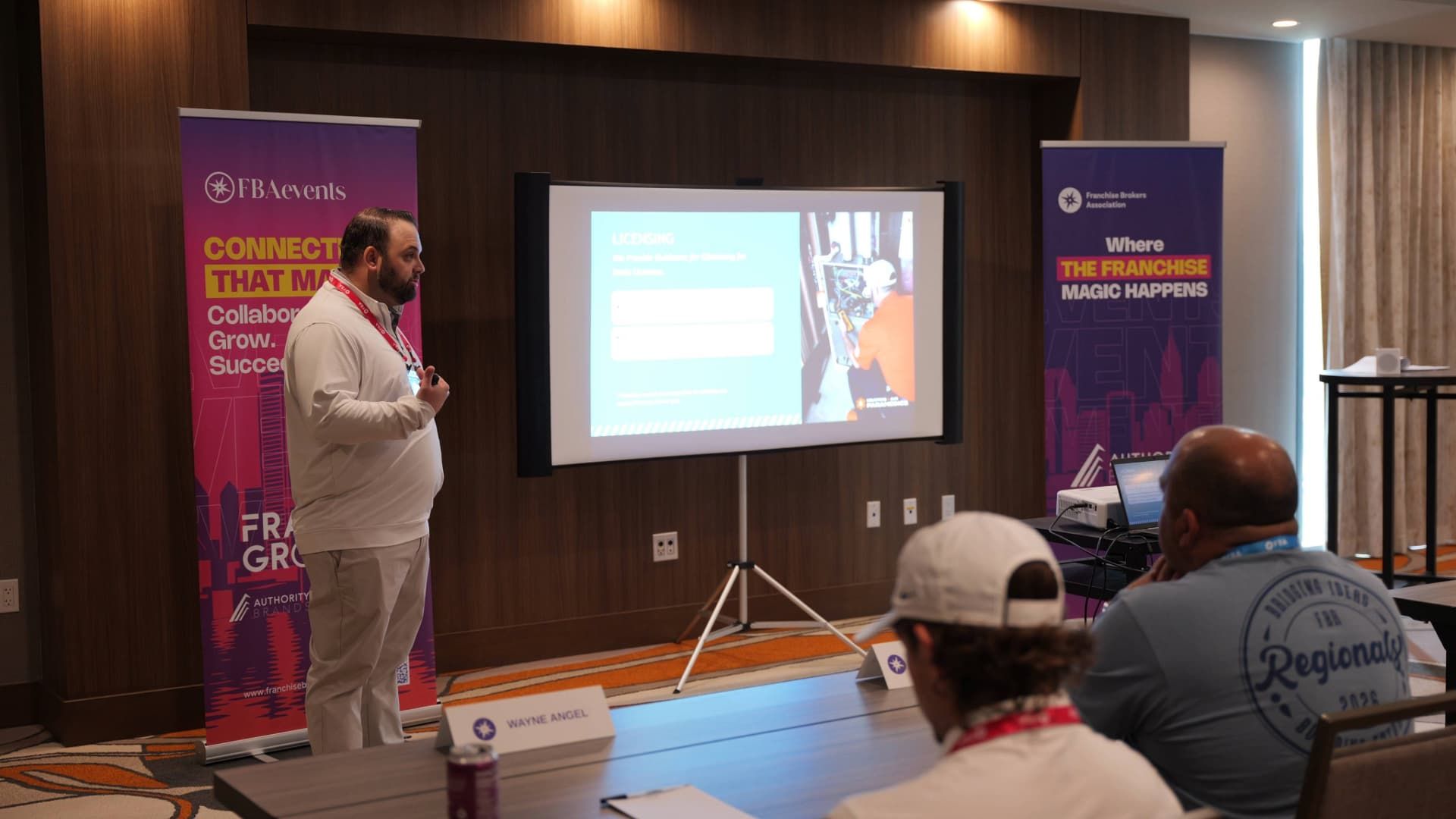
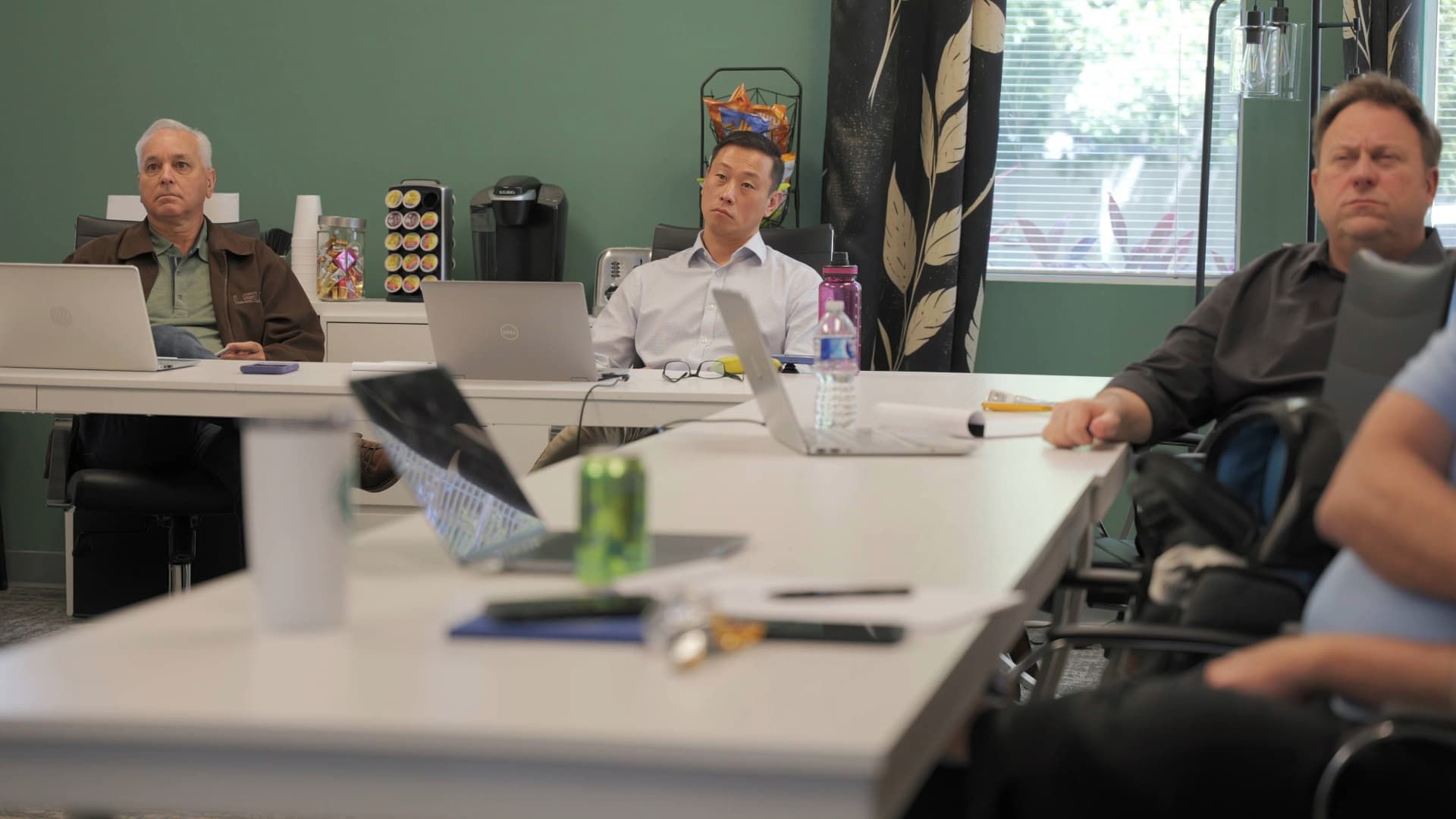
A stalled opportunity does not always need another presentation or follow-up message. It may need a clearer explanation, a different conversation, or an honest pause. FBA’s Broker Support Mixer and BOS Mastermind give brokers opportunities to examine those possibilities with others rather than work through every challenge alone.
What Is Franchise Broker Deal Coaching?
Franchise broker deal coaching is a focused review of a candidate situation to identify missing information, examine assumptions, and choose an appropriate next action. It can help a broker prepare a conversation, address a missed handoff, or recognize that an opportunity is not ready to advance.
The goal is not to find a closing technique for every objection. It is to understand what the candidate needs, what remains unresolved, and which action would improve the decision.
Coaching becomes more useful when the group can distinguish what the candidate actually said from what the broker believes may be happening. A concise brief makes that distinction easier.
Broker Support Mixer or BOS Mastermind: Which Should You Attend?
Choose the session that matches your access:
- Broker Support Mixer: Open to all brokers.
- BOS Mastermind: Exclusively for BOS brokers.
Before attending, check the current FBA calendar or ask the FBA team about the schedule, question-submission process, and guidelines for discussing live candidate situations.
Confirm whether you should submit your brief beforehand, how much presentation time is available, and what confidentiality rules apply. A sensitive situation may require a private conversation rather than a group discussion.
You do not need to wait until you have exhausted every option. Bring the case when another perspective could improve the next decision.
Step 1: Separate Facts From Interpretation
“Candidate went cold” describes an observation. It does not explain why progress stopped.
Before seeking franchise broker deal coaching, divide your notes into confirmed facts, your interpretation, and missing information.
| Category | What belongs here | Example |
|---|---|---|
| Confirmed facts | Direct statements and observable actions | The candidate missed a debrief and said, “I need to understand the staffing commitment.” |
| Broker interpretation | Your current explanation | The candidate may be uncomfortable managing employees. |
| Missing information | What you have not established | Whether the concern involves hiring, payroll, supervision, or launch workload |
This structure gives the group room to question the diagnosis without disputing the record. It also prevents an assumption from becoming the basis of your next message.
Use FBA’s franchise deal stall-reason framework to organize your thinking. Financial readiness, owner-role fit, household alignment, timing, and incomplete research may require different responses. Treat the category as a working diagnosis until the candidate’s answers support it.
Step 2: Complete a One-Page Deal Brief
Your brief should explain the situation without requiring the group to reconstruct your entire relationship with the candidate. Include details that affect the decision and leave out background that does not change the next step.
Use an anonymized candidate label. Share only necessary information and follow FBA’s confidentiality guidelines and your organization’s data-handling policies. Do not assume a group session or AI tool is an appropriate place for bank statements, identifying household details, or confidential agreements.
Copy-and-Use Deal Brief Template
| Section | What to prepare |
|---|---|
| Candidate snapshot | Ownership goal, relevant experience, preferred owner role, broad investment parameters, and market needs |
| Opportunity and stage | Relevant brand or category, completed milestones, and the next step that did not happen |
| Last meaningful touch | Date, channel, candidate statement, and commitments made by each party |
| Stated concern | The candidate’s words, separate from your interpretation |
| What you have tried | Specific actions, when you took them, and the response to each |
| Open dependencies | Information or action still needed from the broker, candidate, franchisor, lender, or advisor |
| Coaching question | One decision you want help making |
| Useful outcome | What you need to clarify—not simply what you want the candidate to do |
If an exact figure is unnecessary, use a summary such as “investment comfort remains unconfirmed.” The group needs enough context to help, not unrestricted access to the candidate’s file.
Ask a Question the Group Can Answer
Instead of:
“How do I get this candidate moving?”
Ask:
“The candidate paused after learning more about staffing. Should I clarify the owner role first, or ask whether their ownership goals have changed?”
Other useful questions include:
- “What assumption am I making that the candidate has not confirmed?”
- “What should I understand before introducing another brand?”
- “Does this look like a temporary blocker or a fundamental fit concern?”
- “Who owns the outstanding action?”
- “What evidence would justify keeping this opportunity active?”
A focused question helps the discussion produce a decision rather than a collection of unrelated tactics.
Step 3: Decide Whether to Use BOS Assistant First
FBA’s BOS Assistant 3.3 overview describes a growing library of coaching plays drawn from Sabrina Wall’s one-on-one work with FBA co-brokers. Brokers describe a candidate situation, and the assistant suggests an approach.
Use it to organize your thinking or prepare a question. It does not independently verify the candidate’s circumstances, and its recommendation still needs your review.
The following is a suggested decision guide, not a required FBA process:
| Your situation | Useful starting point |
|---|---|
| You need help organizing a familiar concern | Explore a relevant BOS Assistant coaching play |
| You want to prepare a diagnostic question | Use the assistant, then check its assumptions |
| You are unsure why the deal stalled | Bring the facts and uncertainty to a live session |
| Several concerns or decision-makers interact | Seek live discussion |
| An attempted approach produced an unexpected response | Bring the attempt and result to the group |
| The issue requires legal, tax, financial, or compliance judgment | Consult the appropriate qualified professional or designated contact |
You do not have to try an assistant-generated play before requesting live coaching. If the situation needs discussion, take it directly to the appropriate session.
A Practical BOS Assistant Prompt
“Help me prepare for a candidate conversation. The candidate’s goal is [goal], and the current stage is [stage]. At our last meaningful interaction, they said [anonymized statement]. I tried [actions], with [results]. My interpretation is [hypothesis], but I have not confirmed [missing information]. Suggest a relevant coaching approach, one diagnostic question, and assumptions I should verify. Do not assume the candidate should advance.”
Compare the response with your records. If you bring it to Broker Support Mixer or BOS Mastermind, explain what the assistant suggested and what remains uncertain. Do not present generated reasoning as something the candidate said.
Step 4: Present the Deal in About 90 Seconds
A brief opening leaves more time for questions. Aim for roughly 90 seconds as a preparation exercise, not a formal session requirement.
Follow this order:
- State the candidate’s ownership goal.
- Identify the current stage and delayed milestone.
- Share the concern accurately.
- Summarize your attempts and the results.
- Ask the coaching question.
Here is a hypothetical example:
“This candidate wants a business they can eventually manage through a team. They completed a franchisor introduction but paused before validation. Their concern was, ‘I don’t know how much staffing will fall on me.’ I sent an owner-role resource and offered a debrief, but we have not connected. I suspect a role mismatch, although I have not confirmed it. What should I ask before deciding whether this model still fits?”
This is an illustrative scenario, not an actual FBA coaching case. It preserves the important context without recounting every interaction.
After presenting, let the group ask questions. Someone else’s perspective may reveal which missing detail matters most.
Step 5: Use the Discussion to Test Your Diagnosis
The most valuable advice may challenge your explanation. A candidate who appears concerned about investment may be uncertain about launch responsibilities. Someone described as unresponsive may be waiting for information the broker promised to provide.
Ask:
- “Which part of this recommendation depends on an assumption?”
- “What evidence would support that interpretation?”
- “What should I clarify before acting?”
- “When would this approach be inappropriate?”
- “What response would tell me to pause?”
If several recommendations emerge, ask for help choosing the first action. Leave knowing what to do before trying anything else.
This is where FBA’s Culture of Connection becomes practical. Other brokers contribute perspective, while you remain responsible for understanding the candidate and applying the advice appropriately.
Step 6: Turn the Advice Into a Task
Before leaving the session, translate the recommendation into an action you control. “Build trust” may describe the objective, but it does not tell you what to do next.
For BOS brokers, save the takeaway on the relevant candidate or opportunity record and create an associated task. If you use another system, apply the same structure in your CRM. Follow your team’s process rather than assuming every account has identical fields or automation.
HubSpot’s guide to creating tasks explains task titles, assignments, due dates, notes, reminders, and record associations.
The Coaching-to-Task Checklist
| Task element | What to record |
|---|---|
| Action | A clear verb and specific activity |
| Owner | The person responsible |
| Due date | When the activity should happen, respecting contact preferences |
| Context | Why this action comes next |
| Completion criteria | What counts as completing your work |
| Review point | What you will reassess after the result |
Example BOS Task
Mentoring takeaway:
“Clarify what the candidate means by staffing concerns before introducing another model.”
Task details:
- Title: Email candidate to offer an owner-role clarification call.
- Owner: Assigned broker.
- Due: Today, if consistent with the existing contact agreement.
- Notes: Staffing concern remains undefined. Clarify hiring, supervision, and launch workload before recommending another step.
- Completion criteria: Personalized invitation sent and outcome documented.
- Review point: Assess the response before creating additional outreach.
Do not define completion as “candidate books a call.” You control sending an appropriate invitation, not whether someone accepts it.
A possible message is:
“When we last spoke, you mentioned uncertainty about staffing. I do not want to assume which part concerns you. Would it help to clarify hiring, day-to-day oversight, or launch workload before you decide whether this model deserves more research?”
What If the Candidate Still Does Not Respond?
A coaching recommendation is not permission to increase contact indefinitely. Review the communication history, requested pauses, and candidate preferences before choosing another action.
If a structured restart fits, use FBA’s 30-day candidate re-engagement sequence. That resource explains a follow-up process; coaching helps you decide whether it is appropriate for this candidate.
If the candidate responds, stop the generic sequence and address what they actually say. If a known dependency prevents progress, document the pause. If they no longer want to continue, update the opportunity accordingly.
A useful coaching outcome can be a clearer pause or close—not only a renewed conversation.
Close the Loop With the Group
When the session format permits, return with a concise update. This helps others understand whether the action clarified the situation and what changed.
Use four lines:
- We discussed: The issue and proposed action.
- I did: The action taken.
- The candidate said or did: The observed response.
- I now need: A decision, clarification, or no further coaching.
For example:
“We discussed clarifying the staffing concern. I offered a short call, and the candidate explained that hiring—not supervision—was the issue. They agreed to investigate launch responsibilities further. My next step is to coordinate the right questions with the franchisor.”
Keep identifying details out unless sharing is appropriate and authorized. An individual result is a learning opportunity, not proof that the same approach will work in every deal.
Common Deal Coaching Mistakes
Avoid these habits when preparing for franchise broker mentoring:
- Bringing a long history without a question.
- Treating a hypothesis as a confirmed objection.
- Omitting actions you already tried.
- Asking for a closing tactic before evaluating fit.
- Sharing unnecessary sensitive information.
- Accepting assistant output without checking assumptions.
- Leaving with advice but no assigned task.
- Repeating a message after the candidate’s situation changes.
- Keeping an opportunity active simply because someone offered another idea.
Coaching should improve the quality of your decision, not extend a deal indefinitely.
Frequently Asked Questions
What FBA sessions help brokers with live deals?
Broker Support Mixer is open to all brokers, while BOS Mastermind is exclusively for BOS brokers. Confirm the current schedule, question-submission process, and guidelines for discussing candidate situations with FBA.
What should a broker prepare before bringing a deal to a session?
Prepare a one-page brief with the candidate’s goals, stage, last meaningful conversation, stated concern, actions already tried, open dependencies, and one coaching question. Separate facts from interpretation and remove unnecessary sensitive information.
When should a broker use BOS Assistant plays versus live coaching?
Use BOS Assistant to organize a familiar situation or prepare a question. Seek live discussion when the diagnosis is uncertain, concerns overlap, or an attempted approach produces an unexpected response. Neither replaces qualified professional advice.
What should a broker do immediately after coaching?
Record the takeaway and create one task with an owner, due date, completion criteria, and review point. BOS brokers can connect that task to the relevant record in their system. Evaluate the result before deciding on further action.
Does successful deal coaching always move a candidate forward?
No. Coaching may reveal a fit problem, a legitimate pause, or a reason to close the opportunity. Success means a better-supported decision and a clear next step.
Bring a Clear Question. Leave With One Action.
The value of franchise broker deal coaching comes from preparation, shared perspective, and follow-through. A concise brief helps the group understand the situation. Its questions test your diagnosis. Your next task turns the discussion into practical candidate support.
Before your next Broker Support Mixer or BOS Mastermind, identify what you know, what you suspect, and what you need help deciding. Leave with one action you can complete today or schedule appropriately.
Existing members can ask FBA which upcoming session best fits their question. Brokers evaluating franchise broker support can explore FBA’s Broker Operating System and request information about current coaching resources, session access, and brokerage tools.
This article provides educational information, not legal, financial, or tax advice. Review coaching recommendations against the candidate’s circumstances, applicable requirements, and current FBA policies.