

Is Texas Roadhouse a franchise? Yes—but with important limitations.
Texas Roadhouse does offer franchising, primarily through international development agreements. As of 2025, the company has confirmed that it is not accepting new U.S.-based franchise applications.
Within the United States, all new restaurant growth remains focused on company-owned operations managed under its distinctive Managing Partner model. This structure gives qualified local operators a leadership stake in performance and culture—without traditional franchise ownership.
Founded in 1993 in Louisville, Kentucky, Texas Roadhouse has grown into one of the most recognizable names in American casual dining. Known for its hand-cut steaks, scratch-made sides, and lively, family-friendly service, the brand has built a reputation for quality, consistency, and community engagement. Internationally, the company continues to expand through selective franchise partnerships with experienced multi-unit operators who meet its operational and financial standards.
For aspiring restaurant investors researching Texas Roadhouse franchise opportunities, it’s essential to understand how the brand actually grows—and what realistic ownership paths exist today.
Disclosure: Texas Roadhouse is not affiliated with the Franchise Brokers Association (FBA). This article is for educational purposes only and is intended to help readers understand the brand’s structure and compare it with available franchise opportunities.
Quick Answer: Is Texas Roadhouse a Franchise?
- U.S. franchising: ❌ Closed.
- International franchising: ✅ Selective, limited.
- Domestic growth model: Company-owned restaurants with Managing Partners.
- Public franchise cost disclosure: ❌ Not available.
If your goal is to own a traditional restaurant franchise in the U.S., Texas Roadhouse is best viewed as a benchmark, not an accessible franchise option.
How Texas Roadhouse Expands and Operates.
Texas Roadhouse operates a limited franchise program primarily outside the United States. According to the company’s Fiscal Year 2024 Annual Report (published February 2025), Texas Roadhouse had 22 franchise partners operating 118 restaurants across 20 U.S. states, one U.S. territory, and 10 international markets.
However, the same report clarifies that Texas Roadhouse is not accepting new domestic franchise applications. In the U.S., development remains focused on company-owned restaurants operated under the Managing Partner model rather than independent franchise ownership.
Internationally, the brand continues to grow through select area development and franchise agreements, typically with experienced multi-unit operators who meet strict operational and financial requirements.
As of July 1, 2025, Texas Roadhouse, Inc. reported 797 system-wide restaurants across its three banners:
- Texas Roadhouse.
- Bubba’s 33.
- Jaggers.
This structure matters for buyers researching Texas Roadhouse franchise information, because it directly affects access, cost transparency, and ownership control.
Inside the Texas Roadhouse Business Model.
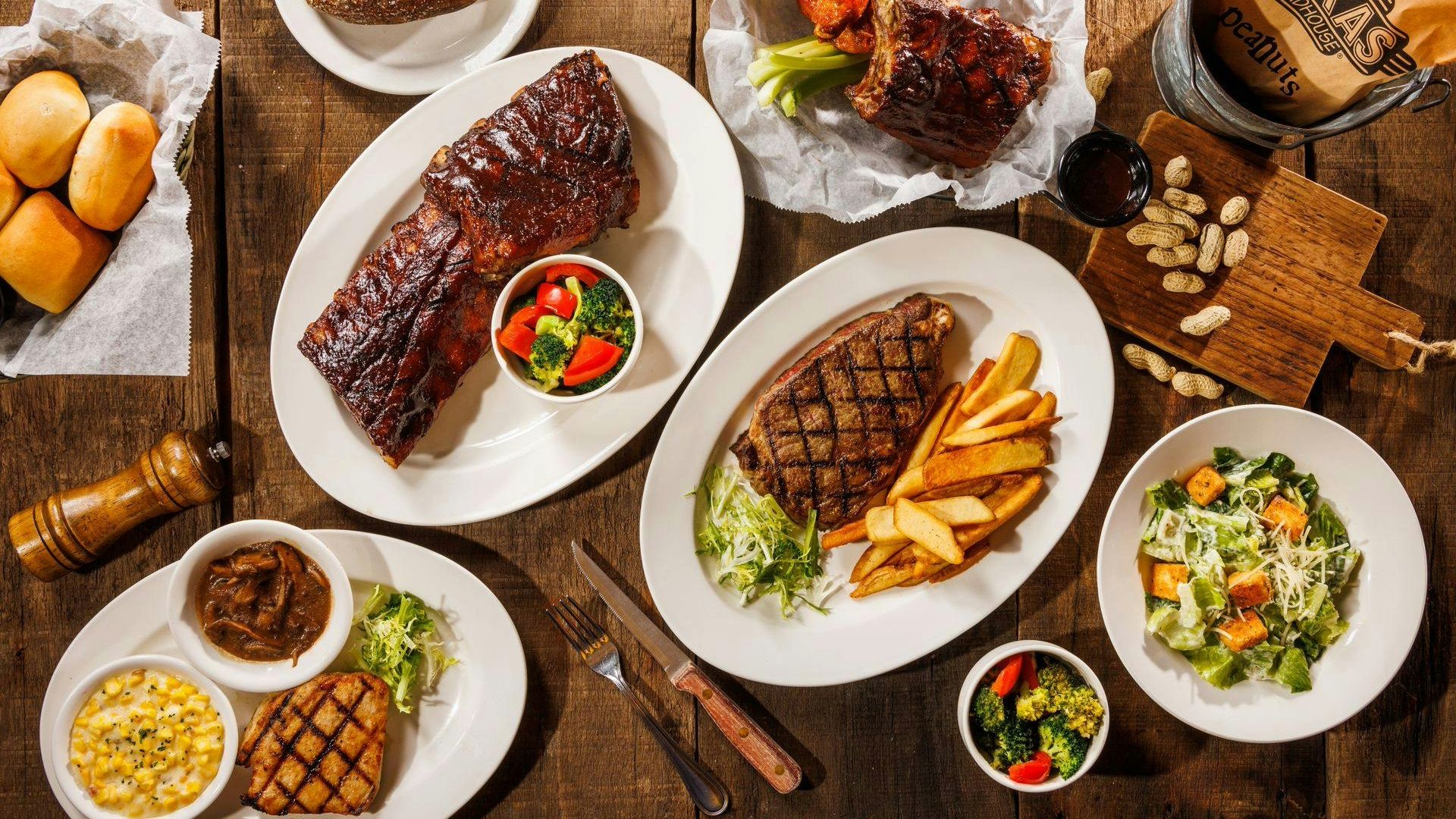
Texas Roadhouse is a full-service casual dining brand centered on scratch-made food and a high-energy guest experience. Its menu features hand-cut USDA Choice steaks, ribs, made-from-scratch sides, and fresh-baked rolls—served in a Western-themed environment that reinforces brand identity.
Operationally, the company relies on:
- Highly standardized procedures.
- Deep management training (often up to 20 weeks).
- On-site trainers for new openings.
- Strong field leadership and coaching.
The Managing Partner Model.
A defining feature of the Texas Roadhouse business model is its Managing Partner system. Instead of franchise ownership, Managing Partners:
- Lead day-to-day restaurant operations.
- Enter multi-year agreements.
- Make a refundable deposit.
- Earn a share of pre-tax unit income.
This structure blends entrepreneurial incentives with corporate control, reinforcing accountability while preserving brand consistency across all U.S. locations.
Ownership, Leadership, and Brand Evolution.
Texas Roadhouse is owned by Texas Roadhouse, Inc. (NASDAQ: TXRH), a publicly traded company headquartered in Louisville, Kentucky. It was founded in 1993 by W. Kent Taylor, who opened the first restaurant in Clarksville, Indiana.
Over three decades, the company expanded carefully—prioritizing site selection, leadership development, and operating discipline. In addition to its flagship steakhouse brand, the company operates:
- Bubba’s 33 (sports grill).
- Jaggers (fast-casual burgers and chicken).
While the company operates a mix of company-owned and franchised restaurants globally, domestic ownership remains corporate, with Managing Partners rather than franchisees.
Pros and Cons of Texas Roadhouse (From a Franchise Perspective).
| Factor | Strengths | Limitations |
|---|---|---|
| Brand Power | National visibility, loyal customer base, public-company transparency | U.S. franchising not available |
| Customer Demand | Differentiated scratch-kitchen experience | Full-service dining sensitive to labor and consumer spending |
| Operations | Rigorous training, strong field support | Scratch kitchens increase complexity |
| Real Estate | Large, visible sites with parking | Higher buildout costs and longer timelines |
| Labor | Managing Partner incentives build accountability | Staffing is labor-intensive |
| Marketing | National marketing scale | Less local flexibility than independent franchises |
Texas Roadhouse is a category-defining brand—but not an open franchise system for most U.S. buyers.
What If You Want a Business Like Texas Roadhouse? Franchise Alternatives to Consider.
If you’re researching a Texas Roadhouse Franchise, you may really be looking for a restaurant business with strong culture, disciplined systems, and loyal repeat guests. Since Texas Roadhouse isn’t accepting new U.S. franchise applicants, the practical move is to compare franchise opportunities with similar operating DNA—but with open ownership pathways.
Below are common directions buyers explore, plus examples from the FBA network to help you visualize how these models operate. These examples are not recommendations, and outcomes vary by market, operator, and contract terms. Always confirm availability, territory, and requirements in each brand’s FDD.
Full-Service Restaurant Concepts (Closest Operational Match).
These most closely resemble the Texas Roadhouse experience: hospitality-driven service, larger teams, longer guest visits, and community visibility. The tradeoff is higher labor complexity and longer buildouts.
- FBA partner spotlight: Huckleberry Restaurant — a full-service restaurant concept that helps illustrate staffing rhythm, kitchen execution, and guest experience consistency.
Polished-Casual, Sports-Grill, and Experience-Driven Dining.
If what attracts you is the energy—busy dining rooms, social atmosphere, and brand culture—polished-casual concepts can deliver a similar feel with different menus. Expect weekend-heavy traffic and strong people-management requirements.
Fast-Casual Alternatives (Lower Complexity, Faster Openings).
Fast-casual models can offer repeat traffic with smaller footprints and fewer roles per shift. The tradeoff is less “event” hospitality and fewer revenue channels than full-service dining.
Beverage-Focused Hospitality Models.
If you like daily rushes and customer interaction but want to avoid a scratch-kitchen labor stack, beverage concepts can be a more streamlined ownership path.
- From the FBA network:
- Ramblin’ Joe’s Coffee — highlights drive-thru speed systems, service consistency, and local marketing.
- Break Coffee — shows a beverage model where throughput and staffing stability matter.
Restaurant-Adjacent Businesses (Industry Exposure Without the Dining Room).
If you want restaurant-industry exposure without front-of-house staffing and long operating hours, restaurant-support service models can be worth comparing.
- From the FBA network: Kitchen Guard — a commercial kitchen support business tied to foodservice demand.
The best “Texas Roadhouse-like” alternative isn’t the one that looks similar on a sign—it’s the one that matches your capital plan, staffing tolerance, and day-to-day operating style.u can explore the Franchise Brokers Association (FBA) Blog, which provides insights, brand evaluations, and category breakdowns to help you make an informed decision.
Does Texas Roadhouse Publish Franchise Costs and Fees?
Does Texas Roadhouse Publish Franchise Costs or Fees?
No. Texas Roadhouse does not publish a U.S. franchise cost, franchise fee, or investment range, because it is not offering new domestic franchises.
International franchise terms are disclosed privately to qualified partners during the vetting process. Any online estimates claiming a “Texas Roadhouse franchise price” or “Texas Roadhouse franchise cost” should be treated as unofficial and unverified.
For buyers seeking transparent cost structures, it’s often more productive to compare brands that actively franchise and publish full FDDs.
How FBA Helps You Choose a Better-Fit Franchise.
Big brands are familiar. That doesn’t mean they’re a fit.
When buyers ask about a Texas Roadhouse Franchise, what they’re often really searching for is a full-service restaurant opportunity with strong culture, systems, and guest loyalty—not necessarily that brand specifically.
FBA helps you evaluate alternatives using a fit-first, diligence-first process, so you choose based on what you can realistically operate and afford.
Here’s how that works in practice:
- Capital + risk fit: We help you evaluate full-service vs. polished-casual vs. fast-casual models based on buildout costs, labor exposure, and financial buffers—before you commit emotionally.
- Role + lifestyle fit: Managing a scratch kitchen with bar service is very different from running a smaller, manager-led restaurant. We map your ideal week to the right model.
- Skill-based selection: We steer you toward concepts that reward your strengths—people leadership, systems execution, multi-unit growth, or guest experience.
- Diligence system: We organize FDD review, validation calls, and comparison notes so brands are evaluated apples-to-apples.
- Clean decision-making: We encourage qualified advisors early and help you avoid shortcuts in high-commitment agreements.
If you want one-on-one guidance, book Franchise Consulting.
If you’d rather learn first, start with the Franchise Webinar.
To see the process end-to-end, join FranPath Live.
Frequently Asked Questions.
Is Texas Roadhouse a franchise?
Yes, but with important limitations. Texas Roadhouse operates a selective international franchise program and explicitly states that it is not accepting new domestic franchisees in the United States. U.S. expansion is focused on company-owned restaurants managed through the brand’s Managing Partner model, which gives qualified operators performance-based leadership roles without traditional franchise ownership.
What kind of company is Texas Roadhouse, and what market does it serve?
Texas Roadhouse is a U.S.-based casual dining steakhouse chain known for its scratch-made food, lively service style, and family-friendly atmosphere. It competes within the full-service dining segment, primarily in the steak and grill category, while its sister brands—Bubba’s 33 and Jaggers—serve adjacent markets in sports-grill and fast-casual dining.
Who owns Texas Roadhouse, and when was it founded?
The company is owned by Texas Roadhouse, Inc. (NASDAQ: TXRH) and was founded in 1993 by W. Kent Taylor. Its headquarters are located in Louisville, Kentucky. Over time, it has grown into a multi-concept restaurant organization operating hundreds of locations domestically and internationally.
If Texas Roadhouse doesn’t franchise widely in the U.S., what are comparable franchise options?
Entrepreneurs seeking similar restaurant ownership opportunities can explore full-service steak or grill franchises, polished-casual or sports-grill brands, and fast-casual protein-forward concepts that actively franchise in the U.S. These alternatives vary in capital requirements, staffing needs, and operational complexity. The Franchise Brokers Association (FBA) offers educational resources and brand comparisons to help investors identify opportunities that fit their goals and experience level.
What considerations matter if you want a business like Texas Roadhouse?
Operating a full-service restaurant typically involves larger real estate footprints, higher staffing levels, and more intensive training programs compared to limited-service brands. Buildout times are generally longer, and the business model requires strong management involvement, quality control, and a commitment to consistent guest experiences.
If Texas Roadhouse does franchise internationally, what training and support are provided?
Training at Texas Roadhouse is known for its depth and consistency. Management employees undergo programs that can extend up to 20 weeks, and new restaurant openings are supported by dedicated trainers who ensure smooth operations. Specific training and support details for international franchisees are provided only through the company’s formal disclosure and qualification process for approved partners.
Is Texas Roadhouse the Right Benchmark for You?
Texas Roadhouse is an outstanding example of how culture, training, and disciplined systems can scale a casual dining brand. However, if your goal is to own a franchise in the U.S., you’ll likely need to explore brands that offer:
- Open franchising
- Published franchise costs
- Clear ownership pathways
Before moving forward, it helps to:
- Model affordability with the Franchise Financial Calculator
- Check alignment using the Zorakle Assessment
When you’re ready, FBA can help you identify restaurant franchises that align with your capital, experience, and long-term goals—without relying on guesswork.ch and connect you with vetted brands across steakhouse, sports-grill, and fast-casual categories.
Ready to take the next step? The Franchise Brokers Association is here to help guide you on your journey into the franchise world. Explore your options today with us.