

West Coast Sourdough is a fast-casual sandwich franchise centered on fresh, hand-crafted sourdough bread. The concept is designed for hands-on owners who want to operate a quality-focused restaurant supported by modern systems and a recognizable West Coast brand identity.
Positioned around its “San Francisco born & bread™” identity, the brand differentiates itself in a crowded sandwich franchise category by leaning into a signature sourdough platform and premium ingredients. Rather than competing on price or oversized portions, West Coast Sourdough emphasizes disciplined execution and consistency. This clear positioning helps the concept stand out among other sandwich franchise opportunities.
This article is sponsored by West Coast Sourdough and was created in partnership with the brand to provide accurate, compliance-safe information about its business model and franchise opportunity. Nothing in this article should be considered legal, financial, or tax advice. Prospective franchisees should always review the most recent Franchise Disclosure Document (FDD) with qualified advisors before making an investment decision.
Overall, the model is built for owner-operators who value operational consistency, local marketing, and a guest experience anchored in bread quality and repeatable systems.
Who is behind West Coast Sourdough, and how did the brand get started?
West Coast Sourdough was founded in San Francisco and built around a quality-first sourdough concept, with a growth strategy that emphasizes systems, consistency, and franchising as the primary expansion path.
West Coast Sourdough traces its roots to the Bay Area, where sourdough bread has long been part of the region’s culinary identity. From the start, the brand centered its concept on fresh, hand-crafted sourdough sandwiches, complemented by bread bowls, salads, and catering offerings. This focus on a single, signature bread platform helped shape a clear and memorable identity in the fast-casual sandwich category.
The brand leans heavily into its “San Francisco born & bread™” positioning, using its West Coast heritage to frame the guest experience and differentiate itself from more generic sandwich concepts. Rather than competing primarily on discounts or portion size, West Coast Sourdough emphasizes ingredient quality, repeatable preparation standards, and a consistent product experience.
From an ownership and growth perspective, the franchisor describes a franchise-focused expansion strategy. The stated approach prioritizes operational clarity, documented systems, and process discipline to support consistency as the brand scales. According to the franchisor, the system began in California and is expanding into additional U.S. markets through franchising.
The brand also highlights the role of modern technology in supporting operations. This includes digital ordering, operational systems, and tools designed to improve efficiency and standardization across locations. Together, these elements reflect a long-term brand development strategy focused on repeatable execution rather than short-term, promotion-driven growth.
How much does a West Coast Sourdough franchise cost?
Based on Item 7 of the Franchise Disclosure Document, the estimated initial investment to open a West Coast Sourdough franchise ranges from $297,000 to $442,000**, with the final amount largely driven by real estate and buildout factors.
The figures below summarize the startup costs and initial investment disclosed by the franchisor. For complete definitions, timing of payments, and any location-specific requirements, prospective franchisees should review the most recent FDD in full.
Startup costs and initial investment (Item 7).
| Category | Low Estimate* | High Estimate* | Notes |
| Initial Franchise Fee | $25,000* | $25,000* | Lump sum paid at signing |
| Construction & Leasehold Improvements | $150,000* | $200,000* | Varies by site condition |
| Lease Deposits & Rent (2 months) | $6,000* | $25,000* | Landlord requirements |
| Furniture, Fixtures & Equipment | $65,000* | $85,000* | Kitchen and dining equipment |
| Signage | $7,000* | $15,000* | Interior and exterior signage |
| Computer, Software & POS System | $4,500* | $7,000* | Required technology stack |
| Grand Opening Marketing | $4,500* | $7,000* | Initial promotional spend |
| Initial Inventory | $6,000* | $12,000* | Food and packaging |
| Utility Deposits | $3,000* | $7,500* | Local provider deposits |
| Insurance Deposits (3 months) | $3,000* | $7,000* | Required insurance coverage |
| Travel for Initial Training | $1,500* | $3,500* | Transportation and lodging |
| Professional Fees | $7,500* | $26,000* | Legal, accounting, architectural |
| Licenses & Permits | $2,000* | $4,000* | Government fees |
| Additional Funds (3 months) | $12,000* | $18,000* | Additional funds for early operations |
| Total Estimated Initial Investment | $297,000* | $442,000* | — |
Important context: These figures reflect startup and early operating needs only. They do not indicate financial performance or outcomes.
What tends to move the total up or down.
Real estate and buildout variables typically have the greatest impact on total startup costs.
- Site condition: Demolition, HVAC, plumbing, and electrical requirements
- Landlord terms: Deposits, tenant improvements, and construction timelines
- Buildout scope: Kitchen layout, finishes, and ADA compliance
- Equipment package: New versus approved used equipment (if permitted)
- Permits and inspections: Local review processes and fees
- Professional services: Architecture, design, legal, and accounting support
- Cash planning: Timing of deposits, deliveries, and early expenses
If you want a structured way to organize these assumptions, you can use the FBA franchise financial calculator to map startup line items—without making performance projections.
Business Model & Day-to-Day Operations.
West Coast Sourdough operates a lunch-driven, fast-casual restaurant model built around a streamlined menu, disciplined prep routines, and consistent execution across in-store, digital, and group orders.
The business model emphasizes operational consistency and a guest experience tied directly to the brand’s sourdough platform. Most locations handle a mix of walk-in traffic, online and app-based ordering, and catering-style orders, with the exact balance shaped by local demand and site characteristics.
Because food is prepared fresh each day, daily operations revolve around preparation standards, order flow management, staffing coordination, and quality controls. The model is designed to support speed during peak lunch periods without adding unnecessary menu or process complexity.
What does a typical day look like for an owner-operator?
Expect hands-on oversight across preparation, service execution, team leadership, and end-of-day controls.
While routines vary by location, staffing plan, and order mix, a typical owner-operator day often includes:
- Morning prep: Baking sourdough and cookies; setting up prep stations and cold storage
- Order systems: Reviewing POS, online ordering, and third-party delivery flow
- Lunch rush: Coaching the team, pacing service, and addressing guest needs
- Large orders: Coordinating catering-style platters and scheduled pickups
- Quality checks: Monitoring portioning, food safety logs, and brand standards
- Inventory work: Receiving deliveries, rotating product, and managing waste
- Local marketing: Community outreach and in-store promotions, following brand guidelines
This structure tends to fit franchisees who want to lead a team on-site and stay closely involved in daily operations, rather than treat the business as a passive investment.
Menu Strategy and Service Channels.
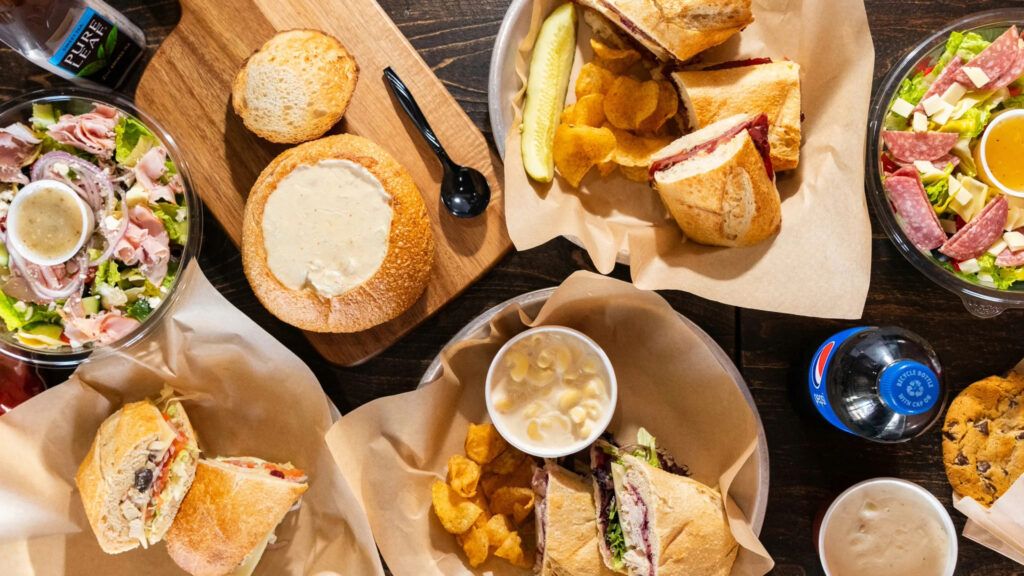
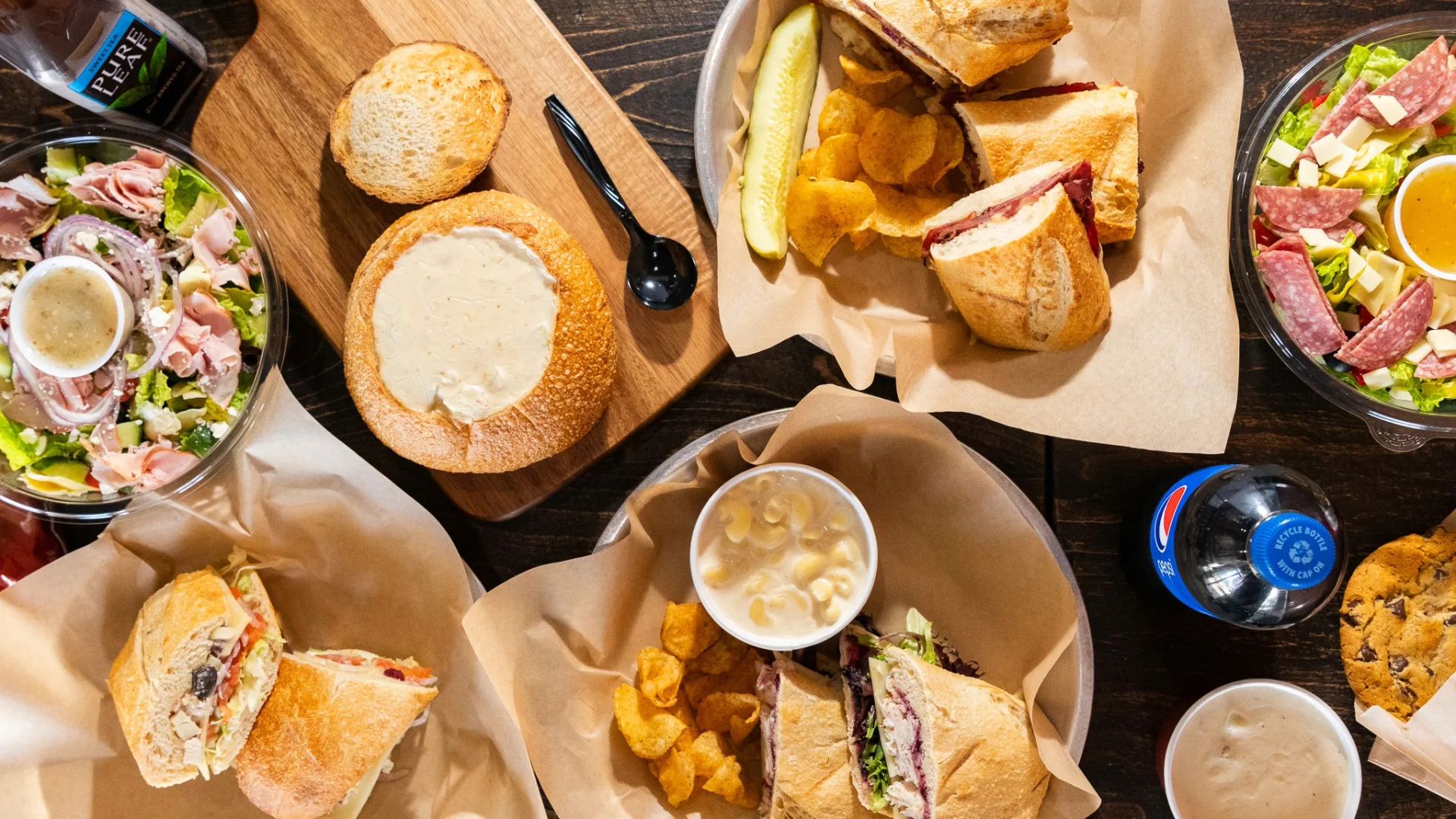
West Coast Sourdough keeps the menu intentionally focused to support consistent execution and fast service. The lineup is designed to cover both individual meals and larger group orders without adding unnecessary complexity.
What’s on the menu?
The core offering centers on sourdough-based items, supported by a small set of complementary categories.
- Signature sourdough sandwiches: Core menu platform.
- Soup and bread bowls: Warm option anchored to the bread format.
- Fresh salads: Lighter choice for variety and preferences.
- Fresh-baked cookies: Add-on and dessert option.
- Group orders: Trays and bundles for offices and events.
This structure helps the brand serve multiple order types—such as dine-in, takeout, and planned pickups—while keeping training and line execution straightforward.
Training, Support & Technology.
West Coast Sourdough describes a support structure built around initial training, ongoing guidance, and required operating systems, with full details defined in the current Franchise Disclosure Document (FDD).
The franchisor emphasizes standardized execution supported by documented procedures and required technology platforms. While public materials outline general areas of support, prospective franchisees should confirm training length, format, required attendees, and system requirements directly in the latest FDD.
Training, support, and technology overview.
The table below summarizes the training and support details currently available. Items not specifically disclosed are listed as Not disclosed.
| Category | Details* | Notes |
|---|---|---|
| Co-op advertising | N/A | No co-op program described |
| Site selection assistance | Available | Scope and deliverables: Not disclosed |
| Lease negotiation assistance | N/A | Landlord negotiations not described as provided |
| Length of initial training* | 158–228 hours* | Also described as approximately 6–12 weeks* |
| Who attends training* | Franchisee or Managing Owner plus up to two managers* | Additional attendees may require an added fee* |
| Training costs | Training provided | Franchisee typically covers travel, wages, and related expenses* |
| Training frequency | No less frequently than quarterly* | Additional sessions offered as needed* |
| Technology platforms | Required | Specific platforms and fees: Not disclosed |
| Marketing support | Provided | Scope described below; budget figures not included |
What support areas does the franchisor highlight?
The emphasis is on consistent execution across food preparation, service flow, staffing, and system use.
Key focus areas include:
- Baking and prep standards: Daily production steps, holding procedures, and quality checks
- Line flow systems: Defined roles, pacing, and speed-of-service routines
- Labor management: Hiring, training, scheduling, and coverage planning
- Local marketing: Store-level outreach and catering visibility, following brand guidelines
- Technology reporting: Order flow visibility, reporting tools, and platform adoption
What to Confirm During Due Diligence.
Before signing, candidates should clarify exactly what training and tools are required and how ongoing support is delivered.
Practical questions to review include:
- How training is delivered (in-person, on-site, or blended)
- Which roles must attend training and for how long
- How operating standards and updates are communicated
- What ordering, POS, and reporting systems are mandatory
- How frequently field or corporate support is provided
The most reliable source for these requirements is the current Franchise Disclosure Document, reviewed with qualified legal and financial advisors.livered, how operating standards are updated, and what reporting or ordering systems are required. The most reliable source for those requirements is the current FDD, reviewed with qualified advisors.
Territories, Real Estate & Equipment.
West Coast Sourdough typically targets retail locations that support strong lunch traffic and efficient kitchen operations, while maintaining defined buildout, territory, and equipment standards set by the franchisor.
Although site selection may offer some flexibility by market, franchisees must still meet the brand’s operational, layout, and equipment requirements to ensure consistency across locations.
What real estate types does West Coast Sourdough consider?
The concept is generally positioned in areas with reliable weekday lunch demand, with some flexibility depending on local conditions.
Common site profiles include:
- Inline retail spaces: Strip centers or mixed-use storefronts
- Urban lunch corridors: Higher weekday foot traffic and delivery demand
- Suburban lunch nodes: Near offices, schools, medical centers, or retail clusters
- Select non-traditional venues: Considered in certain cases (terms vary)
- Operational fit: Space must support required kitchen flow and sourdough baking processes
Final site approval is subject to franchisor review to confirm operational suitability.
How do territory protections work?
Territory rights and protections are defined in the franchise agreement, and the specific language matters.
Prospective franchisees should carefully review:
- Territory definition: How the protected area is measured (if offered)
- Exceptions: Conditions that may allow additional units or sales channels
- Alternate channels: Delivery, catering, or online orders and how they’re treated
- Relocation terms: What applies if a site moves or closes
- Renewal or transfer: Whether territory terms change upon renewal or sale
Because territory provisions can vary, candidates should confirm all details before signing.
What equipment is typically required?
Equipment requirements are designed to support consistent food production, speed of service, and brand standards.
Typical categories include:
- Sourdough production equipment: Baking and prep-aligned tools
- Line equipment: Setups designed for service flow and food safety
- Cold storage: Refrigeration sized for prep volume and inventory rotation
- POS and ordering technology: Required systems for checkout and order flow
- Brand standards: Fixtures, finishes, and signage where applicable
The approved equipment list, vendors, and specifications should be confirmed in the current FDD.
What to Confirm Before You Commit.
Small differences in site, territory, or equipment terms can materially affect how the business operates in your market.
Before moving forward, prospective franchisees should:
- Confirm how territory boundaries are defined
- Clarify which sales channels are included or excluded
- Understand site approval and buildout requirements
- Review equipment specifications and approved vendors
Comparing these terms against your preferred trade area and available real estate options can help ensure alignment before signing a franchise agreement.
Ideal Franchise Owner Profile & Time Commitment.
West Coast Sourdough is positioned for owners who plan to be active in the business, especially during launch and the early operating phase. It’s generally a better fit for operators than for hands-off investors.
What kind of owner tends to fit this model?
The strongest fit is someone who likes leading people, following systems, and staying close to day-to-day execution.
Strong candidates often:
- Team leaders: Comfortable hiring, training, scheduling, and coaching
- Lunch-rush ready: Calm in fast-paced service windows and problem-solving on the fly
- Quality-focused: Willing to follow prep and baking standards consistently
- Process-driven: Likes checklists, station roles, and repeatable routines
- Community-minded: Willing to build local relationships and store visibility
- Catering-capable: Comfortable coordinating larger orders and timed pickups
How much time does ownership usually require?
Time commitment varies by staffing plan and whether the owner is on-site, but most operator-led restaurants require meaningful weekly involvement.
In practice, many owners start with a heavier on-site role while they:
- Build the team and train key managers
- Lock in daily routines and quality controls
- Establish local marketing habits and community connections
- Set up ordering, reporting, and inventory rhythms
As the store stabilizes, owners may shift time toward leadership, staffing depth, and local outreach—while still staying accountable for brand standards and guest experience.
How Does West Coast Sourdough Compare to Other Sandwich Franchises?
West Coast Sourdough differentiates itself by making sourdough bread the centerpiece of the concept, supported by standardized prep routines and integrated digital ordering rather than price-driven positioning.
In a crowded sandwich category, many brands compete on speed, discounts, or portion size. West Coast Sourdough instead emphasizes a signature bread platform, consistent execution, and systems designed to support repeatable daily operations.
Where West Coast Sourdough feels different.
The most meaningful differences show up in the product platform, daily prep requirements, and how orders flow through the restaurant.
Key points of differentiation include:
- Sourdough-first menu: Bread is the signature element, not just a carrier
- Daily baking routines: Fresh production is built into the operating rhythm
- Tighter menu focus: Designed for repeatable line execution and consistency
- Digital ordering mix: App and online orders are part of normal service flow
- Group-order capability: Structured to handle platters and planned pickups
- Brand positioning: San Francisco identity and “born & bread™” messaging
These factors influence how the business operates day to day, not just how the menu looks.
What to compare before you choose a sandwich concept.
Comparing sandwich franchises works best when you focus on how each model actually runs, not just what it sells.
Key areas to evaluate include:
- Daypart exposure: How dependent the concept is on lunch traffic
- Labor demands: Staffing depth required during peak periods
- Prep complexity: Daily prep steps and food safety controls
- Real estate fit: Inline retail versus non-traditional locations
- Vendor rules: Approved suppliers and purchasing requirements
- Local marketing role: What the owner is expected to handle locally
- Territory terms: How protections, exceptions, and channels are defined
If you want a structured way to line up options side by side, you can use the FBA franchise matching tools to compare sandwich and fast-casual concepts based on operator role, support structure, and model requirements—without relying on financial outcomes.
Frequently Asked Questions About the West Coast Sourdough Franchise.
How much does it cost to open a West Coast Sourdough franchise?
The estimated initial investment is $297,000 to $442,000** based on Item 7 of the FDD.
These totals can change mainly based on site conditions, buildout scope, landlord terms, and equipment needs.
What kind of franchise is West Coast Sourdough?
West Coast Sourdough is a fast-casual sandwich franchise built around fresh sourdough bread, plus soups, salads, cookies, and group-order options.
Operationally, it’s designed for quick lunch service supported by in-store prep and a mix of in-person and digital ordering.
Who is the ideal owner for a West Coast Sourdough franchise?
The best fit is usually a hands-on operator who enjoys leading a team, following systems, and staying close to daily execution.
Owners who are comfortable with rush-period staffing, quality standards, and local outreach (including group orders) often align well with the model.
What training and support does the brand provide?
The franchisor describes initial training, operating systems, and ongoing support. The most reliable details are in the current FDD and franchise agreement.
Training is described publicly as a four-week program, and third-party franchise directory listings show 158–228 total training hours (18–28 classroom + 140–200 on-the-job). Travel and wage-related costs are typically the franchisee’s responsibility.
What makes West Coast Sourdough different from other sandwich franchises?
The main difference is the sourdough-first identity, paired with standardized prep routines and a brand story tied to San Francisco.
When you compare sandwich concepts, look at prep complexity, labor demands, digital order flow, real estate requirements, and territory terms—not just the menu.
Is the West Coast Sourdough Franchise the Right Fit for You?
West Coast Sourdough may appeal to entrepreneurs seeking a quality-driven sandwich franchise with strong systems and operator-led ownership.
This concept is often a fit for candidates who:
- Want a recognizable but expanding brand.
- Prefer active involvement over absentee ownership.
- Value premium ingredients and consistency.
- See long-term potential in multi-unit development.
Ready to take the next step? The Franchise Brokers Association is here to help guide you on your journey into the franchise world. Explore your options today.