

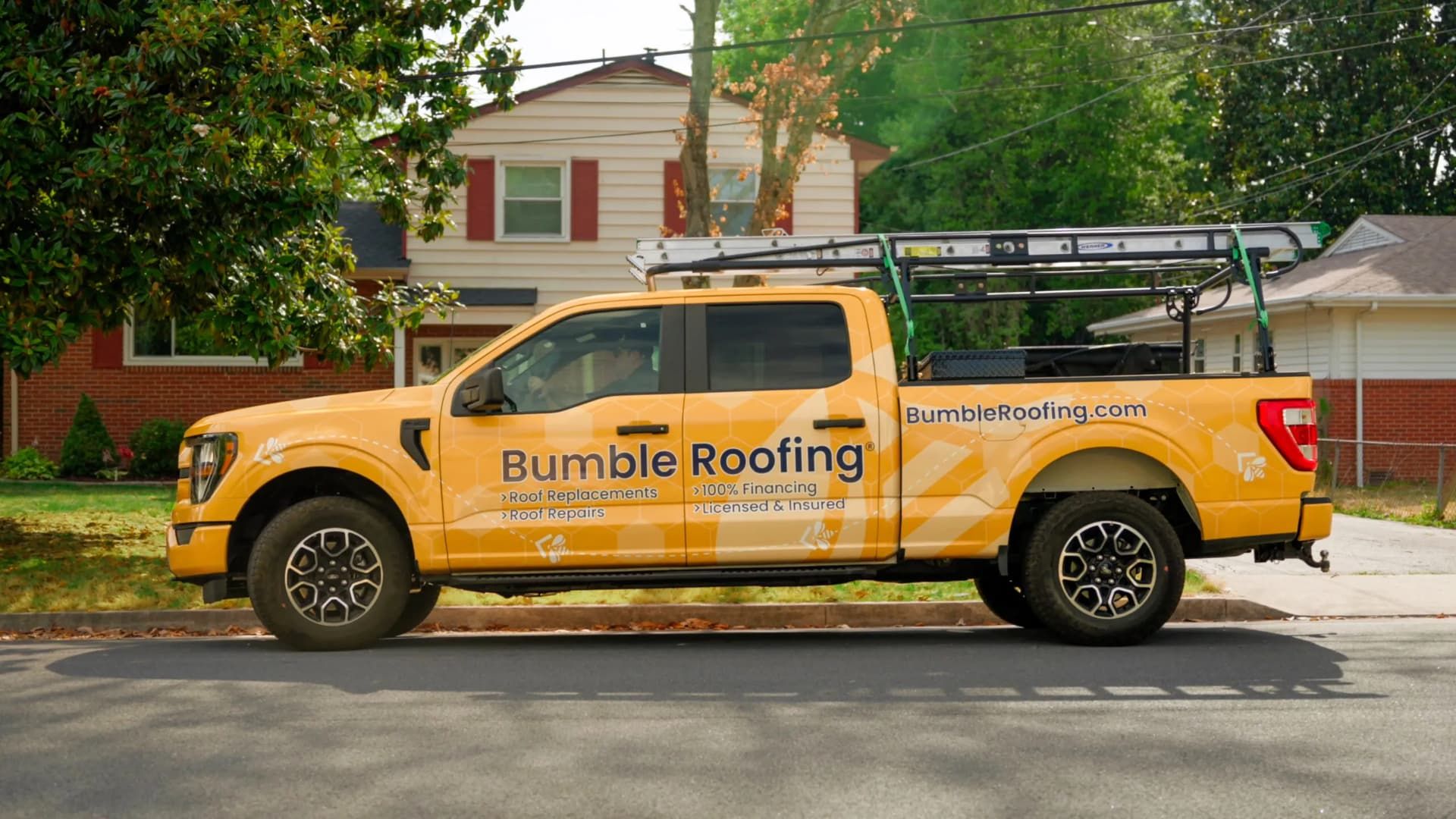
The Bumble Roofing franchise is a tech-forward roofing business that offers residential and commercial roof installation, repair, and maintenance with drone-powered estimates and transparent pricing. This Bumble Roofing Franchise Review explains the model, startup and ongoing costs, daily operations, training, territories, and ideal owner fit so aspiring owners can move through due diligence with a clearer picture of what ownership involves.
This article is sponsored by Bumble Roofing and was created in partnership with the brand to provide accurate, compliance-safe information about its business model and franchise opportunity. Nothing in this article should be considered legal, financial, or tax advice. Prospective franchisees should always review the most recent Franchise Disclosure Document (FDD) with qualified advisors before making an investment decision.
Bumble Roofing is part of the Franchise Brokers Association’s portfolio of vetted franchise opportunities, which means aspiring owners can evaluate the brand with the support of FBA education tools and consultant guidance.
What is the Bumble Roofing franchise model?
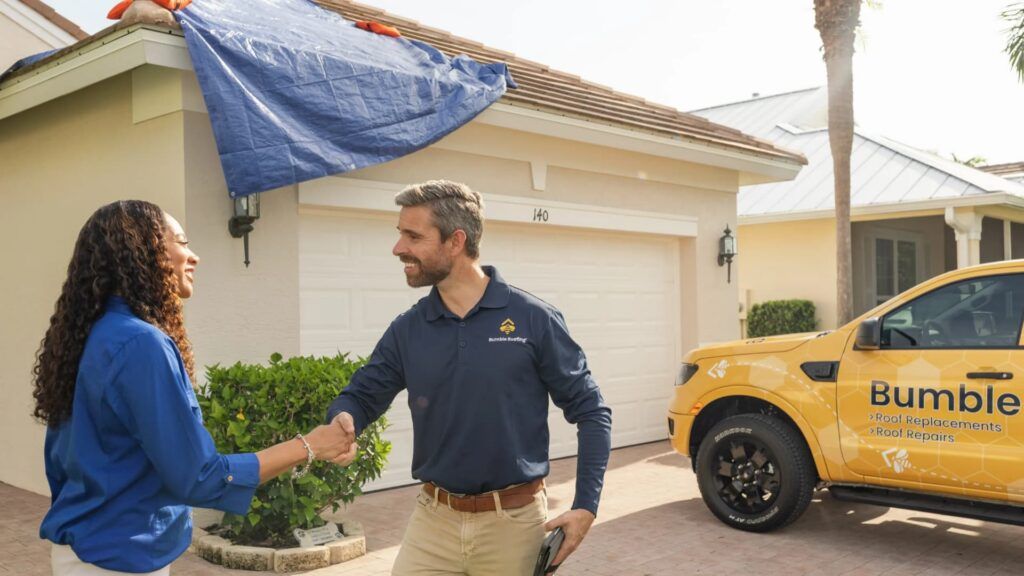
The Bumble Roofing franchise is a home-based roofing business built around sales leadership, project coordination, and customer experience rather than hands-on roofing labor. Franchisees manage local operations, oversee subcontractor crews, and use the brand’s technology stack to guide estimates, scheduling, and communication.
Bumble Roofing positions itself as a modern roofing company that simplifies the buying process through transparent proposals, digital tracking, and technology-assisted inspections. The model serves both residential and commercial customers, giving owners exposure to several practical service lines inside one essential home-services category.
The franchise is part of the Empower Brands family, which brings shared infrastructure across marketing, systems, and vendor relationships. For aspiring owners, that matters because the business is designed to be run from a home office with lean overhead, while field work is completed in the territory through managed crews.
For readers comparing brands, this section establishes the core idea: Bumble Roofing is not a retail franchise or a trade-self-performed model. It is a leadership-focused roofing business designed for owners who want to manage people, process, and local market growth.
How does Bumble Roofing make money and what services does it offer?
Bumble Roofing generates revenue through roofing-related services sold to homeowners, property managers, and commercial customers inside each territory. The business combines replacement, repair, inspection, and maintenance work, which creates a broader service mix than a single-purpose operator.
Current brand materials highlight five core service categories:
- Complete residential roof replacement
- Storm damage repair and restoration
- Preventive roof maintenance programs
- AI-powered drone roof inspections
- Commercial roofing installation for multi-family and commercial properties
That mix matters because it gives franchisees more than one way to build local demand. A territory may see work driven by storm events, aging roofs, property upkeep cycles, or commercial service needs, depending on local conditions and building stock.
Bumble Roofing also emphasizes a more visual and technology-forward sales experience. Drone imagery, roof-measurement tools, and digital proposals help owners and sales teams explain problems clearly and move customers through a process that feels more transparent than traditional handwritten estimates.
Understanding the service mix is important before evaluating cost. Once a candidate knows what the business sells and how the customer journey works, the next step is to assess the startup investment and ongoing fee structure.
What are the Bumble Roofing franchise startup costs?
Bumble Roofing’s current franchise disclosure materials outline an estimated initial investment range of approximately $174,998 to $300,334 for a single territory.* That range covers the franchise fee, equipment, vehicles, insurance, marketing, technology, licensing, and several months of working capital.*
What is the Bumble Roofing franchise fee and initial investment?
The initial franchise fee for one territory is listed at $49,500, paid at signing.* In some cases, territories above a stated single-family household threshold may also require an additional per-household fee, which can increase the total startup cost.*
The broader startup estimate includes practical operating categories such as training travel, equipment and vehicles, insurance, technology systems, office-related expenses, permits, opening advertising, and ongoing local marketing during the early months.* The inclusion of additional funds for the first three months is especially important because it reminds candidates that startup costs are not limited to signing fees and equipment purchases.*
The range is wide for a reason. Vehicle choices, local insurance costs, market entry strategy, and territory characteristics can all shift the final number up or down, which is why candidates should compare any planning assumptions to the latest official franchise documents before making decisions.
Owners who want to pressure-test affordability often use a structured planning tool before they speak with lenders or advisors. The FBA’s franchise financial calculator can help organize upfront and early-stage costs into a more practical planning view.
Bumble Roofing Estimated Initial Investment (Single Territory).
| Type of Expenditure* | Estimated Low* | Estimated High* |
|---|---|---|
| Initial franchise fee* | $49,500* | $49,500* |
| Training travel and living expenses* | $2,000* | $3,500* |
| Equipment and vehicles* | $11,598* | $79,434* |
| Online roofing training* | $250* | $250* |
| GPS tracking systems* | $150* | $400* |
| Insurance* | $2,000* | $20,000* |
| Computer, phone, technology systems* | $3,000* | $6,000* |
| Professional fees* | $1,000* | $5,000* |
| Office-related expenses* | $500* | $1,250* |
| Local software setup* | $0* | $2,000* |
| Business licenses and permits* | $2,000* | $5,000* |
| Opening advertising/marketing* | $20,000* | $30,000* |
| Local marketing analysis* | $3,000* | $3,000* |
| Ongoing first-year local marketing* | $15,000* | $40,000* |
| Additional funds (3 months)* | $55,000* | $55,000* |
| Total estimated initial investment* | $174,998* | $300,334* |
*This table summarizes estimated initial investment ranges as disclosed in the current Bumble Roofing franchise disclosure document. These figures are estimates only and can change. Always rely on the most current official franchise documents and review them with qualified advisors.
Important context: These figures reflect startup and early operating needs only. They do not indicate financial performance or outcomes.
What ongoing fees do Bumble Roofing franchisees pay?
Bumble Roofing franchisees should expect ongoing royalties, brand marketing contributions, technology fees, and required local advertising investment, along with several additional fees that may apply depending on how the business operates. These obligations are a major part of ownership because they affect monthly planning long after the opening phase ends.*
How do Bumble Roofing royalties and marketing fees work?
The royalty system uses tiered percentages tied to calendar year-to-date gross revenue, with lower percentages at higher revenue bands.* After the thirteenth month of operation, the franchisee pays either the calculated royalty or the applicable minimum monthly royalty, whichever is greater.*
Franchisees also contribute to a national branding and marketing fund and must maintain local advertising investment levels that meet the franchisor’s stated requirements.* In practical terms, that means owners need to think about both centralized brand contributions and local market development at the same time.
The technology fee covers core software and system access, while other fees may apply for bookkeeping, conventions, audits, special assistance, or supplemental training.* These charges matter because they shape real operating obligations even if they do not appear as prominently as the franchise fee in early conversations.
For many candidates, this is the section where the business starts to feel more concrete. A startup budget tells you what it takes to open, but the ongoing fee structure tells you how disciplined the operating model must be after launch. That is why many buyers review this section alongside franchise consulting services before deciding whether the fee load fits their goals and management style.
Bumble Roofing Key Ongoing Fees.
| Fee Type* | Amount / Range* | Notes* |
|---|---|---|
| Royalty fee* | Tiered % of gross revenue* | Minimum royalties after year one* |
| National branding/marketing* | Currently 1% of gross revenue, up to 2%* | Collected monthly* |
| Individual local advertising* | Minimum $65,000 first year per territory* | Or 8% of prior-year gross revenue* |
| Opening advertising* | Minimum $20,000 over first 6 months* | Counts toward local investment* |
| Technology fee* | Currently $345/month, up to $500/month* | Covers core tech stack* |
| Bookkeeping services* | $350/month, plus hourly support* | Designated provider fee* |
*Fee amounts and structures come from the current Bumble Roofing franchise disclosure document and may change. Always review the latest official documents with qualified advisors before making decisions.
What does daily operations look like for a Bumble Roofing franchise owner?
Daily ownership in a Bumble Roofing franchise is centered on management, sales oversight, and project coordination. The owner’s role is less about doing roofing work and more about running a local service business that depends on lead handling, customer trust, subcontractor coordination, and consistent follow-through.
A typical day can include reviewing lead flow and sales activity, confirming job schedules, checking material orders, meeting homeowners, reviewing or approving proposals, and monitoring project progress. Owners may also spend time building local referral relationships with insurance contacts, real estate professionals, or property managers.
That workload makes Bumble Roofing a better fit for operators who are comfortable juggling moving parts. The model asks owners to coordinate sales, service, and field execution without losing sight of customer experience, which is often where reputation is built in roofing.
This also explains why the franchise is described as leadership-focused rather than trade-focused. For many candidates, the key due diligence question is not “Can I roof?” but “Can I lead a team, manage a pipeline, and keep jobs moving smoothly?” The next section matters because training and support are what help bridge that gap.
What training and support do Bumble Roofing franchise owners receive?
Bumble Roofing provides initial training, onboarding, ongoing coaching, and a required technology stack to help franchisees launch and operate the business. The support model is designed to help non-roofing owners understand the business at a management level while relying on systems, vendor relationships, and subcontractor oversight.
How does Bumble Roofing train new franchisees?
Current brand materials describe an initial training path that includes virtual sessions, in-person training at headquarters, and field-based instruction focused on sales, production coordination, subcontractor management, and customer experience. Training also includes roofing-related educational content that helps owners understand the trade without becoming field technicians.
After launch, franchisees receive ongoing support through scheduled virtual training, onboarding resources, business coaching, and operational guidance. Brand materials also reference KPI dashboards, commercial bid guidance, and a U.S.-based call center option, all of which suggest a system designed to support visibility and responsiveness as the owner grows.
Technology is part of the support system, not a separate extra. The operating model uses tools for roof imaging, proposal generation, CRM, job management, communication, and call handling, which gives owners a more structured way to manage workflows and customer communication.
Candidates who want to compare support systems across brands can benefit from broader franchise education before they decide. Resources such as the FBA franchise webinar and FranPath Live can help frame better questions around launch support, coaching, and day-to-day operating tools.
How do Bumble Roofing territories and real estate work?
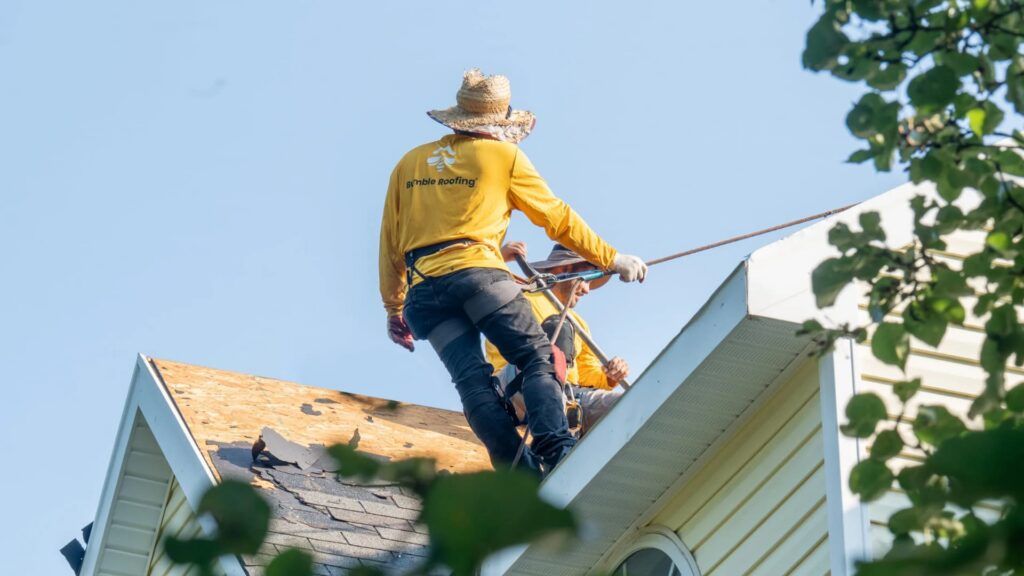
Bumble Roofing is structured as a home-based franchise, so owners usually do not need a storefront. Instead, the business is built around operating from a home office while serving customers throughout a defined territory using vehicles, equipment, and managed field crews.
What should owners know about Bumble Roofing territory structure?
Territories are generally defined using single-family household counts inside a geographic area.* If a territory exceeds a stated threshold, the franchisee may pay an additional fee tied to the extra household count, which increases the upfront territory cost.*
That structure matters because territory size is not just a map issue. It affects startup cost, market opportunity, and eventually how an owner thinks about staffing, sales coverage, and expansion. Candidates should ask how household counts are measured, how boundaries are determined, and what performance expectations apply to maintaining territorial rights.
Brand materials also describe discounted pricing for additional territories, which shows that multi-territory growth is built into the model. For some buyers, that will sound attractive. For others, it is simply a reminder to ask whether they want to master one territory first or build toward a larger regional footprint.
This section is often easier to understand with outside context. Neutral resources such as FTC franchise disclosure guidance and NASAA franchise resources can help candidates understand how territory language, competition clauses, and renewal issues often work across franchise systems.
Who is the ideal Bumble Roofing franchise owner?
The ideal Bumble Roofing franchise owner is a process-oriented leader who is comfortable managing teams, building local relationships, and handling consultative sales conversations. Prior roofing experience is not required, but ownership does appear to favor candidates who like structure, accountability, and people management.
What backgrounds and traits fit Bumble Roofing best?
Current brand materials point to several natural candidate profiles, including corporate managers, sales-driven entrepreneurs, and numbers-focused operators. The common thread is not trade skill. It is the ability to manage people, communicate clearly, and follow systems.
That profile makes sense given the business model. Owners must coordinate subcontractors, maintain local visibility, convert leads, and keep projects moving without personally performing the installations. That is a different skill set from hands-on construction work, and it is important for candidates to recognize the difference early.
Bumble Roofing also emphasizes personality traits such as approachability, trustworthiness, and process discipline. Those traits matter because a large part of the role involves helping customers understand roofing needs in a way that feels credible and organized.
Candidates who want a more structured way to test personal fit can use the FBA’s Zorakle assessment to compare their working style and strengths with the operating demands of different franchise models.
How does the Bumble Roofing franchise compare to other roofing franchises?
Bumble Roofing stands out in the roofing franchise category because it combines a home-based structure, technology-forward estimating, and franchisor-backed systems inside an essential service sector. That does not make it automatically better for every buyer, but it does make the concept distinct from both independent roofers and more traditional service franchises.
What makes Bumble Roofing different from other home-service concepts?
Compared with an independent roofing business, Bumble Roofing offers a defined operating model, brand identity, training framework, and centralized support. Compared with some other home-service franchises, it places especially strong emphasis on digital estimating, drone-based visuals, and a customer process built around clarity and transparency.
Several differentiators are worth noting:
- Home-based model with no standard storefront requirement
- Leadership-focused ownership instead of self-performed trade labor
- Technology-assisted estimating and project communication
- Empower Brands backing and shared systems infrastructure
- Multi-territory expansion path built into the model
This is where comparison becomes practical. Candidates should not stop at “What makes Bumble Roofing interesting?” They should also ask, “What kind of day, team, territory, and cost structure do I actually want to operate?” A broader look at franchise opportunities can help put Bumble Roofing in context against other home-service concepts.
What due diligence steps should aspiring Bumble Roofing owners take?
A strong Bumble Roofing due diligence process should include reviewing the latest franchise documents with advisors, speaking with current and former franchisees, understanding territory terms, and assessing whether the owner role fits the candidate’s strengths. This is the stage where the article stops being educational and starts becoming operational.
Key due diligence steps include:
- Reviewing the latest official franchise documents and agreements carefully
- Asking how startup and ongoing costs are likely to show up in real operating conditions
- Speaking with franchisees about sales, support, scheduling, subcontractor management, and customer expectations
- Clarifying territory boundaries, performance requirements, and multi-territory conditions
- Testing personal fit against the actual owner role, not just the industry category
The franchisor may provide financial performance information in Item 19 of the FDD; consult the document with a qualified advisor.
Outside resources can help improve the quality of those questions. The FTC franchise disclosure guidance explains how the disclosure process works, while SBA small business resources can provide general business-planning context. Candidates who want more guided education can also use the FBA franchise webinar and FranPath Live as part of their evaluation process.
Bumble Roofing Franchise Review FAQ
Is roofing experience required to own a Bumble Roofing franchise?
Roofing experience is not required to own a Bumble Roofing franchise. The business is designed for owners who manage teams, sales activity, and customer relationships rather than performing roofing labor themselves. Training, vendor partnerships, and subcontractor guidance help non-industry owners understand the trade at a management level so they can oversee quality and safety without being on the roof.
How tech-forward is the Bumble Roofing operating model?
Bumble Roofing uses a technology-forward model that includes digital estimating, roof imaging, CRM workflows, project tracking, and communication tools. The goal is to make estimating more visual, proposals clearer, and job coordination more organized for both the owner and the customer.
For buyers comparing franchises, this matters because technology changes the owner’s day. A stronger system can improve process visibility, but it also means the owner must be comfortable following tools and dashboards consistently.
What kind of territory will I receive with a Bumble Roofing franchise?
A Bumble Roofing territory is generally based on single-family household counts within a defined geographic area. Larger household counts can increase the upfront territory cost, and territory terms should be reviewed carefully in the current franchise documents.
Candidates should also ask how boundaries are mapped, how additional territories are priced, and what operational expectations apply if they want to expand beyond one territory over time.
How can I know whether the Bumble Roofing franchise is a good fit for my goals?
Bumble Roofing may be a good fit for candidates who want a home-based, leadership-focused business in an essential service category and are comfortable managing sales, people, and process. It is likely a weaker fit for someone who wants a passive role or expects the business to run without close coordination.
A realistic fit decision usually comes from comparing the owner role, the fee structure, the territory model, and the daily workload against your own skills and preferences. Tools like the Zorakle assessment and franchise consulting services can make that comparison more grounded.
Is the Bumble Roofing franchise the right next step?
Bumble Roofing may be worth a closer look for aspiring owners who want a home-based, technology-forward roofing business with structured support and a leadership-focused operating model. The key is to evaluate the brand based on the actual owner role, territory design, support system, and cost structure rather than on industry appeal alone.
Ready to take the next step? The Franchise Brokers Association connects aspiring owners with the guidance, tools, and franchise options they need to make a confident, informed decision. Whether you are still exploring or ready to move forward, explore franchise opportunities with the support of an experienced FBA consultant.