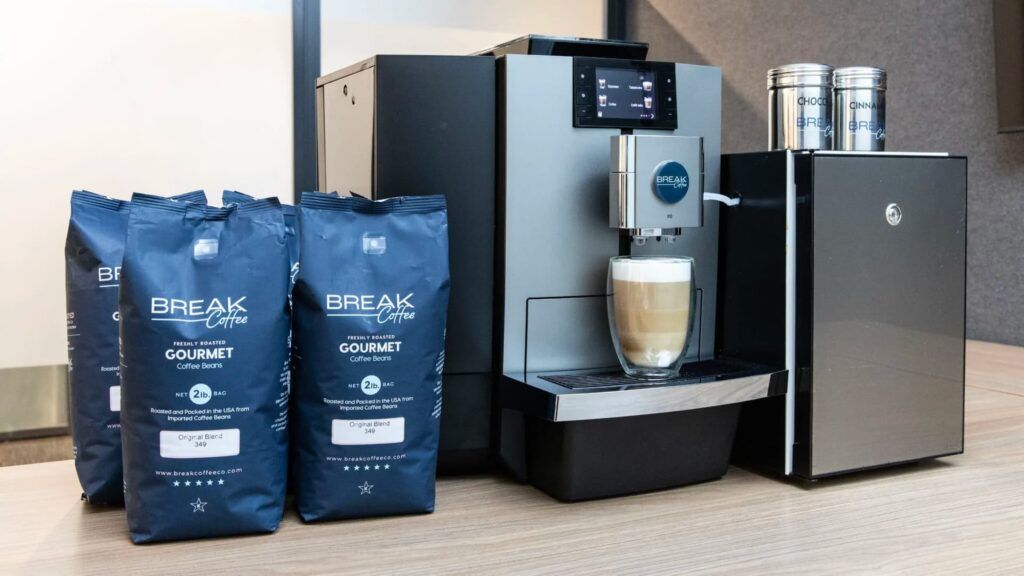



This Break Coffee Franchise Review examines a workplace coffee-service business, not a traditional café. Franchisees place, stock, and service bean-to-cup machines for commercial customers. A single-territory startup is estimated at $97,525–$141,000. Candidates should evaluate business-to-business selling, service responsibilities, required fees, and territory terms before deciding whether the model fits.
This article is sponsored by Break Coffee and was created in partnership with the brand to provide accurate, compliance-safe information about its business model and franchise opportunity. Nothing in this article should be considered legal, financial, or tax advice. Prospective franchisees should always review the most recent Franchise Disclosure Document (FDD) with qualified advisors before making an investment decision.
What Does This Break Coffee Franchise Review Tell Prospective Owners?
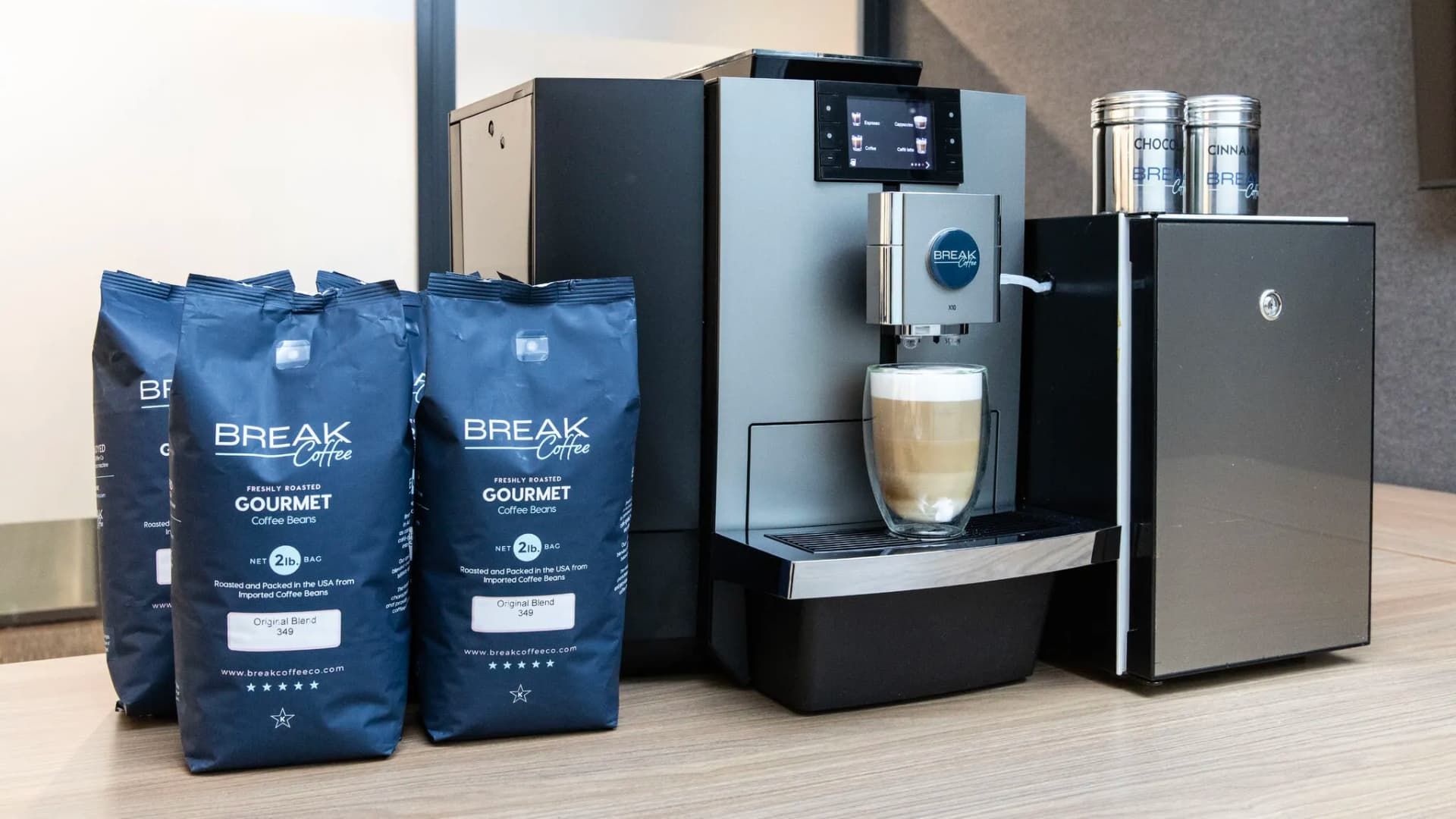
Break Coffee is a business-to-business workplace beverage franchise that combines equipment placement, coffee supplies, and ongoing service. Owners develop commercial relationships and maintain customer accounts rather than operate a walk-in café. The central ownership question is whether selling locally, coordinating service visits, and following equipment standards match your skills and availability.
The distinction matters when picturing your working week. Instead of managing a counter queue, you may contact office managers, arrange demonstrations, deliver supplies, and troubleshoot a machine.
The franchise has predecessor-system connections, but candidates should distinguish those roots from the current franchisor’s operating history. A familiar service concept does not replace evaluating the present organization, agreements, and support commitments.
What Ownership Responsibilities Matter in a Break Coffee Franchise Review?
Break Coffee requires owners to supervise and manage their businesses, even when they operate part time alongside other activities. Appointing a non-owner manager requires prior written approval and completion of required training. This makes oversight, service coverage, and customer communication essential responsibilities rather than optional tasks delegated without conditions.
A practical ownership plan should identify who handles prospecting, installations, cleaning, replenishment, and unexpected service requests. If another person performs fieldwork, determine who checks service quality and covers absences.
The brand’s flexible operating format should not be confused with an absence of operational duties.
How Much Does a Break Coffee Franchise Cost?
Break Coffee estimates an initial investment of $97,525–$141,000 for one territory, including a $59,500 initial franchise fee. The range includes machines, opening expenses, and additional funds for the initial operating period. Actual requirements depend on equipment, professional services, transportation, insurance, and other circumstances specific to the proposed business.
The initial franchise fee is already included in the total. Do not add it twice when organizing your budget.
What Are the Standard Single-Territory Startup Estimates?
Break Coffee’s standard single-territory estimate includes an initial machine purchase and the practical expenses needed to prepare for operations. Several categories vary because candidates begin with different equipment, transportation, and professional-service needs. The additional-funds allowance also varies substantially, making it important to review the underlying assumptions with qualified advisors.
| Startup expense | Low Estimate | High Estimate |
|---|---|---|
| Initial franchise fee | $59,500* | $59,500* |
| Beverage machines | $20,000* | $25,000* |
| Initial training expenses | $1,000* | $3,000* |
| Professional fees | $1,000* | $3,000* |
| Business licenses and permits | $25* | $500* |
| Computer systems | $0* | $1,000* |
| Vehicle allowance | $0* | $1,500* |
| Initial operating inventory | $500* | $1,000* |
| Grand opening advertising | $5,000* | $5,000* |
| Insurance | $500* | $1,500* |
| Additional funds, initial three months* | $10,000* | $40,000* |
| Total estimated initial investment | $97,525* | $141,000* |
These estimates reflect one territory and are subject to the assumptions and qualifications in the official franchise documents. For the most accurate and current information, review the latest Franchise Disclosure Document (FDD) for Break Coffee with qualified advisors. Startup estimates are not historical operating results.
A zero-dollar low estimate does not mean a resource is unnecessary. For example, an owner may already have suitable computer equipment. The vehicle allowance should not be read as a quotation for purchasing a replacement vehicle.
What Startup Costs Are Disclosed for Conversion Franchises?
Break Coffee does not disclose a separate conversion-franchise startup schedule in the reviewed investment tables. A conversion generally involves bringing an existing business into a franchise system, but candidates should not assume that this option is offered. Eligibility, equipment acceptance, required changes, and conversion-specific costs require direct confirmation.
| Conversion-franchise category | Low Estimate | High Estimate |
|---|---|---|
| Conversion franchise fee | Not disclosed | Not disclosed |
| Equipment and required changes | Not disclosed | Not disclosed |
| Training and transition expenses | Not disclosed | Not disclosed |
| Total conversion investment | Not disclosed | Not disclosed |
Separate conversion-franchise estimates are not disclosed in the reviewed official franchise documents. Do not treat the standard startup estimates as a conversion offer. For the most accurate and current information, review the latest Franchise Disclosure Document (FDD) for Break Coffee with qualified advisors.
Important context: These figures reflect startup and early operating needs only. They do not indicate financial performance or outcomes.
The documents separately estimate $137,525–$276,000 for two to five territories. That is a multiple-territory range, not a conversion range or a per-territory quotation.
Use the FBA’s franchise financial calculator to organize questions about funding needs. The SBA startup-cost guidance can also help separate one-time expenses from ongoing commitments.
Which Initial and Ongoing Franchise Fees Matter Most?
Break Coffee’s principal disclosed charges include the initial franchise fee, royalties, brand-fund contributions, technology support, and local advertising requirements. Some charges use percentage formulas with minimum obligations, while others apply only under specific conditions. Candidates should request a written fee walkthrough that reflects their territory count and operating stage.
| Selected fee or requirement | Disclosed amount | Practical context |
|---|---|---|
| Initial franchise fee, one territory | $59,500* | Due when signing; nonrefundable |
| Initial machine purchase | $20,000–$25,000* | Required initial inventory of six machines* |
| Royalty | 12%* of contract-defined Gross Sales, subject to minimums | Minimum obligations vary by operating stage and territory count |
| Brand-fund contribution | 2%* of contract-defined Gross Sales, subject to minimums | Separate from required local advertising |
| Technology and support | $49 monthly*, subject to increase | Confirm adjustment provisions |
| Local advertising | $500 monthly* | Applies unless and until the specified machine-placement condition is maintained |
| Assigned-account placement fee | 15%* of amounts collected during the first 12 months* | Applies to qualifying assigned accounts, not ordinary routed leads |
| Card-processing reimbursement | Up to 3.5%* of transaction price | Subject to issuer changes |
These selected charges are summarized from official franchise documents and remain subject to contractual definitions, minimums, conditions, and changes. This is not a complete fee schedule. For the most accurate and current information, review the latest Franchise Disclosure Document (FDD) for Break Coffee with qualified advisors.
“Gross Sales” is the agreement’s defined basis for calculating certain fees, not an outcome estimate.
For one territory, the disclosed monthly royalty minimum progresses from $0 during months 0–8 to $350 during months 9–24, $700 during months 25–60, and $1,050 from month 61 onward. Brand-fund minimums follow a separate schedule. Confirm reconciliation procedures and resolve any inconsistent wording before signing.
What Does a Break Coffee Owner Do During a Typical Week?
Break Coffee owners combine local business development with scheduled equipment service and account care. Public brand materials describe weekly or biweekly visits depending on usage, while actual workloads depend on customer needs and route conditions. A realistic schedule includes travel, preparation, follow-up, and unexpected issues, not cleaning time alone.
An illustrative week might include these tasks:
- Prospecting: Contact office managers and other commercial decision-makers.
- Demonstrations: Explain the equipment and customer trial process.
- Installation preparation: Confirm access, placement, and site requirements.
- Service visits: Clean machines and replenish approved supplies.
- Troubleshooting: Coordinate repairs or replacement when needed.
- Account care: Record issues and follow up with customer contacts.
These examples describe the work involved, not a guaranteed timetable.
The brand handles centralized customer billing through a designated affiliate. Owners still need to review account records, deductions, service notes, and unresolved customer questions.
What Training and Support Does Break Coffee Provide?
Break Coffee’s initial training is described as a two-day program totaling 16 classroom hours, covering sales, marketing, installation demonstrations, and customer service. Official materials also describe operating manuals, startup supplies, marketing artwork, and centralized billing. Candidates should distinguish these documented commitments from additional assistance that may be discretionary or separately charged.
The published training schedule lists no on-the-job hours within the initial course. Ask how equipment practice is delivered and whether supplemental field training would be useful.
Questions worth asking include:
- Equipment practice: Will you perform cleaning and installation tasks yourself?
- Troubleshooting: What happens when remote assistance does not resolve a fault?
- Training costs: Which travel and attendance expenses remain your responsibility?
- Marketing approval: How are proposed materials reviewed?
- Support availability: Who responds when the main contact is unavailable?
- Technology access: What information must owners maintain in the customer platform?
The franchise provides employee qualification and training standards, but owners remain responsible for hiring and managing their personnel.
How Do Break Coffee Territories and Real Estate Requirements Work?
Break Coffee permits a home-based office and defines territories through agreed boundaries and business-count methodology. Territory provisions contain important qualifications, including reserved distribution rights and national-account arrangements. The reviewed documents also use inconsistent exclusivity descriptions, so candidates should obtain written clarification rather than assume complete protection from overlapping activity.
The documents describe approximately 2,000 qualifying businesses per single territory. That count is not a list of committed customers or a guarantee of suitable service locations.
Ask for the actual map and employer data before evaluating available franchise territories. Check drive times, building access, parking, and customer concentration.
A home-based format also leaves practical questions: where will supplies remain clean and secure, and how will machines be transported? Confirm local storage, sanitation, licensing, and insurance requirements.
Who Is a Good Candidate for a Break Coffee Franchise?
Break Coffee may suit an owner who enjoys business-to-business selling, organized service work, and ongoing customer relationships. That is an owner-fit interpretation, not a qualification guarantee. The strongest practical match involves comfort with outreach, careful follow-through, equipment procedures, and responsibility for service coverage when plans change unexpectedly.
Coffee enthusiasm alone does not establish fit. An office manager may be unavailable during a visit, a demonstration may need rescheduling, or a machine may require attention between planned stops.
Useful self-assessment areas include:
- Sales confidence: Starting conversations with unfamiliar decision-makers.
- Service discipline: Completing cleaning and maintenance consistently.
- Route planning: Coordinating visits around customer access.
- Communication: Explaining service issues without overpromising.
- Recordkeeping: Maintaining accurate customer and inventory information.
- Oversight: Monitoring any employee or approved manager.
Minimum liquid-capital and net-worth qualifications: Not disclosed in the reviewed materials.
The FBA’s Zorakle ownership assessment can support reflection on work preferences. It does not replace investigating actual operating responsibilities.
How Does Break Coffee Compare With Other Business Models?
Break Coffee differs from a café because the customer relationship centers on workplace equipment and service rather than walk-in transactions. It also differs from independent office-coffee operations because franchisees follow contractual systems and supplier requirements. These distinctions change the tasks owners perform, but they do not establish that one model fits everyone.
A café generally requires attention to a customer-facing location, opening hours, and counter service. A workplace route instead emphasizes commercial contacts, customer access, machine care, and travel between accounts.
Independent operation may allow broader sourcing choices. The franchise requires designated suppliers for key equipment and consumables, so compare both purchasing flexibility and the support attached to those requirements.
Use the FBA to compare franchise opportunities and discuss franchise ownership fit without assuming that every coffee-related business involves the same work.
What Questions Do Candidates Ask About Break Coffee?
Break Coffee candidates commonly ask about startup costs, home-based operation, staffing, financing, and customer agreements. Each question addresses a different ownership obligation, so a simple marketing label rarely provides enough detail. The answers below summarize the reviewed materials while identifying conditions that candidates should confirm directly before proceeding.
Is Break Coffee a Coffee Shop Franchise?
Break Coffee is a workplace coffee-service franchise rather than a conventional coffee shop. Franchisees place and service beverage equipment for offices and other commercial customers. The model focuses on business relationships, replenishment, cleaning, and equipment support instead of operating a retail café with walk-in counter service.
Can You Run Break Coffee From Home?
Break Coffee permits operation from a home-based office, subject to its operating requirements and applicable local rules. Home-based administration does not eliminate customer visits, equipment handling, or supply management. Candidates should confirm storage arrangements, vehicle needs, insurance coverage, and any local restrictions before treating their residence as an operating base.
Can You Own Break Coffee While Keeping Another Job?
Break Coffee’s official franchise documents allow part-time operation alongside other activities when adequate oversight is maintained. Owners must still supervise the business, and a non-owner manager requires prior written approval and training. Candidates should arrange reliable daytime service coverage rather than assume that customer needs will fit around another job.
Does Break Coffee Offer Franchise Financing?
Break Coffee does not offer direct or indirect financing in the reviewed official franchise documents and does not guarantee financing obligations. Candidates considering a franchise purchase should investigate outside funding separately with qualified advisors. They should also distinguish lender approval from an independent assessment of contractual obligations and personal suitability.
Do Break Coffee Customers Sign Long-Term Contracts?
Break Coffee’s public website describes a two-week trial followed by a month-to-month agreement for standard office programs, with possible contracts for larger enterprise installations. This differs from an unrestricted “no contract” description. Candidates should confirm local customer terms, cancellation procedures, equipment retrieval, and responsibilities when an account ends.
How Should You Decide Whether Break Coffee Fits Your Goals?
Break Coffee deserves consideration when workplace selling, equipment service, and relationship management align with how you want to work. A sound decision also requires understanding minimum fees, territory limits, support commitments, and personal obligations. Evaluate the actual agreement and service routine rather than relying on broad descriptions of flexibility or simplicity.
Request Break Coffee franchise information, speak with current and former franchisees, and ask to observe a service route where permitted. Use FTC franchise disclosure guidance to organize your investigation.
The official documents highlight concerns involving the franchisor’s ability to provide support, limited operating history, spouse guarantees, minimum payments, and dispute location. Discuss those disclosures with qualified legal and accounting advisors.
You can also attend franchise education webinars or explore FranPath Live while preparing your questions.
Ready to take the next step? The Franchise Brokers Association connects aspiring owners with the guidance, tools, and franchise options they need to make a confident, informed decision. Whether you are still exploring or ready to move forward, explore franchise opportunities with the support of an experienced FBA consultant.