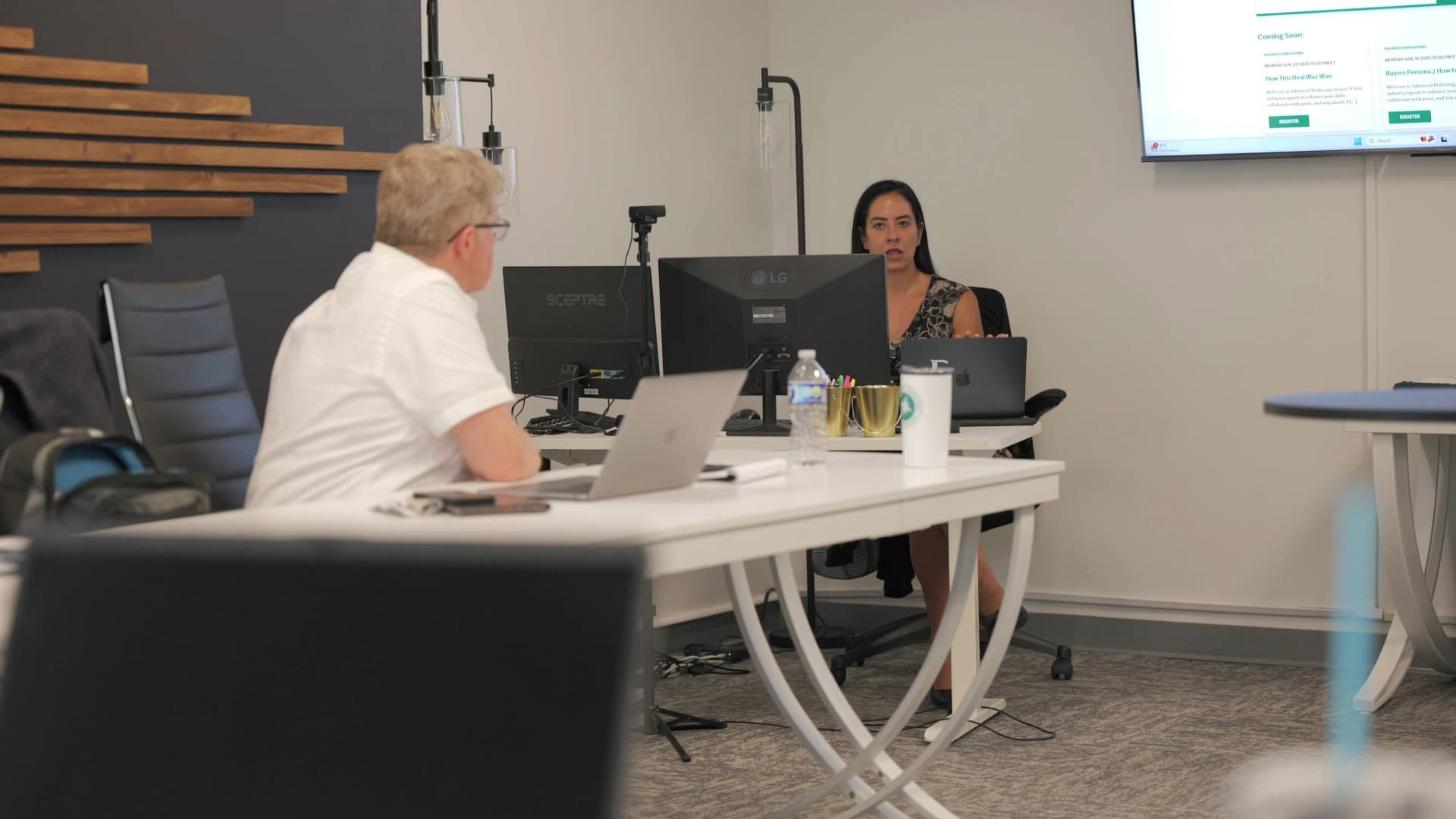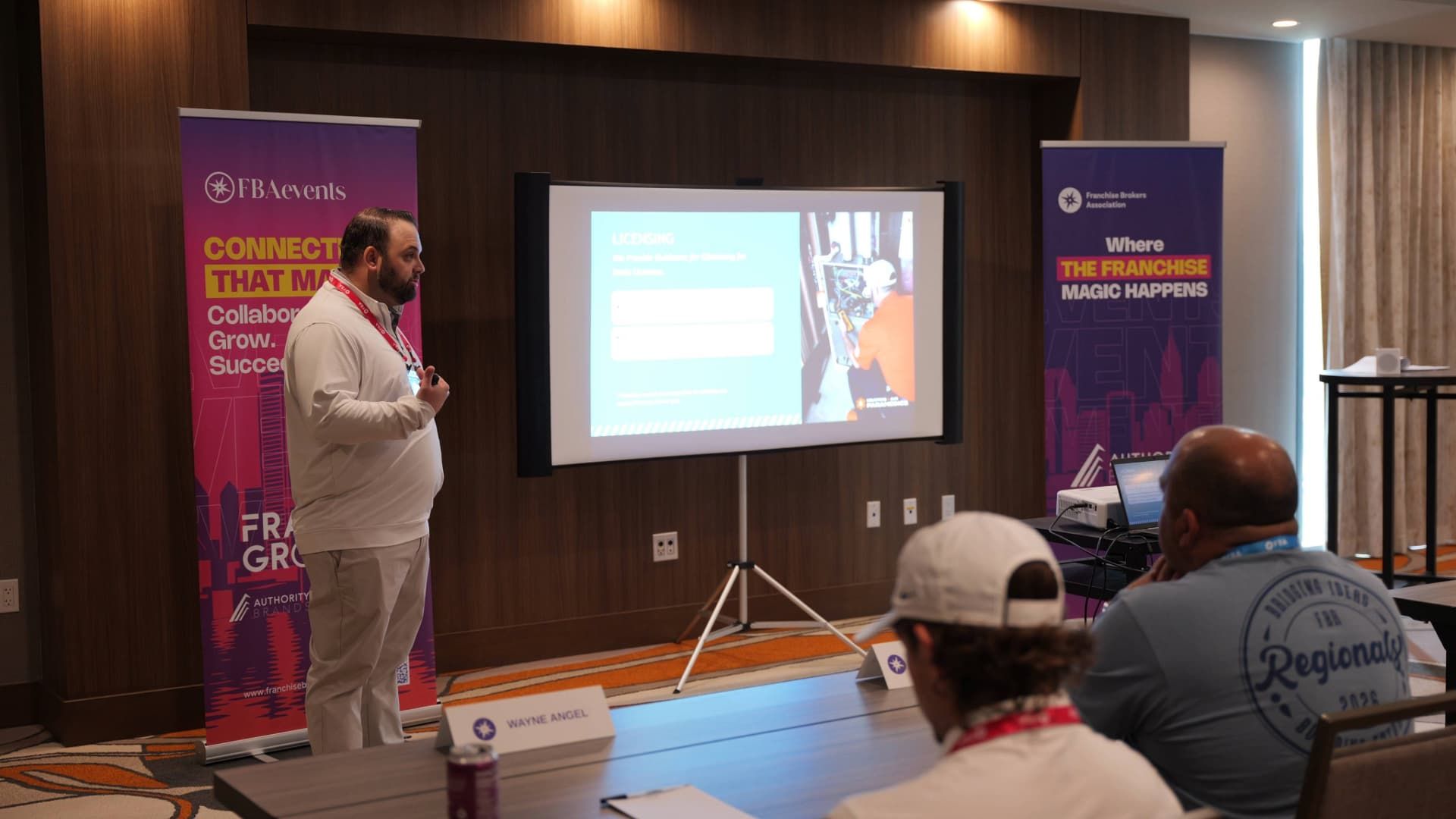




Franchise broker support combines training, educational resources, technology tools, mentoring, and advisory connections that help brokers operate their businesses and support candidates. The right arrangement should help you conduct better discovery, organize follow-up, investigate brand fit, and recognize when a question requires a qualified professional.
For aspiring brokers, the first priority is learning the work. Independent franchise consultants may need something different: a reliable operating system, access to experienced peers, or help identifying why candidate conversations stall.
Start with those needs rather than the longest feature list. This guide explains how to compare support programs, what evidence to request before paying, and how to turn available resources into a practical working routine.
What Does Franchise Broker Support Include?
A well-rounded support system connects learning with execution. Broker training teaches the process. Technology helps organize it. Mentoring helps you apply judgment when the situation is not straightforward.
| Support area | What it should help you do | Evidence to request |
|---|---|---|
| Broker training | Develop discovery, qualification, and communication skills | Curriculum, exercises, and feedback process |
| Educational resources | Explain the candidate journey clearly | Current guides, templates, and update procedures |
| Technology tools | Preserve context and manage next actions | A realistic workflow demonstration |
| Mentoring | Examine candidate challenges with experienced peers | Access rules, session format, and confidentiality guidelines |
| Brand research | Evaluate opportunities against candidate criteria | Selection standards, sources, and update practices |
| Advisory support | Identify and refer specialist questions | Clear boundaries and referral procedures |
| Business development | Build a repeatable consulting practice | Responsibilities, costs, and measurement methods |
Not every provider includes every service. A course, membership organization, software platform, and consulting franchise can involve different commitments.
Your comparison should identify what is included, what costs extra, and what you remain responsible for providing.
Choose Support for Your Stage of Business
If You Are Exploring Franchise Consulting
Learn what the role involves before committing to a technology package or membership.
Ask a training provider to explain a typical candidate relationship, including situations where the candidate pauses, changes direction, or decides not to buy.
Prioritize:
- Understanding the broker’s role and compensation.
- Practicing candidate discovery.
- Evaluating readiness without making assumptions.
- Learning the research and disclosure process.
- Recognizing professional boundaries.
- Building a realistic prospecting and follow-up routine.
The Franchise Training Institute describes franchise consulting as a structured process of understanding candidates, identifying aligned options, and guiding their investigation. Use that role description to assess whether the work fits your interests—not simply whether the industry sounds attractive.
If You Already Work With Candidates
Identify the operational gap before buying more support.
Review recent files and ask:
- Where did I lose context?
- Which commitments became overdue?
- What information did I need but could not obtain?
- When would another broker’s perspective have helped?
- Which administrative tasks repeatedly interrupted candidate work?
Weak discovery needs a different solution from missed follow-up. Additional brand presentations will not fix disorganized records, and automation will not correct an unclear process by itself.
1. Evaluate Broker Training Through Practice
Useful broker training should prepare you to perform specific tasks—not only recognize terminology.
Ask how you will practice discovery, qualification, brand evaluation, candidate education, and difficult conversations. Then ask who reviews your work.
| Training topic | Practical exercise to request |
|---|---|
| Discovery | Conduct a mock conversation and receive feedback |
| Qualification | Separate candidate statements from verified readiness |
| Brand evaluation | Explain alignment, limitations, and open questions |
| Candidate education | Describe the research process in plain language |
| Follow-up | Create a relevant next action |
| Difficult conversations | Explore uncertainty without applying pressure |
| Documentation | Record a clear summary and agreed commitment |
Access to recorded lessons can be useful, but it is not the same as individual feedback. Confirm which form of support you are purchasing.
Questions to Ask Before Paying for Training
- What should I be able to do when training ends?
- How much practice and feedback are included?
- Who teaches the material?
- How are resources updated?
- What continues after initial training?
- Which services require additional fees?
- What happens if I need more time?
- What does the certificate represent?
A course-completion certificate should not be treated as confirmation that every legal or registration obligation has been satisfied. Obtain appropriate guidance for your activities and jurisdictions.
If you are comparing training options, explore FTI’s franchise consultant training information and request the current curriculum, delivery format, and written inclusions.
2. Look for Educational Resources You Can Apply
A resource library is valuable when you can find an accurate answer and use it at the right stage.
Useful educational resources may include discovery guides, research checklists, validation questions, meeting agendas, follow-up templates, and case discussions.
Review a sample before joining a program. Ask:
“Which candidate question does this resource answer, when would I use it, and what information still needs direct verification?”
For example, FBA’s franchise candidate qualification guide addresses early discovery. Its franchise validation call questions help brokers prepare candidates to speak with owners. These resources solve different problems and should not become interchangeable attachments.
For disclosure education, use the FDD explanation for franchise candidates to support understanding—not to replace independent legal review.
Check the Update Process
Ask who maintains the library and how changes are communicated.
Investment information, territories, financing requirements, and brand details can change. A trustworthy resource should help you locate current information rather than imply that an older summary settles the question.
3. Compare Technology Tools Against a Real Workflow
A franchise broker CRM should preserve the candidate’s history and make the next action visible.
Request a demonstration using a realistic scenario:
“Show me how the system handles a candidate comparing two brands who pauses, changes their budget, and returns several months later.”
This tests continuity, not just dashboard appearance.
Evaluate:
- Contact and communication history.
- Candidate and brand-opportunity records.
- Pipeline definitions.
- Tasks, reminders, and scheduling.
- Goals, constraints, and changing preferences.
- Overdue commitments.
- Communication preferences and opt-outs.
- Reporting.
- Permissions and data export.
Also ask who handles onboarding, configuration, troubleshooting, and ongoing administration. Software access and implementation support are separate services.
Where BOS and BOS AI Fit
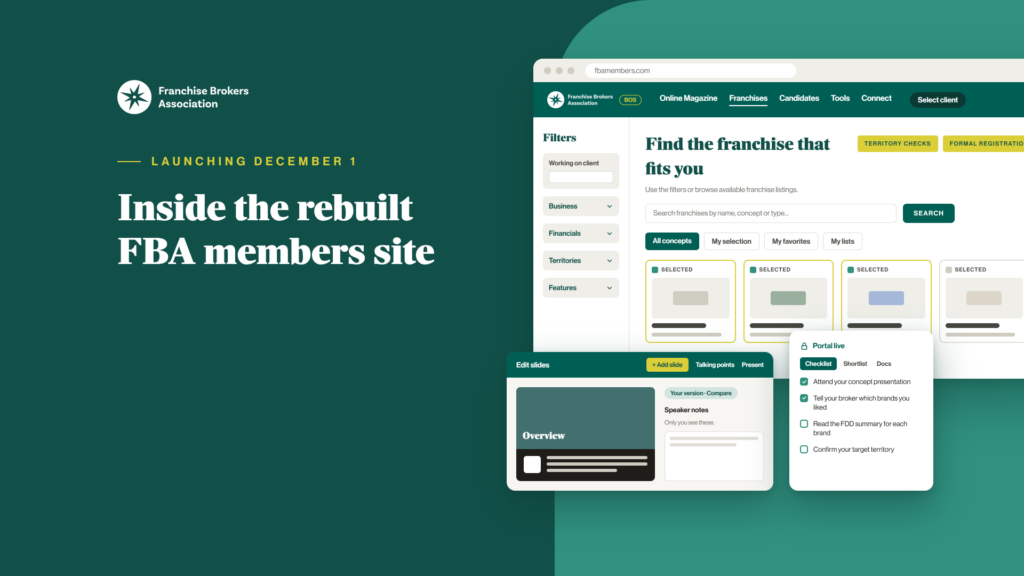
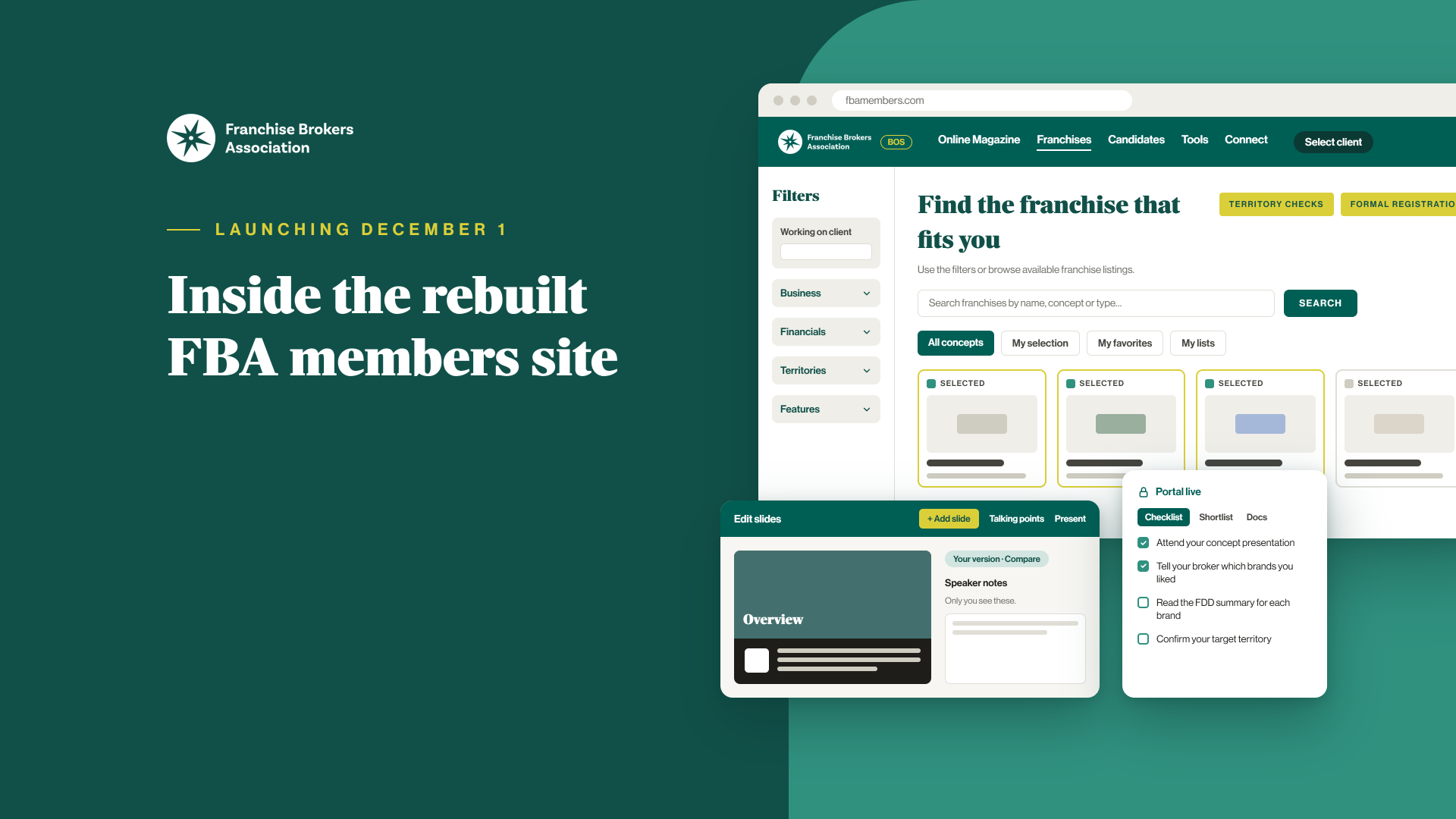
FBA’s Broker Operating System describes a HubSpot-based operating framework with brokerage workflows, tasks, templates, and reporting.
The BOS AI overview describes additional AI-assisted capabilities for candidate preparation, note synthesis, pipeline review, and task management.
Request a demonstration around your actual needs. Confirm current functionality, access requirements, onboarding, and pricing rather than assuming every published capability is enabled in every account.
4. Use AI to Prepare, Not Decide
AI can help organize records, summarize a conversation, or suggest a diagnostic question. It should not become the final authority on candidate fit, financing eligibility, contractual obligations, or likely financial results.
FBA’s BOS Assistant coaching overview describes coaching plays drawn from Sabrina Wall’s work with FBA co-brokers.
A useful request is:
“What have I not confirmed before my next candidate conversation?”
A less useful request is:
“Tell me which franchise this candidate should buy.”
Before applying generated guidance:
- Compare it with the record.
- Separate confirmed facts from interpretation.
- Verify current brand information.
- Review compliance-sensitive statements.
- Decide whether live coaching or specialist advice is needed.
Follow approved data-handling rules. Access to an AI tool does not automatically authorize sharing financial statements, identity documents, or confidential agreements.
5. Evaluate Mentoring by Access and Follow-Through
Mentoring should help you examine a real question and choose an appropriate next step.
Ask whether you can bring current candidate situations, submit questions beforehand, receive individual support, and return with the result. Confirm confidentiality expectations and the process for sensitive cases.
Within FBA:
- Broker Support Mixer is open to all brokers.
- BOS Mastermind is exclusively for BOS brokers.
Confirm current schedules, registration details, and participation guidelines with FBA.
Prepare a Focused Coaching Question
Bring a short brief covering the candidate’s goals, current stage, last meaningful interaction, stated concern, previous attempts, and missing information.
Instead of asking, “How do I save this deal?” ask:
“What should I clarify before deciding whether this opportunity still fits?”
Record one recommendation and convert it into an assigned task. Mentoring should improve your judgment, not simply generate more outreach.
6. Examine Brand Research and Portfolio Transparency
Portfolio access is only one part of research support. You also need to understand how information is selected, maintained, and used.
Ask:
- How are brands admitted?
- What criteria are reviewed?
- How often is information refreshed?
- Who confirms territories?
- How are concerns communicated?
- What happens when no portfolio option fits?
- How are compensation arrangements explained?
A larger portfolio is not automatically better, and a network’s review does not eliminate investment risk.
FBA’s franchise brand evaluation guide provides a structured starting point.
The FTC’s consumer guide to buying a franchise also encourages buyers to investigate broker selection criteria, portfolio limitations, compensation, and earnings claims. Your support system should prepare you to answer those questions clearly.
7. Understand What Advisory Support Does Not Replace
Advisory support should help brokers recognize when a question belongs with another professional.
| Candidate question | Appropriate resource |
|---|---|
| “What obligations does this agreement create?” | Franchise attorney |
| “How should I interpret these financial statements?” | Qualified accountant |
| “Will this financing structure qualify?” | Lender and appropriate advisors |
| “What are the tax consequences?” | Qualified tax professional |
| “What is operating this business actually like?” | Franchisor and current or former franchisees |
| “How should I organize my investigation?” | Broker-supported research process |
A referral list can make the next step easier, but a referral does not replace the candidate’s own engagement with that professional.
Ask whether referral arrangements involve compensation and how potential conflicts are explained.
8. Review Business Development Support Realistically
Training, membership, and software do not create a pipeline by themselves. Confirm what the provider supplies and what you must do.
Useful business development guidance may cover audience selection, referral relationships, educational content, inquiry response, follow-up, acquisition costs, and pipeline measurement.
If leads are offered, clarify the definition. An inquiry, verified contact, qualified appointment, and ready-to-invest candidate are not equivalent.
Ask whether leads are shared, how consent is obtained, what information is provided, and which charges are separate. Avoid evaluating a program on unsupported income projections or promised deal volume.
How Much Does Franchise Broker Support Cost?
There is no single price that covers every arrangement. Request a written breakdown and compare the total commitment.
Include:
- Initial training and onboarding.
- Membership and renewal charges.
- Software subscriptions and user seats.
- Optional coaching.
- Marketing and lead expenses.
- Events and travel.
- Transaction fees or revenue sharing.
- Cancellation and data-export terms.
A lower entry price may exclude services you need. A larger package may include resources you will not use.
Ask:
“What would my first-year commitment be under the plan you recommend, which costs are optional, and what remains my responsibility?”
Support may improve your process. It does not guarantee candidates, commissions, or business growth.
Compare Support Models Before Comparing Providers
You may need one arrangement or a combination.
| Model | Main purpose | What to clarify |
|---|---|---|
| Standalone training | Build foundational knowledge and skills | Feedback and post-course access |
| Membership or network | Provide community, resources, and relationships | Access, obligations, and commercial terms |
| Technology subscription | Organize day-to-day operations | Implementation, permissions, and portability |
| Independent coaching | Address specific skills or decisions | Scope, availability, and credentials |
| Consulting franchise | Provide a defined business arrangement | Contractual controls, fees, and exit terms |
Do not assume these models are interchangeable. Review the agreement rather than relying on labels such as “independent,” “partner,” or “full support.”
A Practical Franchise Broker Support Checklist
Before committing, request evidence in each area.
| Area | What to review |
|---|---|
| Training | Current syllabus and sample exercise |
| Feedback | How someone evaluates your work |
| Resources | A current guide relevant to your process |
| Technology | A realistic demonstration |
| Mentoring | Access rules and submission process |
| Brand research | Selection and update procedures |
| Advisory boundaries | Escalation and referral practices |
| Business development | Responsibilities and lead definitions |
| Costs | Written inclusions and exclusions |
| Data and exit | Export, retention, cancellation, and transition terms |
Mark each item as confirmed, clarification needed, or not included. This is a proposed evaluation tool, not an industry certification.
Do not let an impressive demonstration outweigh unclear terms or unsupported promises.
Make Support Useful in the First 30 Days
Week 1: Define the Process
Map the candidate journey and identify the information needed at each stage. Learn the purpose of a task before adopting its template.
Week 2: Practice and Configure
Practice discovery, test your CRM, and choose a small set of relevant resources. Avoid automating a process you do not yet understand.
Week 3: Bring a Real Question
Use an appropriate mentoring opportunity to review a situation or practice case. Assign the resulting action.
Week 4: Review the Change
Check whether you preserved context, completed commitments, improved questions, or identified a mismatch earlier. Address the largest remaining gap before adding tools.
Established consultants can use the same framework to reset an inconsistent process.
Red Flags in a Support Program
Be cautious when a provider:
- Promises easy commissions or guaranteed growth.
- Treats every concern as an objection to overcome.
- Cannot explain how materials are updated.
- Equates certification with complete legal authorization.
- Presents portfolio access as investment safety.
- Avoids fee or compensation questions.
- Offers software without implementation support.
- Promises AI accuracy without review responsibilities.
- Cannot explain data access and exit terms.
A credible provider should explain both the benefits and the limits of its services.
Frequently Asked Questions
What is franchise broker support?
It is the training, educational resources, technology, mentoring, research assistance, and professional connections that help brokers operate their businesses and support candidate investigation.
What should aspiring brokers prioritize?
Start with role clarity, practical broker training, discovery skills, professional boundaries, and consistent recordkeeping. Add automation around a process you understand.
Can independent consultants receive support without giving up independence?
Potentially. Review branding, exclusivity, portfolio, compensation, and data obligations in the agreement. Do not assume independence based on marketing language.
Is mentoring different from training?
Yes. Training teaches foundational knowledge and skills. Mentoring helps apply judgment to a specific situation. Both can be useful at different stages.
Does franchise broker support include leads?
Not necessarily. Confirm whether lead services are included or separately priced, how contacts are sourced, and what qualification standard applies.
What should brokers ask before switching networks?
Review current contractual obligations, active candidate treatment, compensation rights, data portability, software access, and transition support. Obtain appropriate legal advice before acting.
How does FBA support franchise brokers?
FBA’s published resources describe brokerage education, community, coaching resources, and BOS technology. FTI provides information for professionals exploring franchise consulting and training. Confirm current packages, access, and pricing directly.
Choose Support You Can Explain—and Use
The right franchise broker support addresses your current gaps, fits your business model, and helps you serve candidates responsibly.
Request a training sample, test the technology, review mentoring access, and obtain written terms. Then identify how each service will fit your routine.
If you are exploring the career, learn about franchise consulting through FTI. If you already work with candidates, explore FBA’s Broker Operating System and request information about support options suited to your practice.
This guide provides educational information, not legal, financial, tax, or investment advice. Features, access requirements, and pricing may change. Review current agreements and consult qualified professionals about obligations relevant to your business.