


A British Swim School franchise has an estimated initial investment of $122,700 to $176,050 for a Standard Territory, including a $59,500 franchise fee. A Targeted Territory has an estimated investment of $95,200 to $151,050, including a $39,500 franchise fee. The model generally uses existing pools rather than requiring owners to build a dedicated swim facility. This guide explains the investment, required fees, pool partnerships, territory protections, and responsibilities prospective owners should understand.
About this article. British Swim School is a member of the Franchise Brokers Association. FBA publishes reviews of member brands as part of its membership program, and FBA and its brokers may receive a commission from the franchisor if a candidate FBA works with goes on to purchase a franchise. This article was researched and written by FBA from the brand’s current Franchise Disclosure Document and FBA’s own franchise database. The brand did not write, review, or approve it before publication.
Nothing in this article should be considered legal, financial, or tax advice. Prospective franchisees should always review the most recent Franchise Disclosure Document (FDD) with qualified advisors before making an investment decision.
What Is a British Swim School Franchise?
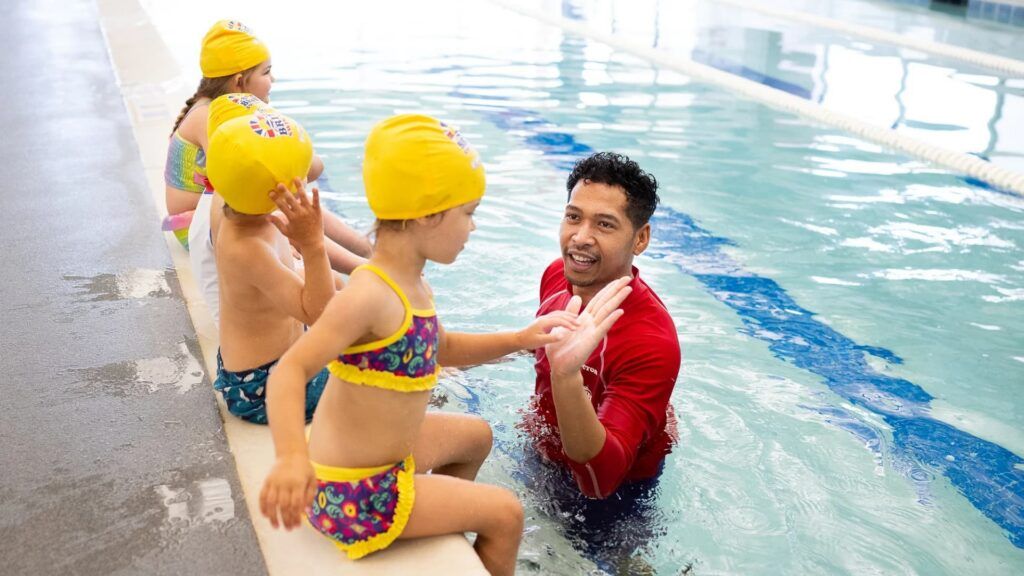
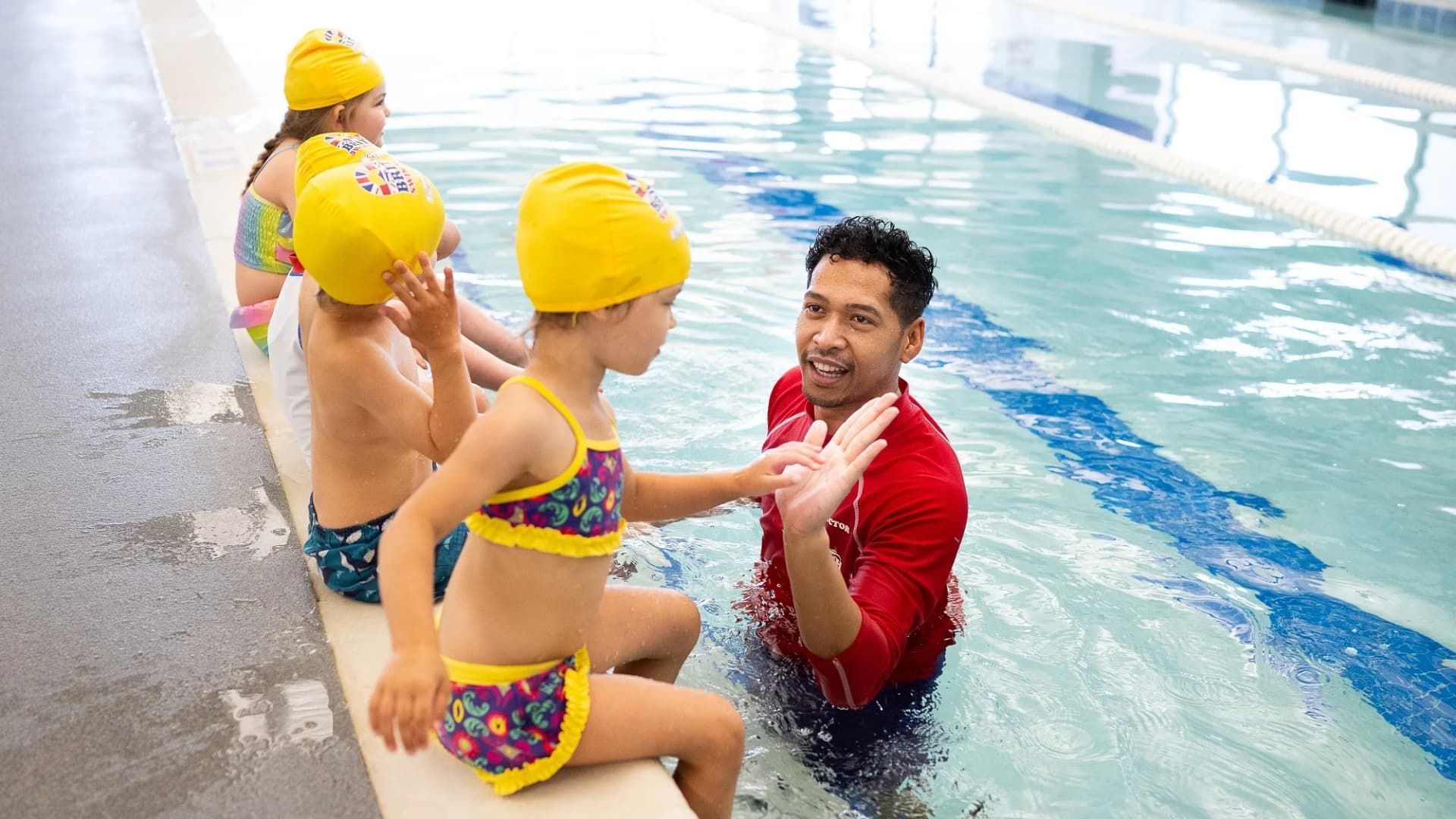
British Swim School provides swimming and water survival instruction through private and group lessons. Its program covers survival skills, stroke development, breathing techniques, and coordination, with lessons ranging from early water introduction to advanced skill development. Although it serves different ages, the FDD describes its primary focus as children ages 10 and under.
Franchise operations began in 2011 under a predecessor company. The current franchisor, British Swim School Franchising, LLC, was formed in March 2019 and began offering franchises that June. It is part of Buzz Franchise Brands, whose other brands include Pool Scouts, Home Clean Heroes, and Wonderly Lights.
The practical distinction is where lessons happen. Instead of requiring a purpose-built center, the business generally operates through approved existing pools, such as those at hotels and fitness facilities.
How Does a British Swim School Franchise Work Without Building a Pool?
British Swim School generally anticipates that franchisees will pay third-party facilities for access to pool space during designated periods. Owners can independently arrange approved pool rentals or participate in the franchisor’s Pool Program. The FDD also permits approved pools owned or leased by the franchisee or an affiliate, so pool ownership is not prohibited; it is simply not required by the usual model.
For prospective owners, access is the central operating consideration. A suitable pool must offer more than water: its location, available hours, customer access, and operating arrangements must work for the business.
Three questions deserve attention:
- Pool availability: Which facilities can accommodate lessons during the hours local families want?
- Agreement terms: What notice, cancellation, pricing, and renewal provisions govern access?
- Continuity: How would the business respond if a facility became unavailable?
Owners are responsible for selecting pools, and the franchisor must approve the pool and applicable agreement. Item 11 describes assistance with initial pool-location efforts, but additional in-person scouting may involve charges and does not guarantee that a pool will be secured. Loss of pool-use rights or breach of a pool agreement can also have consequences under the franchise agreement.
Pool agreements are therefore more than a startup task. They are part of the business’s operating foundation.
How Much Does a British Swim School Franchise Cost?
The estimated investment varies by territory type and development commitment.
| Offering | Population guideline | Initial franchise fee | Estimated initial investment |
|---|---|---|---|
| Standard Territory | Up to approximately 25,000 children under 10 | $59,500 | $122,700 to $176,050* |
| Targeted Territory | Approximately 8,000–20,000 children under 10 | $39,500 | $95,200 to $151,050* |
| Area development | Two or three Standard Territories | $99,500 for two; $139,500 for three | $212,300 to $426,550* |
*FDD estimate. Figures are drawn from the 2026 FDD’s territory descriptions and Items 5 and 7. Population estimates rely on third-party data, and the offered territory may vary based on demographics and other factors.
For the most accurate and current information, review the latest Franchise Disclosure Document (FDD) for British Swim School. The financial figures presented here are historical results from franchised businesses as disclosed in Item 7 and Item 19 of the 2026 FDD.
Important context: These figures reflect startup and early operating needs only. They do not indicate financial performance or outcomes.
The startup estimate includes more than the franchise fee. Item 7 lists marketing programs, pool-related expenses, equipment and supplies, training travel, insurance, technology, professional fees, and other opening needs. It also includes an additional-funds estimate covering an initial three-month period.
Personal living expenses and financing needs should be evaluated separately.
Before choosing a territory, organize your assumptions with FBA’s franchise funding calculator and review the resulting budget with qualified advisors.
Does British Swim School Offer Franchise Fee Discounts?
The FDD describes two potential discounts on the first franchise fee:
- VetFran: A 20% discount for eligible participants.
- Community Heroes: A $2,500 discount for qualifying applicants, including specified emergency services and education professionals.
The programs cannot be combined, and eligibility and development-agreement restrictions apply. On a $59,500 Standard Territory fee, a 20% discount would equal $11,900. Separately, the franchisor may, at its discretion, finance part of the initial franchise fee, and Item 10 says it may finance up to half of the initial investment or operating capital, typically at 12% annual interest repaid over one to three years.
What Should Multi-Territory Buyers Know?
An area development agreement is available for two or three Standard Territories, not Targeted Territories. The FDD says two-territory agreements are typical, while three-territory agreements may be offered to qualified, experienced buyers at the franchisor’s discretion.
The development schedule matters as much as the cumulative fee. Under Item 5, a second business cannot open until the first has operated for at least 12 months. Failure to meet the agreed development schedule can result in loss of future development rights.
Ask what happens if you purchase development rights and later decide not to open every business.
What Are British Swim School’s Ongoing Fees?
The main recurring charges include royalties, a marketing fund contribution, required advertising programs, and technology fees.
| Fee or requirement | Amount or basis |
|---|---|
| Royalty | 10% of gross sales, subject to minimums in later calendar years |
| Marketing fund contribution | 2% of gross sales |
| SEO services | Currently $3,600 annually |
| Digital marketing, Standard Territory | Currently $17,000 annually per territory |
| Digital marketing, Targeted Territory | Currently $12,000 annually per territory |
| Technology fee | Approximately $250 monthly before opening, increasing with users, active students, and applicable pricing |
| Mailer program | Required during the first operating year, with setup, mailing-list, and postcard charges |
| Pool access | Varies by facility and agreement |
This is a summary, not a complete fee schedule. Items 5, 6, and 7 describe payment timing, additional charges, and applicable qualifications.
For the most accurate and current information, review the latest Franchise Disclosure Document (FDD) for British Swim School. The financial figures presented here are historical results from franchised businesses as disclosed in Item 7 and Item 19 of the 2026 FDD.
When Do Minimum Royalties Begin?
The minimum royalty schedule follows full calendar years after the franchise agreement’s effective date, not simply the anniversary of opening.
| Period | Monthly royalty |
|---|---|
| Effective date through December 31 of the first full calendar year afterward | 10% of gross sales |
| Second full calendar year | Greater of 10% of gross sales or $1,500 |
| Third full calendar year | Greater of 10% of gross sales or $2,500 |
| Fourth full calendar year onward | Greater of 10% of gross sales or $3,500 |
For the most accurate and current information, review the latest Franchise Disclosure Document (FDD) for British Swim School. The financial figures presented here are historical results from franchised businesses as disclosed in Item 7 and Item 19 of the 2026 FDD.
A buyer acquiring an existing franchise should also ask about the applicable royalty period: the FDD states that a transfer does not restart or reduce the schedule.
For budgeting purposes, a $3,500 minimum equals 10% of $35,000 in monthly gross sales. Below that sales level, the minimum would exceed a straight 10% calculation. This is a fee illustration, not a sales forecast.
What Marketing Costs Come on Top of the 2% Contribution?
The marketing fund contribution does not replace the required SEO, digital marketing, mailer, or applicable local advertising expenditures.
For the first year, SEO and digital marketing fees are payable when the website goes live. After the first operating year, owners may discontinue the mailer program, but must redirect an equivalent amount to digital advertising rather than eliminate that spending.
Pre-marketing and grand-opening advertising requirements are at least:
- $10,000 for a Standard Territory.
- $7,500 for a Targeted Territory.
The FDD also establishes an advertising-expenditure formula for the succeeding year when a business reaches or exceeds $1 million in annual gross sales. That threshold does not mean marketing spending is optional below $1 million; other required programs already apply.
How Do British Swim School Territories Work?
British Swim School grants a defined territory identified in an attachment to the franchise agreement. Subject to compliance with the applicable agreements, the franchisor will not operate or authorize another British Swim School business at a pool inside that territory.
That protection does not prevent every form of competition.
Customers may choose a British Swim School outside their home territory. Franchisees generally cannot market outside their own territory without approval, but they may serve customers who live elsewhere. The franchisor also reserves specified rights concerning other brands and distribution channels.
Item 12 states that continuation of territorial exclusivity does not depend on achieving a particular sales volume or market penetration. However, compliance obligations and other contractual restrictions still matter.
Before accepting a territory, review:
- The actual map and demographic estimates.
- Potential pool facilities and available lesson hours.
- Nearby British Swim School operations.
- Restrictions affecting specific pool partnerships.
- Approval requirements for adding or relocating pools.
Population alone does not establish available lesson capacity. A promising map still needs suitable facilities and workable schedules.
What Does a British Swim School Owner Do?
This is a management business, not a passive investment.
Item 15 requires the business to remain under the direct, full-time supervision of the owner or designated manager. For an entity franchisee, the designated manager must be an owner with at least 50% ownership interest and voting power, with chief-executive authority. An ordinary hired manager should not be assumed to satisfy that requirement.
An illustrative week could include:
- Coordinating pool schedules and facility relationships.
- Recruiting, supervising, and supporting employees.
- Reviewing enrollment and customer service.
- Implementing local marketing.
- Monitoring expenses and required payments.
- Working with the aquatics manager on program delivery.
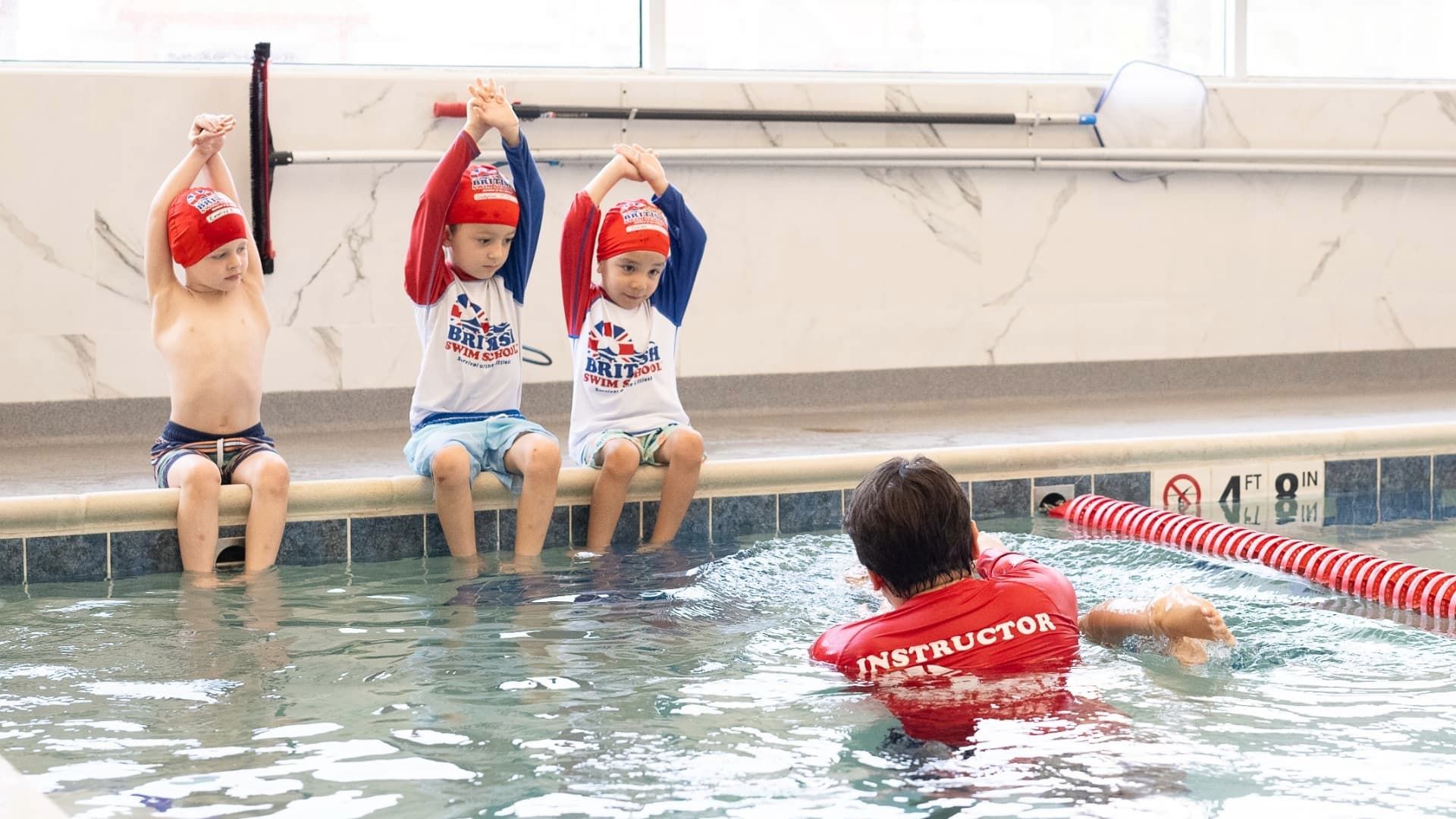
Owners do not necessarily have to teach every lesson. However, if the owner will not train and manage instructors, an aquatics manager is required. Owners who act as their own aquatics manager should expect in-water training and the instructional responsibilities associated with that role.
Hiring a capable team can change how responsibilities are shared. It does not remove the contractual supervision requirement.
What Training and Support Does British Swim School Provide?
The 2026 FDD’s training table lists an estimated 89 hours of classroom or online instruction and 20 hours of on-the-job training, totaling 109 hours. The franchisor may vary the length and content based on participants’ experience and skills.
Training combines self-paced, virtual, and in-person instruction. Topics include sales and marketing, finances, operations, aquatics, human resources, business management, and customer service. In-person instruction takes place in Virginia Beach or other designated locations, with aquatics training also using designated training facilities.
The distinction between owner training and employee training is important. Franchisees remain responsible for hiring, training, directing, scheduling, and supervising their employees. Instructors must pass the required swim-instructor training before teaching.
Support described in Item 11 includes initial pool-location assistance, pool and agreement approvals, operating standards, marketing guidance, and operational advice. Review which services are required, discretionary, or separately charged rather than treating “comprehensive support” as an unlimited commitment.
For help understanding the disclosure process, FBA’s free franchise education webinar and FranPath Live sessions provide a starting point before detailed discussions with advisors and franchisors.
What Do British Swim School Franchisees Earn?
British Swim School’s 2026 FDD includes an Item 19, the section where a franchisor may disclose how its outlets performed. For 2025 it reports gross revenue and customer counts for 244 franchised outlets, revenue quartiles for 88 of the oldest outlets, an income statement for 168 outlets, and revenue per contracted pool. Every figure covers Standard Territories only.
Those groups should not be treated as interchangeable. The FDD defines a “class” by the year franchise agreements were signed, subject to its operating criteria, rather than simply by the year an outlet opened. Each outlet is a territory, and one territory can use several pools. British Swim School has no company-owned outlets, so every figure below comes from franchised outlets.
How much revenue do British Swim School outlets generate?
Item 19 reports gross revenue for the 244 franchised outlets that were open and operating for at least six full months in 2025, grouped by the year each franchise agreement was signed, with the same classes shown for 2023 and 2024. Gross revenue is total sales before any expense, so it is not income.
| Agreement signed (outlets in 2025) | Year | Average | Median | Above average | Highest | Lowest |
|---|---|---|---|---|---|---|
| Before 2022 (88) | 2023 | $606,775 | $465,080 | 29 (34%) | $2,948,728 | $15,631 |
| Before 2022 (88) | 2024 | $596,178 | $425,232 | 31 (35%) | $2,614,532 | $31,344 |
| Before 2022 (88) | 2025 | $574,744 | $395,028 | 33 (38%) | $2,319,232 | $16,769 |
| 2022 (13) | 2023 | $353,256 | $231,426 | 5 (38%) | $938,391 | $141,098 |
| 2022 (13) | 2024 | $323,911 | $275,222 | 5 (38%) | $756,801 | $148,099 |
| 2022 (13) | 2025 | $384,722 | $305,391 | 4 (31%) | $1,005,103 | $168,628 |
| 2023 (36) | 2023 | $213,514 | $170,260 | 15 (42%) | $695,491 | $7,266 |
| 2023 (36) | 2024 | $330,867 | $246,022 | 16 (44%) | $1,078,697 | $31,904 |
| 2023 (36) | 2025 | $376,169 | $293,430 | 13 (36%) | $1,363,122 | $57,663 |
| 2024 (69) | 2024 | $134,106 | $107,272 | 26 (38%) | $496,827 | $101 |
| 2024 (69) | 2025 | $256,871 | $197,680 | 25 (36%) | $831,156 | $26,838 |
| 2025 (38) | 2025 | $119,685 | $99,565 | 12 (32%) | $434,272 | $18,813 |
Source: 2026 FDD Item 19, Tables 1, 2a and 2b. The filing bases these tables on the 244 outlets operating in 2025, so earlier years show how those outlets performed then, not every outlet that operated in those years. “Above average” is the number and share of outlets in that class above the class average for that year.
For the most accurate and current information, review the latest Franchise Disclosure Document (FDD) for British Swim School. The financial figures presented here are historical results from franchised businesses as disclosed in Item 7 and Item 19 of the 2026 FDD.
The franchisor’s caution, from Item 19: “Some outlets have sold and/or earned these amounts. Your individual results may differ. There is no assurance that you will sell as much or earn as much.”
Read the spread as well as the average. In every class and year, fewer than half of outlets were above the average, so the median is the better guide to a typical outlet. The lowest figure in each row shows how wide the range runs.
How many customers does an outlet serve?
The same 244 outlets also reported 2025 customer counts. Item 19 defines a customer as one unique individual.
| Agreement signed | Outlets | Average customers | Above average | Median | Highest | Lowest |
|---|---|---|---|---|---|---|
| Before 2022 | 88 | 660 | 34 (39%) | 539 | 2,380 | 39 |
| 2022 | 13 | 464 | 4 (31%) | 393 | 993 | 216 |
| 2023 | 36 | 449 | 14 (39%) | 382 | 1,096 | 117 |
| 2024 | 69 | 320 | 27 (39%) | 276 | 895 | 40 |
| 2025 | 38 | 185 | 17 (45%) | 173 | 483 | 44 |
Source: 2026 FDD Item 19, Table 1.
For the most accurate and current information, review the latest Franchise Disclosure Document (FDD) for British Swim School. The financial figures presented here are historical results from franchised businesses as disclosed in Item 7 and Item 19 of the 2026 FDD.
What do the top and bottom quartiles look like?
Item 19 ranks the 88 pre-2022 outlets that were open and operating for at least six months in 2025, including the full month of December, into four equal groups by gross revenue. Each figure is the average gross revenue of the outlets in that quarter.
| Average gross revenue | 2023 | 2024 | 2025 |
|---|---|---|---|
| Top 25% of outlets | $1,369,980 | $1,356,644 | $1,307,986 |
| Second 25% | $611,875 | $585,541 | $557,986 |
| Third 25% | $346,873 | $318,532 | $309,131 |
| Bottom 25% | $110,507 | $123,994 | $123,873 |
Source: 2026 FDD Item 19, Table 3. These are the system’s longest-standing outlets; the newer classes in the first table report lower revenue.
For the most accurate and current information, review the latest Franchise Disclosure Document (FDD) for British Swim School. The financial figures presented here are historical results from franchised businesses as disclosed in Item 7 and Item 19 of the 2026 FDD.
The franchisor’s caution, from Item 19: “Some outlets have sold and/or earned these amounts. Your individual results may differ. There is no assurance that you will sell as much or earn as much.”
The gap is wide. In 2025 the top quarter of these outlets averaged $1,307,986 and the bottom quarter $123,873, more than a tenfold difference within the same class.
How much of that revenue becomes operating income?
Item 19 also includes an income statement for the 168 U.S. franchised outlets that were open and operating for at least nine months in 2025 and supplied income statement information. The franchisor left out outlets open less than nine months because of higher-than-usual expenses in an outlet’s first three months. Costs were self-reported by franchisees. For 44 multi-outlet franchisees, which reported one set of figures for their whole business, costs were divided across their outlets in proportion to each outlet’s revenue.
| 2025 line | Average | Share of average revenue | Above average | Median | Highest | Lowest |
|---|---|---|---|---|---|---|
| Gross revenue | $432,912 | 100% | 58 (35%) | $295,286 | $2,319,232 | $16,769 |
| Labor | $142,480 | 33% | 59 (35%) | $104,552 | $865,603 | $4,864 |
| Pool rental | $72,719 | 17% | 59 (35%) | $29,136 | $335,168 | $5,086 |
| Lesson supplies | $11,744 | 3% | 31 (26%) | $2,068 | $22,314 | $305 |
| Total cost of sales | $226,943 | 52% | 23 (14%) | $164,893 | $1,223,085 | $10,256 |
| Gross profit | $205,968 | 59 (35%) | $130,393 | $1,096,147 | $6,513 | |
| Gross profit, % of gross revenue | 48% | 44% | 47% | 39% | ||
| Royalty | $43,291 | 10% | 58 (35%) | $29,529 | $231,923 | $1,677 |
| Marketing fee | $8,658 | 2% | 58 (35%) | $5,906 | $46,385 | $335 |
| IT | $4,951 | 1% | 59 (35%) | $3,812 | $13,059 | $1,006 |
| Advertising and promotion | $21,951 | 5% | 66 (39%) | $17,213 | $182,776 | $2,026 |
| Office supplies and expense | $1,758 | 0% | 36 (21%) | $519 | $3,936 | – |
| Merchant and bank fees | $10,567 | 2% | 54 (32%) | $6,629 | $62,706 | $574 |
| Training | $1,596 | 0% | 48 (29%) | $538 | $15,449 | – |
| Insurance | $4,739 | 1% | 56 (33%) | $3,153 | $18,496 | $128 |
| Total operating expenses | $97,512 | 23% | 53 (32%) | $67,298 | $574,730 | $5,747 |
| Net operating income (before owner compensation) | $108,457 | 60 (36%) | $63,095 | $521,417 | $766 | |
| Net operating income, % of gross revenue | 25% | 76 (45%) | 21% | 22% | 5% |
Source: 2026 FDD Item 19, Table 4. “Share of average revenue” divides each line’s average by average gross revenue. In the two “% of gross revenue” rows, each column’s percentage divides that column’s figure by that column’s gross revenue. Because the median, highest and lowest figures on each line can come from different outlets, those percentages describe the column, not a single outlet. “Above average” counts are shown as the filing reports them, and a dash means the filing shows none.
For the most accurate and current information, review the latest Franchise Disclosure Document (FDD) for British Swim School. The financial figures presented here are historical results from franchised businesses as disclosed in Item 7 and Item 19 of the 2026 FDD.
The franchisor’s caution, from Item 19: “Some outlets have sold and/or earned these amounts. Your individual results may differ. There is no assurance that you will sell as much or earn as much.”
Net operating income here is not profit or take-home pay. When reading it, keep in mind:
- Net operating income is calculated before owner compensation.
- It excludes office costs, personal owner expenses such as health care, vehicle, travel and retirement, interest, amortization and depreciation, and other income or expense.
- Entity-level management-team payroll is excluded.
- Some multi-outlet expenses are allocated across outlets based on revenue.
- Average and median line items do not form a complete income statement for one individual outlet.
In this group, median gross revenue was $295,286 and median net operating income was $63,095, before the owner is paid and before debt service and the other excluded costs. Those two medians may come from different outlets. The lowest net operating income reported was $766.
How much revenue does each pool bring in?
Item 19 also reports results per contracted pool, counting pools where franchisees provided services for more than 30 days in the year, as captured in the brand’s point-of-sale system. In 2025, 565 contracted pools generated average revenue of $178,624 and median revenue of $110,671, ranging from $205 to $1,334,364. In 2024, 559 pools averaged $156,388 (median $82,535, range $347 to $1,427,799). In 2023, 361 pools averaged $192,266 (median $113,644, range $480 to $1,296,857).
Outlets contracted with an average of 2 pools in 2025 (median 2, range 1 to 9), 2 in 2024 (median 2, range 1 to 8) and 2.3 in 2023 (median 2, range 1 to 10). Owners add and drop pools based on demand, lane availability and operating hours, so results per pool vary widely.
For the most accurate and current information, review the latest Franchise Disclosure Document (FDD) for British Swim School. The financial figures presented here are historical results from franchised businesses as disclosed in Item 7 and Item 19 of the 2026 FDD.
The franchisor’s caution, from Item 19: “Some outlets have sold and/or earned these amounts. Your individual results may differ. There is no assurance that you will sell as much or earn as much.”
Item 19 covers Standard Territory operations and does not report Targeted Territory performance. A Targeted Territory buyer should not assume that Standard Territory figures describe the smaller-fee offering. Item 19 says written substantiation for these figures is available on reasonable request, so ask for it.
How to use the FDD. Read Item 7 for the investment, Item 19 for the full figures and their qualifications, and Item 20 with the list of current and former franchisees in Exhibit D. Calling owners whose territories match the size and age you’re considering is what puts any average in context.
How Big Is the British Swim School System?
British Swim School reported 289 franchised U.S. outlets at December 31, 2025, compared with 258 a year earlier, a net increase of 31. Those 289 outlets were operated by 175 U.S.-based franchisees. Item 20 reports no company-owned outlets for that year.
Owners, outlets, and pool facilities are different measures. One franchisee may operate multiple outlets, and an outlet may use multiple pools. Use the same definition and reporting date when comparing system-size claims.
The ending count also does not explain every movement within the system. Read Item 20’s detailed tables and contact current and former franchisees to understand openings, transfers, terminations, and other departures.
What Risks Should Prospective Buyers Review?
The FDD’s opening risk disclosures deserve attention alongside the investment figures.
They highlight mandatory minimum payments, a significant number of signed franchises that have not yet opened, and the franchisor’s financial condition. Specifically, the document states that its financial condition calls into question its ability to provide services and support. Review that disclosure and the financial statements with qualified advisors rather than drawing conclusions from system growth alone.
Item 4 separately describes a historical personal Chapter 13 bankruptcy involving a franchise-development executive, filed in 2014 and discharged in 2020. It is not described as a bankruptcy of the franchisor.
Useful due-diligence questions include:
- Pool access: How long did recent owners take to secure suitable facilities, and what happens if access ends?
- Required spending: What payments begin before opening, and which continue regardless of sales?
- Owner involvement: How will the full-time supervision and aquatics-management requirements be satisfied?
- Performance: Which reporting group is relevant to the proposed investment?
- System changes: What do detailed Item 20 records and former owners reveal?
- Support capacity: How should a buyer assess the highlighted financial-condition disclosure?
Who Is a British Swim School Franchise Right For?
The model may appeal to someone who enjoys community relationships, staff leadership, customer service, and the practical work of coordinating facilities and schedules.
It may be worth exploring if you:
- Want to operate a service business focused on swimming and water safety.
- Have experience leading people or developing local relationships.
- Are comfortable negotiating and maintaining facility access.
- Can fund the investment and required ongoing spending.
- Understand the owner-supervision obligations.
It may be a poor fit if you:
- Want an investment requiring little personal involvement.
- Prefer complete control over a dedicated facility.
- Dislike staffing, scheduling, and customer service.
- Are uncomfortable with minimum payments during slower periods.
- Expect marketing claims to substitute for financial and legal review.
FBA’s owner-fit assessment can support reflection on your strengths and preferences, but it should complement, not replace, investigation of the specific opportunity. You can also talk with a franchise consultant about how British Swim School compares with other children’s activity franchises.
British Swim School Franchise FAQ
How much does it cost to open a British Swim School franchise?
A Standard Territory has an estimated initial investment of $122,700 to $176,050, including a $59,500 franchise fee. A Targeted Territory has an estimated investment of $95,200 to $151,050, including a $39,500 fee, according to the 2026 FDD.
Do owners need their own pool?
No. The usual model uses approved existing pools through rental arrangements or the franchisor’s Pool Program. The FDD also allows approved owned pools, so owning a pool is permitted but not required.
What is the British Swim School royalty?
The royalty is 10% of gross sales. Minimum monthly royalties begin in the second full calendar year after the agreement’s effective date, rising from $1,500 to $2,500 in the third full calendar year and $3,500 from the fourth full calendar year onward. The greater of the percentage or applicable minimum is payable.
Are marketing costs included in the 2% contribution?
No. Required SEO, digital marketing, mailer, and applicable local advertising expenditures are separate from the 2% marketing fund contribution. Payment timing and requirements vary by program and territory type.
Can British Swim School be operated passively?
The FDD requires direct, full-time supervision by the owner or designated manager. For an entity franchisee, the designated manager must hold at least 50% ownership interest and voting power. Buyers should not assume a hired employee can replace that ownership-level responsibility.
How long is British Swim School training?
The 2026 FDD’s training table lists an estimated 109 hours: 89 classroom or online hours and 20 on-the-job hours. Length and content may vary, and franchisees remain responsible for training their own employees.
Do the reported results include Targeted Territories?
No. Item 19 of the 2026 FDD describes historical Standard Territory performance only and explicitly excludes Targeted Territories, which the franchisor began offering in 2025. A Targeted Territory buyer has no disclosed results for that offering to compare against.
How much revenue does a British Swim School franchise make?
Across the 168 U.S. franchised outlets open at least nine months in 2025 that reported income statements, gross revenue averaged $432,912 (median $295,286), according to the 2026 FDD. Net operating income, before owner compensation, averaged $108,457 (median $63,095) and ranged from $766 to $521,417. About a third of outlets reached each average.
Explore Whether the Model Fits Your Goals
British Swim School offers a way to operate swim instruction through existing pool facilities, but evaluating it requires more than comparing franchise fees. Pool access, required marketing, full-time supervision, minimum payments, and the FDD’s highlighted risks all belong in the decision.
Ready to take the next step? The Franchise Brokers Association connects aspiring owners with the guidance, tools, and franchise options they need to make a confident, informed decision. Whether you are still exploring or ready to move forward, explore franchise opportunities with the support of an experienced FBA consultant.