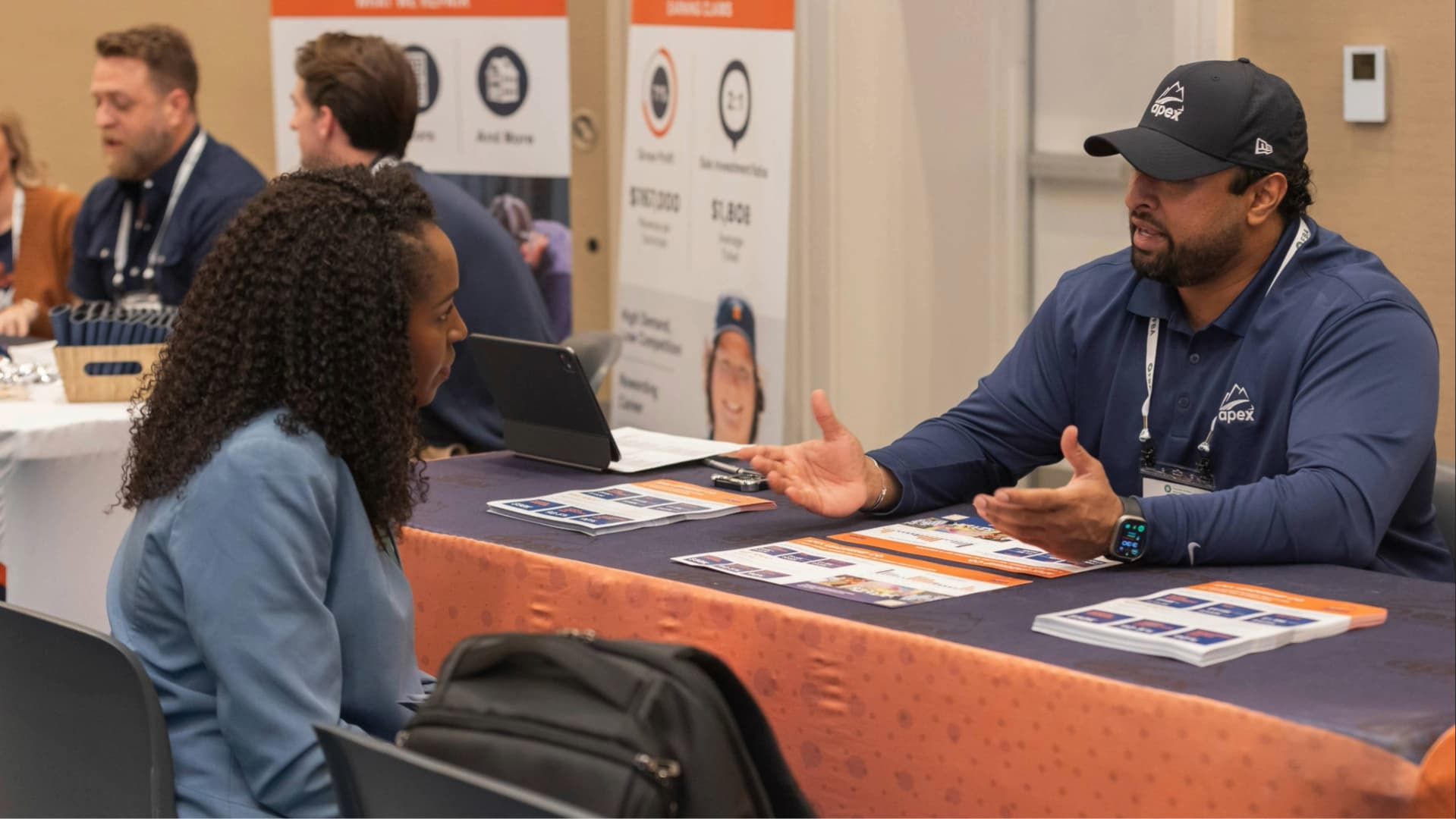




A two-week franchise deal review is a scheduled check of active candidate opportunities every 14 days. Brokers use it to identify stalled progress, clarify unresolved concerns, update pipeline stages, and assign a specific next action.
The goal is not to make candidates decide faster. It is to catch problems while there is still time to address them thoughtfully.
A candidate may remain interested while struggling with financing, household alignment, owner-role expectations, or unanswered questions. A regular review helps brokers distinguish those situations from genuine disengagement.
What Is a Two-Week Franchise Deal Review?
A two-week deal review is an internal pipeline-management habit. It checks whether each active opportunity has evidence of progress, an accurate status, and an agreed next step.
It is not a candidate decision deadline. It is also not a reason to wait two weeks before following up.
Continue normal communication between reviews. Use the scheduled review to examine the larger picture:
- What has changed?
- What is preventing progress?
- Who needs to act?
- Does the current plan still make sense?
The two-week cadence is a proposed workflow, not a legal requirement or a proven formula for preventing lost deals. Adjust it to your practice and the pace of each opportunity.
Why Follow-Up Reminders Are Not Enough
A reminder tells you to contact someone. A deal review asks why you are contacting them and what that conversation should accomplish.
Without that distinction, brokers can repeat outreach without improving clarity.
For example:
- A candidate needs a joint conversation with a partner, not another generic check-in.
- A territory question requires a franchisor response, not a request for the candidate to decide.
- An overwhelmed candidate needs fewer options, not another brand introduction.
- A planned funding event requires a documented pause, not an indefinitely active pipeline stage.
FBA’s framework for identifying franchise deal stall reasons helps brokers distinguish a temporary delay from a pause, mismatch, or confirmed loss.
A useful review produces a better plan—not just another task.
1. Review Each Candidate–Brand Opportunity Separately
A candidate can be progressing with one franchise while losing interest in another.
Review each candidate–brand relationship individually, while keeping the candidate’s overall goals visible.
| Opportunity | Current evidence | Review decision |
|---|---|---|
| Brand A | Franchisee validation calls are scheduled | Continue the agreed plan |
| Brand B | Staffing concerns remain unresolved | Clarify owner responsibilities |
| Brand C | Preferred territory is unavailable | Close or investigate alternatives |
A candidate-level note such as “still interested” hides these differences.
Where your CRM allows it, link brand-specific opportunities to a shared candidate profile. This helps prevent duplicate outreach and conflicting messages.
2. Find the Last Meaningful Interaction
Start with the most recent exchange that changed your understanding of the opportunity.
Meaningful updates include:
- A candidate explaining what they learned from a franchisor call.
- A lender clarifying a funding question.
- A partner joining the decision process.
- A candidate preparing questions after reviewing disclosures.
- A territory issue being resolved.
- A validation conversation changing the candidate’s assessment.
An unanswered email records outreach. It does not establish engagement.
Ask:
“What do we know now that we did not know at the previous review?”
If the answer is nothing, investigate why. Do not automatically assume the candidate has lost interest.
3. Compare Commitments With Actual Progress
Review the last agreed milestone.
Was the candidate planning to read approved materials, speak with a partner, schedule validation, or clarify funding? Was the broker or franchisor responsible for providing information?
Record three things:
| Question | What to establish |
|---|---|
| What was agreed? | The task, responsible person, and expected date |
| What happened? | Completion, partial progress, delay, or no update |
| What changed? | A new concern, dependency, priority, or timing issue |
A missed task should prompt questions rather than an immediate judgment about commitment.
FBA’s franchise candidate qualification guide emphasizes assessing readiness in context. One missed assignment should not outweigh the rest of the evidence.
Check your own commitments, too. A candidate cannot act on information that has not been provided.
4. Identify the Primary Blocker
“Still thinking” is not a complete explanation.
Ask what the candidate is thinking about and what information would help them assess it.
Common blockers include:
- Financial readiness.
- Owner-role mismatch.
- Household or partner alignment.
- Timing or life events.
- Brand or market fit.
- Due-diligence concerns.
- Research readiness or availability.
These issues can overlap. Choose the primary factor preventing the next useful step and record secondary concerns separately.
If the reason is unknown, write “unknown.” Do not invent an explanation to complete a CRM field.
Use a neutral question:
“What is the main issue we need to clarify before the next step would be useful?”
5. Check for Process Friction
Not every stall begins with the candidate.
Review whether:
- The next step was clearly explained.
- The candidate received too many assignments.
- A franchisor question remains unanswered.
- Responsibility for follow-up was unclear.
- The candidate understands the purpose of the next meeting.
- Communication matches the candidate’s stated preferences.
- Multiple contacts are creating confusion.
Then assign ownership accurately.
Instead of:
“Candidate has not progressed.”
Record:
“Candidate needs territory clarification before scheduling the next call. Broker will request an update from the franchisor by Thursday.”
That note identifies the actual dependency and the person responsible.
6. Confirm That the Timeline Still Fits
A candidate’s circumstances can change during franchise research.
Revisit:
- Employment-transition plans.
- Funding events.
- Relocation.
- Household responsibilities.
- Time available for research.
- Advisor availability.
- Franchisor scheduling.
FBA’s franchise candidate decision timeline guide helps organize these dependencies around meaningful milestones.
If a defined future event prevents progress, move the opportunity to a documented pause. Continuing interest alone does not make an opportunity active.
Record when to reconnect and what should trigger the conversation.
The Two-Week Franchise Deal Review Checklist
Use this checklist for every active opportunity:
| Review area | Question | Required update |
|---|---|---|
| Status | Is the opportunity active, stalled, paused, or closed? | Evidence-based stage |
| Meaningful contact | When did we last exchange useful information? | Date and summary |
| Previous commitment | What was supposed to happen? | Task, owner, and outcome |
| Candidate understanding | Can the candidate explain what they are investigating? | Fit assessment and open questions |
| Blocker | What prevents the next useful step? | Confirmed issue or “unknown” |
| Dependency | Is another party responsible for an outstanding action? | Person and action |
| Timeline | Does the plan reflect current circumstances? | Updated milestone |
| Next step | What will clarify or advance the decision? | Specific task and date |
End with this test:
“Could someone else read the record and understand what should happen next?”
If not, improve the notes before finishing the review.
Choose One Clear Outcome
Every review should produce a decision about the opportunity’s next stage.
| Outcome | When to use it | Next action |
|---|---|---|
| Continue | Agreed milestones are progressing | Confirm the next task and date |
| Clarify | A specific question is blocking progress | Assign someone to obtain the answer |
| Re-engage | Contact has weakened and the reason is unclear | Begin personalized outreach |
| Pause | A known event prevents near-term progress | Record the trigger and check-in date |
| Close or redirect | A confirmed withdrawal or mismatch exists | Document the reason and assess alternatives appropriately |
Do not advance a stage simply because an email was sent. Stage changes should reflect progress or a clearer understanding of the situation.
For opportunities requiring renewed contact, FBA’s 30-day candidate re-engagement sequence provides a structured alternative to repeated generic check-ins.
Send a Short Reset Message
When the review reveals uncertainty, invite the candidate to a brief conversation.
Candidate Reset Email Template
Subject: A quick reset on your franchise research
Hi [Candidate Name],
When we last spoke, your next step was [agreed task], and the main question was [specific issue].
I want to make sure our plan still fits your situation. Has anything changed with your priorities, timing, or interest in [Brand Name]?
We can use a short call to clarify the remaining questions and decide whether to continue, adjust the plan, or pause until a better time.
Best,
[Broker Name]
During the call, ask:
- “What has changed since we last spoke?”
- “What remains unclear?”
- “Does this opportunity still fit your goals?”
- “What would make the next step useful?”
- “Should we continue now or agree on a later check-in?”
Use the answers to update the plan. Do not treat the conversation as a request for immediate commitment.
A Practical Deal Review Example
Consider a hypothetical candidate who remains in an active stage after an introductory franchisor call.
The CRM shows two unanswered messages, but no debrief or agreed milestone.
During the review, the broker identifies:
- No meaningful post-call feedback.
- Unconfirmed owner-role expectations.
- No clear next action.
- An unknown reason for silence.
Instead of presenting another franchise, the broker invites the candidate to a reset call.
The candidate explains that staffing expectations are unclear and a partner needs to join the discussion.
The updated record becomes:
Status: Clarification needed.
Primary concern: Staffing and owner involvement.
Secondary factor: Partner participation.
Next action: Broker will arrange a focused conversation with the candidate and partner, then obtain clarification from the franchisor.
Follow-up: [Agreed date].
The review did not create urgency. It uncovered the information needed for a better decision.
Protect Due Diligence While Maintaining Momentum
A pipeline review should never become pressure to skip research.
Candidates may need time to review disclosures, investigate the market, speak with franchisees, and consult qualified legal and financial advisors.
The FTC’s consumer guide to buying a franchise explains these steps and the risks involved in franchise ownership.
Avoid using the review to:
- Predict earnings or guarantee results.
- Minimize unresolved concerns.
- Imply that time already invested creates an obligation to proceed.
- Push a candidate past an important diligence milestone.
An informed pause or rejection can be an appropriate outcome.
Measure Review Quality, Not Just Outreach Volume
Start with a few internal measures:
- Active opportunities with a dated next action.
- Outstanding tasks separated by responsible party.
- Opportunities without a recent meaningful update.
- Paused opportunities with a defined follow-up trigger.
- Opportunities accurately restaged after review.
Use these measures to improve your own process. They are not universal benchmarks or predictions of a closing.
Look for recurring issues over time. Repeated financing concerns may suggest earlier financial-readiness discussions. Repeated owner-role concerns may indicate that launch expectations need clarification before introductions.
Common Review Mistakes to Avoid
- Treating an unanswered message as meaningful engagement.
- Keeping every interested candidate in an active stage.
- Assuming the candidate is responsible for every delay.
- Repeating follow-up without identifying its purpose.
- Adding brands before resolving the underlying concern.
- Advancing stages based on activity rather than progress.
- Failing to document who owns the next action.
- Using an internal review schedule as a candidate deadline.
Frequently Asked Questions
How often should franchise brokers review their pipeline?
A review every two weeks is a practical starting point. Adjust the cadence to your pipeline size and candidate activity. Continue normal follow-up between reviews rather than waiting for the scheduled review.
What is the difference between a deal review and follow-up?
Follow-up communicates with a candidate or another party. A deal review examines the opportunity’s evidence, stage, blocker, responsibilities, and next action to determine what communication is needed.
Does two weeks without progress mean a franchise deal is lost?
No. The candidate may be researching or waiting on another party. Investigate the cause before changing the status.
What should brokers do when a candidate stops responding?
Review the last meaningful interaction and agreed task. Send personalized outreach that references the candidate’s situation and offers a clear way to resume, pause, or close the conversation.
Should stalled opportunities remain active?
Not indefinitely. A known future dependency may justify a paused stage. A confirmed withdrawal or mismatch should be documented and closed or redirected appropriately.
Can franchise broker training improve pipeline reviews?
A structured franchise broker training program can help brokers develop more consistent discovery, documentation, follow-up, and referral habits. Review current course content and support options before selecting a program.
Build a More Disciplined Pipeline Habit
The two-week franchise deal review helps brokers replace assumptions with evidence.
Check what changed, identify the real blocker, review your own commitments, and give every opportunity an accurate status and next action.
If you want to strengthen these habits, explore FBA’s franchise broker training and support pathway. Ask about current training options, franchise brokerage tools, and ongoing support before choosing your next professional-development step.
The objective is not to keep every deal alive. It is to ensure that no candidate is left without direction because the process lost clarity.
This article provides educational information, not legal, financial, or tax advice. Brokers and candidates should consult qualified professionals about applicable requirements and individual circumstances.