


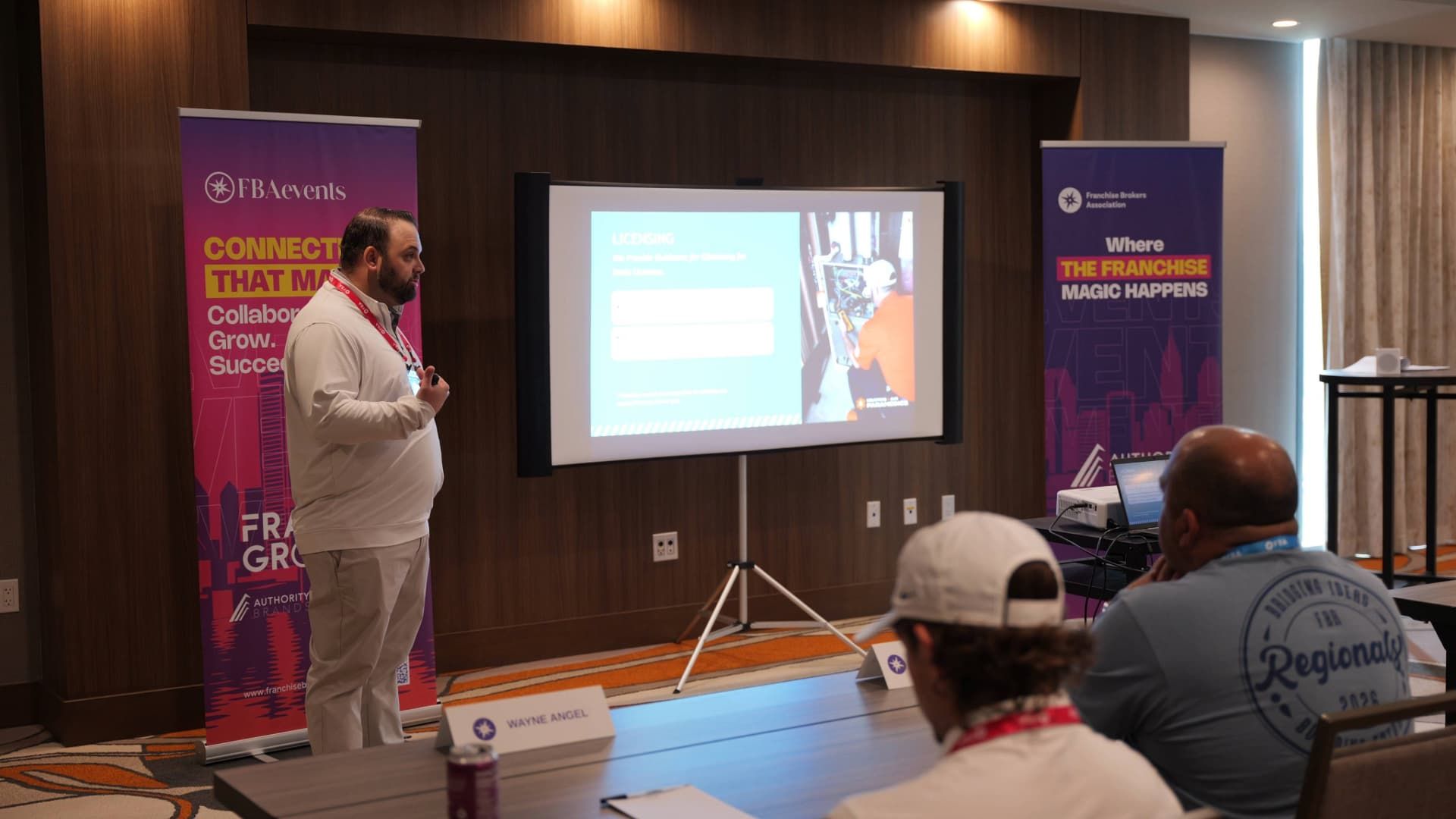
For franchisee validation calls, a franchisor should prepare the process—not the answers. Explain scheduling, help owners set availability boundaries, distribute facilitated introductions fairly, and debrief candidates afterward. Do not script endorsements, provide financial talking points, or restrict candidates to a designated list of owners.
Broker-referred candidates may arrive with detailed questions about startup expenses, working hours, training, support, and financial performance. Franchisees should understand why those conversations happen and how to participate without becoming an extension of the sales team.
The goal is readiness, not rehearsed enthusiasm.
A well-organized validation process protects independent due diligence. It also helps franchisors identify gaps between the ownership experience they describe and the experience franchisees report.
This article provides educational information, not legal, financial, or franchise sales advice. Have qualified franchise counsel review your validation procedures, preparation materials, and financial communication boundaries.
What Are Franchisee Validation Calls?
Franchisee validation calls are conversations in which prospective owners ask current or former franchisees about their experience with the business.
Candidates may explore:
- Actual startup expenses and additional funding needs
- Launch-stage and ongoing owner responsibilities
- Hiring, staffing, and employee management
- Initial training and continuing support
- Local marketing requirements
- Challenges and unexpected costs
- Whether the franchisee would make the same decision again
These conversations help candidates investigate ownership—not simply confirm that they should buy.
FBA’s Validation Call Question Bank helps brokers prepare candidates to ask specific questions, clarify financial terms, and compare different experiences.
For franchisors, better-prepared candidates make a clear, respectful validation process especially important.
1. Preserve the Candidate’s Choice of Franchisees
Franchisors can suggest relevant contacts. They should not restrict candidates to an approved shortlist.
The Spadea Lignana franchisee validation field guide explains that candidates choose whom they contact. Suggested introductions can reflect relevant similarities, such as location, background, or time in the system.
For example, your team might introduce a candidate to:
- A newer owner who recently completed onboarding
- An established owner who can discuss mature operations
- Someone operating a comparable business format
- An owner with a similar intended level of involvement
Explain that these are optional starting points, not exclusive contacts.
Do not require candidates to contact only designated validators or discourage conversations with less enthusiastic owners.
The FTC’s consumer guide to buying a franchise encourages candidates to use current and former franchisee contact information from Item 20 and speak beyond a separate reference list.
Preserving access does not mean promising that every owner will answer or disclose private information. Franchisees can set personal availability boundaries.
2. Prepare Franchisees for Logistics, Not Talking Points
Give franchisees a short orientation before validation requests become frequent.
Explain:
- Why prospective owners may contact them
- How to schedule a convenient time
- How to establish a reasonable call length
- That candid experiences are welcome
- That participation is not a sales presentation
- That they do not need to predict a candidate’s results
- How to raise privacy, legal, or process questions
- That they can decline to discuss sensitive information
Do not provide a list of complaints to avoid or a financial success story to repeat.
Sample Logistics Notice
Have counsel review any notice before distribution. A proposed version might say:
“Prospective franchise owners may contact you to learn about your experience. You may arrange a convenient time and explain how long you are available. Please speak in your own words and respect applicable privacy and confidentiality obligations. You are not expected to persuade the candidate or predict their results. Contact [authorized person] if you have a process or compliance question.”
Keep the distinction clear: preparation helps owners participate comfortably; coaching tries to control what candidates hear.
3. Rotate Suggested Introductions Without Limiting Access
The most responsive franchisees can become the default contacts for every candidate.
Manage that workload with a voluntary availability roster for facilitated introductions. Use it to distribute requests—not to decide whom candidates are allowed to call.
Track only the information needed for scheduling and relevant introductions:
| Scheduling Detail | Purpose |
|---|---|
| Preferred contact times | Reduces disruption to daily operations |
| Recent introduction requests | Helps avoid repeatedly approaching the same owners |
| Time in the system | Supports different launch-stage and established perspectives |
| Business format | Helps candidates explore comparable operating requirements |
| Ownership involvement | Provides context for owner responsibilities |
| Temporary pause | Allows owners to step back during busy periods |
Avoid a roster made up only of top performers or consistently enthusiastic owners.
Make clear that pausing facilitated introductions does not remove someone from required disclosures or restrict a candidate’s independent outreach.
4. Coordinate the Broker-to-Development Handoff
Before validation begins, clarify what the candidate has already learned and what remains uncertain.
Confirm:
- Preferred ownership role
- Target market and business format
- Main questions or concerns
- Discovery completed so far
- Whether the broker has prepared a question list
- Who will assist with scheduling
- Who will debrief the candidate
Use this context to improve relevance, not narrow the investigation.
For example, a candidate considering manager-led ownership may want to understand delegation, hiring, and responsibilities the owner cannot hand off. A relevant introduction can help explore those issues without telling the franchisee what to say.
FBA’s guide to building a consistent candidate handoff from broker to development team explains how to preserve context and assign next steps.
Share only necessary candidate information through an appropriate, authorized process. Personal financial records do not belong in a routine introduction email.
5. Establish Financial Boundaries Before Questions Arise
Candidates may ask franchisees about revenue, expenses, profitability, and working capital. Preparing for those questions does not mean supplying answers.
Franchisors should not give validators:
- Revenue figures to emphasize
- Profitability scripts
- Candidate-specific earnings estimates
- Payback calculations
- Instructions to describe selected results as typical
- Claims intended to fill gaps in Item 19
An independent owner discussing personal experience is not automatically the same as a franchise seller delivering an FPR. However, agency, coordination, incentives, and reuse of the information can affect the legal analysis.
Have counsel review the arrangement and any proposed incentives or reimbursements. Do not reward positive statements.
The FTC’s explanation of financial performance disclosures provides background on Item 19, substantiation, and the difference between gross sales and profits.
Do Not Repackage Validation Notes as Earnings Claims
A candidate’s notes are not verified system-wide financial data.
Do not turn numbers collected during validation into:
- A new system average
- An informal profit forecast
- A financial testimonial for other candidates
- A spreadsheet predicting results
- Evidence that another candidate should perform similarly
FBA’s guidance on avoiding compliance mistakes in broker conversations offers additional context for managing financial messaging boundaries.
6. Debrief Candidates Without Steering Their Conclusions
A debrief should clarify understanding and identify unresolved questions. It should not become a rebuttal session.
Ask:
- What changed your understanding of ownership?
- Which examples were most useful?
- What did you hear directly, and what did you infer?
- Where did experiences differ?
- Which questions remain unanswered?
- What would help you investigate further?
Listen before offering an explanation.
If a candidate raises a concern, avoid immediately dismissing the owner as an exception. First understand the issue and determine what further investigation is appropriate.
A constructive response might be:
“Thank you for raising that. Let’s clarify what you heard and what still needs investigation. We can connect you with the appropriate team to discuss the support process, and you can decide what additional validation would be useful.”
Do not pressure candidates to identify critical owners or suggest that honest criticism will affect someone’s standing in the system.
7. Turn Feedback Into Operational Follow-Up
Validation feedback should reach the people responsible for the ownership experience.
Create a simple issue log:
| Feedback Theme | What to Investigate | Responsible Team |
|---|---|---|
| Training missed important launch tasks | Curriculum, practice, and onboarding gaps | Training |
| Support requests went unanswered | Escalation routes and response records | Operations |
| Workload differed from expectations | Owner-role messaging and staffing realities | Development and operations |
| Technology was difficult to adopt | Implementation, usability, and training | Technology support |
| Changes were poorly explained | Communication and change-management practices | Leadership |
Distinguish three things:
- A candidate’s interpretation
- A reported franchisee experience
- An independently confirmed finding
Feedback is a signal—not automatic proof. Investigate recurring themes and serious individual concerns through the appropriate process.
For each issue requiring action, record an owner, next step, review date, and outcome. Protect identities where practical, but do not promise confidentiality your team cannot maintain.
8. Use Unresolved Questions to Improve Discovery Day
Validation can reveal what candidates still need to understand.
If several candidates ask about hiring support, provide access to the appropriate operations representative. If they remain uncertain about owner involvement, revisit the role description with practical examples.
Use Discovery Day to investigate—not overwhelm.
FBA’s guide to elevating Discovery Day into a decision-making process connects candidate questions with operational information and access to the people responsible for support.
Do not mark validation complete simply because a candidate made a certain number of calls. Assess what they explored and what remains unresolved.
A Simple Validation Readiness Workflow
Assign responsibility before the next candidate enters validation.
| Stage | Recommended Action | Primary Owner |
|---|---|---|
| Before requests | Review logistics guidance and legal boundaries | Development and counsel |
| Before introductions | Confirm owner availability and candidate context | Development |
| During validation | Preserve independent access and answer process questions | Development |
| After conversations | Debrief the candidate without steering conclusions | Assigned representative |
| When concerns emerge | Assess and route issues appropriately | Relevant team |
| During process review | Check workload, unresolved questions, and corrective actions | Development and operations |
Measure process quality rather than positivity.
Useful indicators include scheduling delays, concentration of requests among owners, unresolved candidate questions, and completion of operational follow-up.
Do not score franchisees by how often their conversations lead to an award.
Franchisee Validation Readiness Checklist
Before the next broker-referred candidate begins validation, confirm:
- Candidates can choose whom they contact.
- Suggested introductions do not replace broader access.
- Franchisees understand the purpose and scheduling process.
- Participation does not require rehearsed answers.
- Owners can set availability boundaries.
- Facilitated requests are distributed fairly.
- Candidate information is shared appropriately.
- No financial talking points are supplied.
- Privacy and financial questions have an escalation contact.
- Candidate debriefs are scheduled.
- Feedback can reach operations and training.
- Honest criticism does not trigger retaliation.
- Counsel has reviewed the process and preparation materials.
How Validation Readiness Supports FBA Broker Relationships
When you partner with franchise brokers, make the validation process easy to explain.
Brokers should know:
- How suggested introductions work
- That candidates retain independent contact choices
- Who handles scheduling questions
- How unresolved issues are escalated
- How the development team will coordinate follow-up
That clarity supports a consistent candidate experience without turning brokers or owners into scripted advocates.
For brands evaluating franchise broker network membership, review FBA’s franchisor membership options against your current development needs and engagement capacity. Confirm included services; network participation does not replace legal review or internal process ownership.
Frequently Asked Questions
Can a Franchisor Choose Which Franchisees a Candidate Calls?
A franchisor can suggest relevant contacts, but should not restrict the candidate to those people. Candidates should be able to investigate independently using applicable franchisee contact information. Suggested introductions are a convenience—not an exclusive list.
How Should Franchisors Prepare Franchisees for Validation Calls?
Explain scheduling, etiquette, privacy considerations, time boundaries, and escalation contacts. Encourage franchisees to speak honestly in their own words. Do not provide financial talking points or scripts designed to produce favorable answers.
What Should Franchisors Do With Validation Call Feedback?
Clarify the candidate’s understanding, document unresolved questions, and route operational concerns to the responsible team. Separate reported experiences from confirmed findings. Use feedback to improve the system rather than punish candid owners.
How Can Franchisors Prevent Validator Overload?
Maintain a voluntary availability roster and distribute facilitated introductions across relevant owners. Allow temporary pauses during busy periods. Do not use the roster to restrict independent candidate outreach.
Should the Development Team Attend Validation Calls?
Do not make attendance the default condition of access. Independent conversations give candidates space to ask candid questions. If attendance serves a specific purpose, obtain everyone’s agreement, clarify the role, and avoid steering the discussion.
Can Franchisees Discuss Their Own Financial Experience?
Independent owner conversations require a different analysis from franchisor-issued financial claims. Franchisors should not script those discussions or reuse owner statements as unofficial earnings representations. Have counsel review the circumstances, confidentiality issues, and any agency or incentive arrangements.
Prepare for Candor, Then Act on What You Learn
A strong validation process makes candid investigation easier without controlling its outcome.
Prepare franchisees for logistics and boundaries. Distribute requests fairly. Preserve candidate choice. Debrief without defensiveness and route meaningful concerns to the people who can address them.
The most useful result is not a uniformly positive set of calls. It is a clearer understanding of candidate fit—and a more accurate view of the ownership experience your system delivers.