
Franchise marketing events become less effective when audience targeting, brand messaging, qualification, and follow-up operate as separate activities. Franchisors can improve results by setting one primary objective, preparing for relevant conversations, assigning next steps, and measuring meaningful progress—not attendance alone.
A crowded booth does not necessarily produce qualified candidates. A successful franchisee workshop does not automatically generate franchise sales. A broker conference may create valuable relationships without producing an immediate referral.
Each outcome needs a different strategy and measurement approach.
For franchise development leaders, event optimization means finding where progress breaks down and fixing that specific problem before increasing the budget.
This guide explains the most common bottlenecks and provides a practical process for improving event strategy, candidate quality, and franchisee engagement.
What Are Franchise Marketing Events?
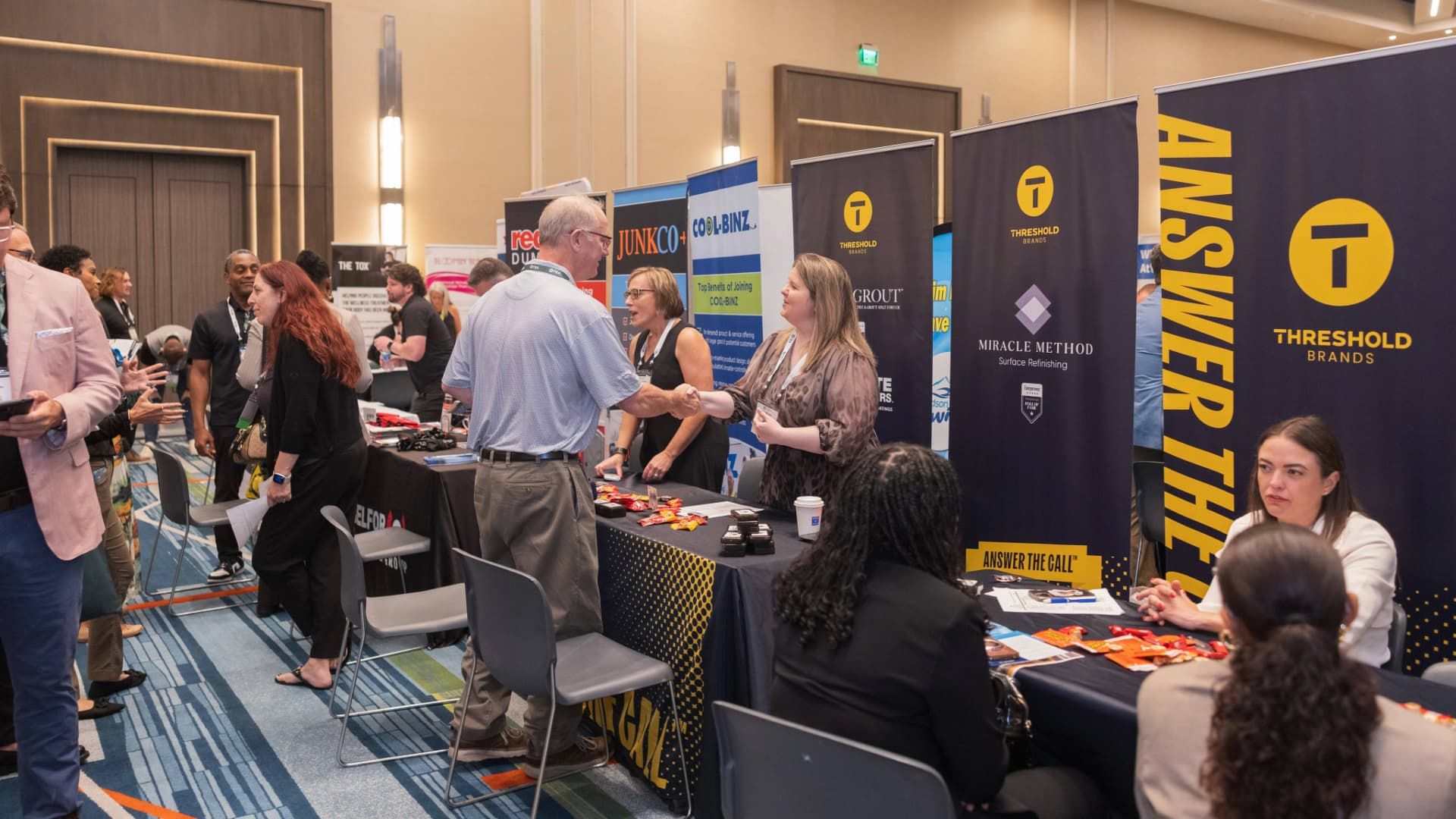
Franchise marketing events are planned activities that help a franchise brand educate audiences, attract prospective owners, build broker relationships, or strengthen participation within its system.
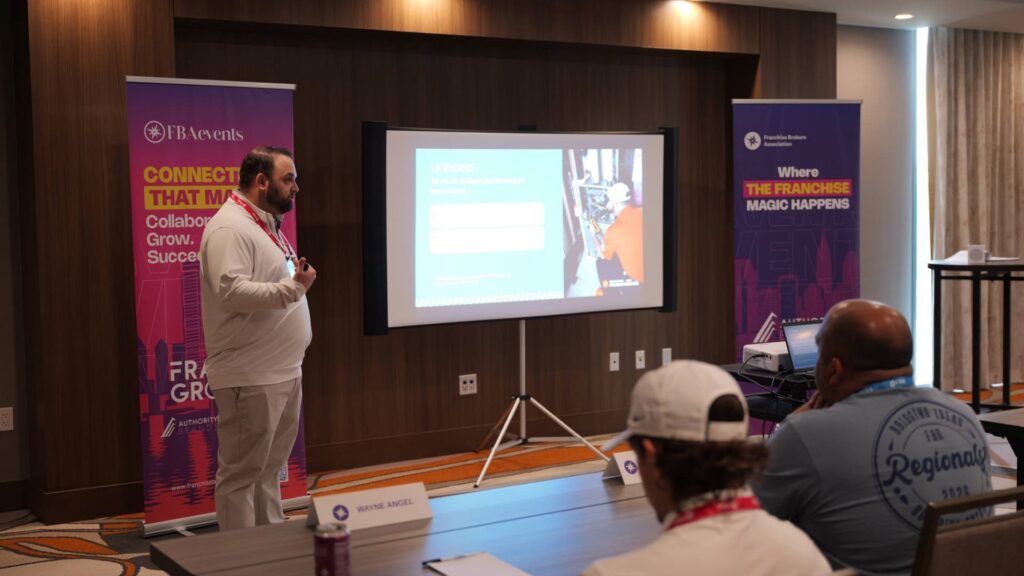
They include expos, broker gatherings, webinars, Discovery Days, franchisee conferences, and local marketing workshops.
The format matters because each event serves a different audience.
| Event Format | Primary Audience | Useful Outcome |
|---|---|---|
| Franchise expo | Prospective owners | Relevant inquiries and completed discovery conversations |
| Broker event | Brokers and consultants | Better brand understanding and suitable introductions |
| Candidate webinar | People exploring ownership | Clearer expectations and appropriate next steps |
| Discovery Day | Candidates deeper in evaluation | Resolved questions and informed mutual-fit decisions |
| Franchisee conference | Existing owners and support teams | Learning, feedback, and operational alignment |
| Local marketing workshop | Franchisees and local teams | Practical implementation of approved marketing activities |
Do not apply the same sales target to every format.
1. Unclear Event Goals
An event strategy becomes difficult to manage when development, marketing, operations, and leadership expect different outcomes.
One team may want immediate applications. Another may want visibility. A third may expect owners to adopt a new marketing program.
Choose one primary objective and a small number of supporting outcomes.
For a broker gathering:
“Help relevant brokers understand our ideal franchisee profile and schedule follow-up discussions about candidate fit.”
For a franchisee workshop:
“Help participating owners complete a local marketing action plan with an implementation date.”
Before approving participation, answer:
- Who is the event for?
- What should participants understand or do afterward?
- What evidence will demonstrate progress?
- Who owns the next action?
Attendance is an activity measure. It is not a substitute for an objective.
2. Poor Audience Fit
A large audience can still be the wrong audience.
Your franchise may require active local leadership while attendees are seeking passive ownership. Candidates may be interested in markets where your brand is not developing. Brokers may recognize your name but misunderstand your financial criteria.
Compare the event audience with:
- Available and priority markets
- Approved financial qualification criteria
- Required owner involvement
- Relevant leadership and operational capabilities
- Single-unit or multi-unit preferences
- Candidate decision timelines
- Your capacity to manage discovery and support new owners
For broker events, prepare a concise ideal franchisee profile. For candidate-facing events, explain basic ownership expectations before asking people to schedule a call.
FBA’s guide to preparing your brand for franchise broker networks can help align your positioning, qualification criteria, and resources.
The goal is not to reject exploratory conversations. It is to distinguish education from a candidate ready for formal qualification.
3. Messaging That Generates Attention but Not Understanding
A polished presentation can leave people excited without helping them understand the business.
Replace broad claims with practical answers:
- What does the business do?
- Who are its customers?
- What does the owner manage?
- Which responsibilities cannot be delegated easily?
- What training and support are available?
- Which candidates should investigate further?
For example:
“Owners lead local business development, recruit and manage their teams, and oversee service quality. The franchisor provides initial training, operating procedures, and ongoing support.”
This is more useful than describing the opportunity as “easy to scale” or “ideal for anyone.”
At broker events, test the message with one question: Can the broker recognize a suitable candidate afterward?
Keep Financial Messaging Within Approved Boundaries
Event conversations are still franchise sales communications.
Have counsel review relevant slides, scripts, testimonials, handouts, and follow-up materials. Do not add informal earnings estimates or payback calculations to make a presentation more compelling.
The FTC’s financial disclosure guidance explains Item 19 and why candidates must distinguish revenue from profit.
FBA’s Item 19 broker guide provides related guidance on preserving context and avoiding unsupported financial statements.
4. Contact Collection Without Qualification
A badge scan records contact information. It does not establish fit, financial readiness, or permission to use every communication channel.
Use a short conversation framework and record the context.
Questions for Prospective Owners
- What interests you about business ownership?
- Which market are you considering?
- How involved do you want to be?
- What investment range are you exploring?
- What is your decision timeline?
- What do you most need to understand?
Avoid collecting sensitive documents in public spaces. Use an appropriate process for financial verification later.
Questions for Brokers
- Which ownership profiles are you working with?
- Which markets are relevant?
- What do you need to understand about our model?
- Is there a specific candidate-fit discussion?
- How would you prefer to reconnect?
Use distinct CRM statuses:
- Educational inquiry
- Broker relationship follow-up
- Candidate introduction pending
- Franchisor qualification required
- Not currently aligned
This makes franchise lead generation reporting more useful than a single list labeled “event leads.”
5. Follow-Up Without Clear Ownership
Relevant conversations can stall because nobody owns the next step.
Before the event, define:
- Where contacts and notes will be stored
- Which fields are required
- Who reviews new records
- How duplicates are handled
- Who contacts each person
- What response commitment applies
- How absences or workload changes are covered
Close substantive conversations with a specific commitment.
Instead of:
“We will send you information.”
Use:
“I will send our approved owner-role overview tomorrow. We can reconnect Tuesday to discuss your market questions.”
The follow-up should reference the conversation rather than place everyone into the same generic sequence.
For broker referrals, use FBA’s framework for a consistent candidate handoff.
6. Franchisees Are Present but Not Meaningfully Engaged
Franchisee engagement requires more than attendance or a panel appearance.
Define how participation benefits owners and the system.
Useful roles include:
- Sharing operating lessons in their own words
- Identifying support gaps
- Contributing to peer-learning sessions
- Demonstrating approved local marketing practices
- Discussing implementation barriers
- Helping shape future training topics
Explain the schedule, expected time commitment, and discussion format.
Do not pressure owners to deliver uniformly positive statements or scripted financial endorsements. Have counsel review relevant testimonial, incentive, privacy, and financial communication issues.
For franchisee-focused events, build sessions around problems owners actually want to solve—not only announcements leadership wants to deliver.
7. Workshop Attendance Does Not Lead to Action
A full room does not prove that participants will implement what they learned.
For every training session, define a practical output and a follow-up process.
| Stage | Example: Local Marketing Workshop |
|---|---|
| Before | Ask owners to identify one marketing obstacle |
| During | Build an approved campaign outline |
| At completion | Assign responsibility and an implementation date |
| After | Review execution and identify support needs |
If owners do not act, investigate why.
Possible barriers include staffing, budget, technology, unclear instructions, or a tactic that does not fit local circumstances.
Sending more reminders is not a complete franchisee engagement strategy.
8. Reporting Stops at Activity
Registrations, booth visits, and email opens show participation. They do not establish development value.
Match measurement to the event’s purpose.
| Objective | Measures to Review |
|---|---|
| Broker education | Understanding of candidate fit, completed follow-ups, relevant introductions |
| Candidate recruitment | Completed discovery calls, confirmed qualification, progression |
| Discovery Day | Questions resolved, mutual-fit decisions, documented next steps |
| Franchisee engagement | Participation, implementation, obstacles resolved |
| Relationship development | Agreed actions completed and subsequent relevant activity |
Keep event-sourced and event-influenced activity separate.
A candidate already in discovery who attends a webinar may be influenced by the event. That does not necessarily make them a newly generated lead.
Useful Event Performance Calculations
Use consistent definitions:
- Qualification rate: Qualified event-sourced candidates divided by event-sourced candidate inquiries.
- Meeting completion rate: Completed follow-up meetings divided by scheduled follow-up meetings.
- Cost per qualified candidate: Defined event costs divided by qualified event-sourced candidates.
Document the reporting period, included costs, and qualification standard. If the denominator is zero, report the limitation rather than presenting a misleading rate.
Allow time for candidates to progress. Early engagement and eventual franchise awards belong to different stages.
9. Feedback Does Not Change the Next Event
A useful debrief identifies decisions—not just impressions.
Ask:
- Which conversations matched our objective?
- Where did attendees misunderstand the opportunity?
- Which questions repeated?
- What delayed follow-up?
- Which concerns require operational review?
- What should we stop, revise, or repeat?
Assign each action to a person and deadline.
For example:
“Several brokers interpreted our model as passive ownership. Development will revise the owner-role slide and review it during the next training session.”
FBA’s guide to using event feedback to refine your franchise pitch provides a related framework.
Change a manageable number of variables at a time. Otherwise, the team may struggle to identify which adjustment helped.
A Practical Event Marketing Strategy for Franchisors
Use this workflow to connect planning, delivery, and follow-through.
| Phase | Main Action | Deliverable |
|---|---|---|
| Strategy | Define audience, objective, budget, and capacity | Event brief |
| Preparation | Approve messages and qualification procedures | Current resources and conversation guide |
| Scheduling | Assign roles and plan relevant meetings | Meeting plan |
| Delivery | Capture context and agree on next steps | Complete contact records |
| Follow-up | Execute commitments and document outcomes | Updated CRM records |
| Review | Evaluate progression and engagement | Performance summary |
| Improvement | Address the most important bottleneck | Owned action plan |
Before committing to another event, confirm that your team can execute every phase.
Hypothetical Example: More Scans, Fewer Useful Conversations
Consider a hypothetical franchisor that captures many contacts at an expo but schedules few completed discovery calls.
The first assumption might be that follow-up emails need stronger subject lines.
A process review could reveal a different problem:
- Attendees did not understand the required owner involvement.
- Booth staff recorded no market preferences.
- Everyone received the same follow-up.
- No representative owned the first conversation.
The appropriate fix is not simply more email.
The team should clarify messaging, capture relevant context, assign ownership, and offer an appropriate next step.
This illustrates a central principle: improve the stage where progress breaks down rather than increasing activity everywhere.
How FBA Events Fit Into Your Development Plan
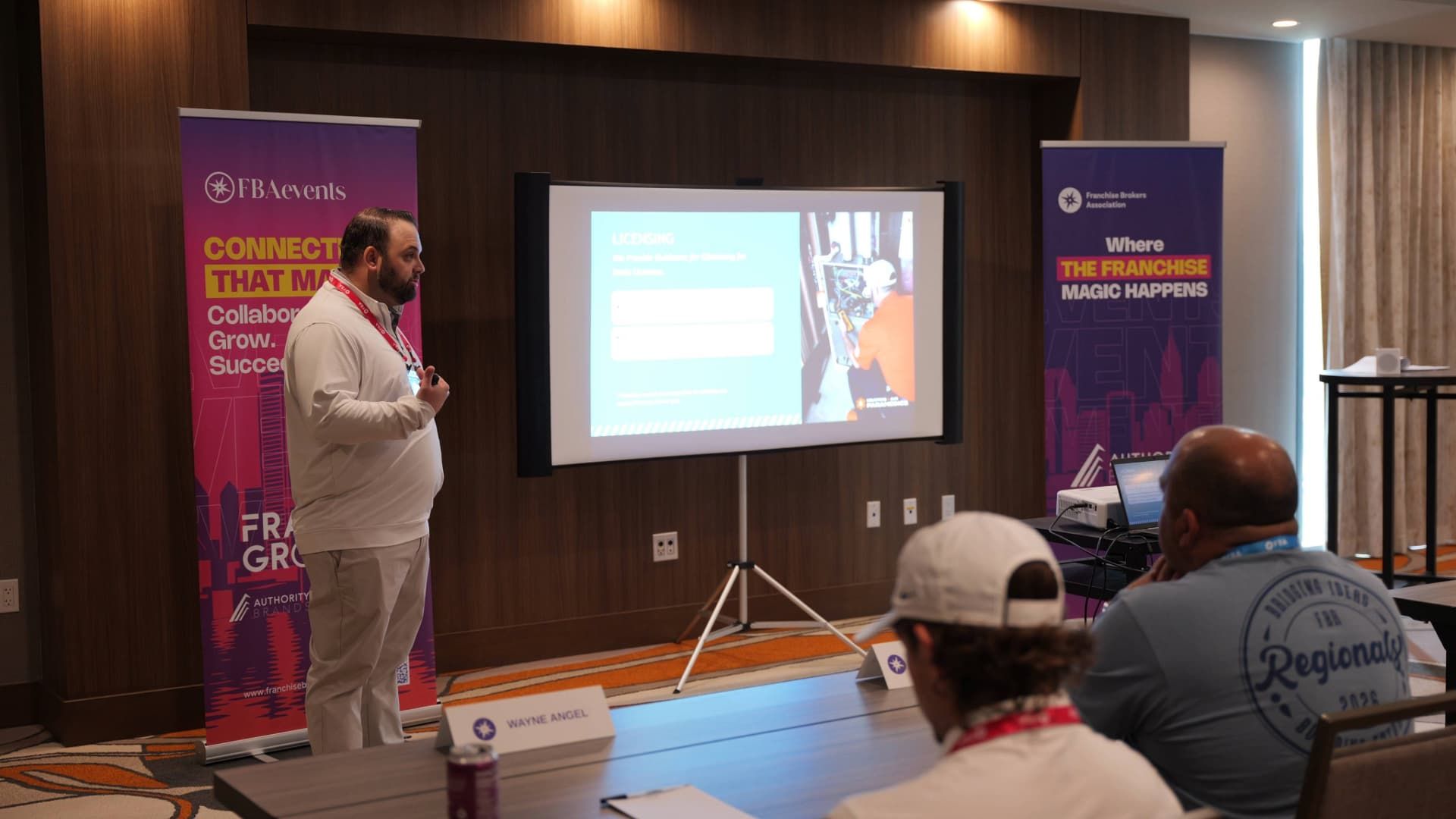
Broker-focused events should be approached as opportunities for education, relationship-building, and relevant follow-up.
Prepare:
- A clear ideal franchisee profile
- Current market guidance
- Approved brand materials
- Questions that help you understand broker needs
- A realistic follow-up plan
Explore FBA events to review available formats and confirm current participation requirements with the FBA team.
If you are comparing franchise broker network membership, evaluate how your team will use the available opportunities—not simply whether your logo will be visible.
Review FBA’s franchisor membership options against your goals, resources, and engagement capacity. Confirm included services rather than assuming event participation guarantees referrals, awards, or openings.
Franchise Marketing Event Checklist
Before the next event, confirm:
- One primary objective is documented.
- The audience matches current priorities.
- Candidate criteria and market information are current.
- Messaging and financial materials are approved.
- Contact capture includes useful context.
- Follow-up ownership is assigned.
- Communication preferences are respected.
- Franchisee participation has a clear purpose.
- Implementation support is available.
- Metrics distinguish activity from progression.
- A debrief is scheduled.
- Improvements will have owners and deadlines.
Frequently Asked Questions
Why Do Franchise Marketing Events Underperform?
Common bottlenecks include unclear objectives, poor audience fit, vague messaging, weak qualification, and inconsistent follow-up. Identify where progress slows before deciding that the event itself is ineffective.
How Can Franchisors Improve Event Candidate Quality?
Explain ownership expectations and basic requirements early. Ask focused questions, record candidate goals, and separate educational inquiries from people ready for qualification. Contact collection alone does not establish suitability.
How Should Franchisors Measure Event ROI?
Define the intended outcome and relevant costs before the event. Track qualified candidates, completed meetings, development progression, or franchisee implementation as appropriate. Distinguish financial return from earlier indicators of progress.
How Can Events Improve Franchisee Engagement?
Address practical owner needs, provide opportunities for candid input, and produce clear next actions. Follow up on implementation barriers and support requests. Attendance alone is not evidence of meaningful engagement.
Should Every Event Generate Franchise Leads?
No. Broker education, franchisee learning, and operational alignment can be valid primary objectives. Evaluate each event against its purpose.
How Quickly Should Teams Follow Up?
Set a realistic internal commitment before the event and communicate it clearly. Prioritize agreed actions and personalized responses. The appropriate schedule depends on the conversation, participant preference, and team capacity.
Fix the Bottleneck Before Expanding the Budget
Better franchise marketing events begin with a clearer process—not necessarily a larger booth or more registrations.
Define the audience. Explain the opportunity accurately. Capture relevant context. Assign follow-up and measure the outcome that matters.
Then use the findings to improve the next event.
That approach gives franchise development leaders a more disciplined way to turn visibility into informed conversations—and franchisee participation into practical action.